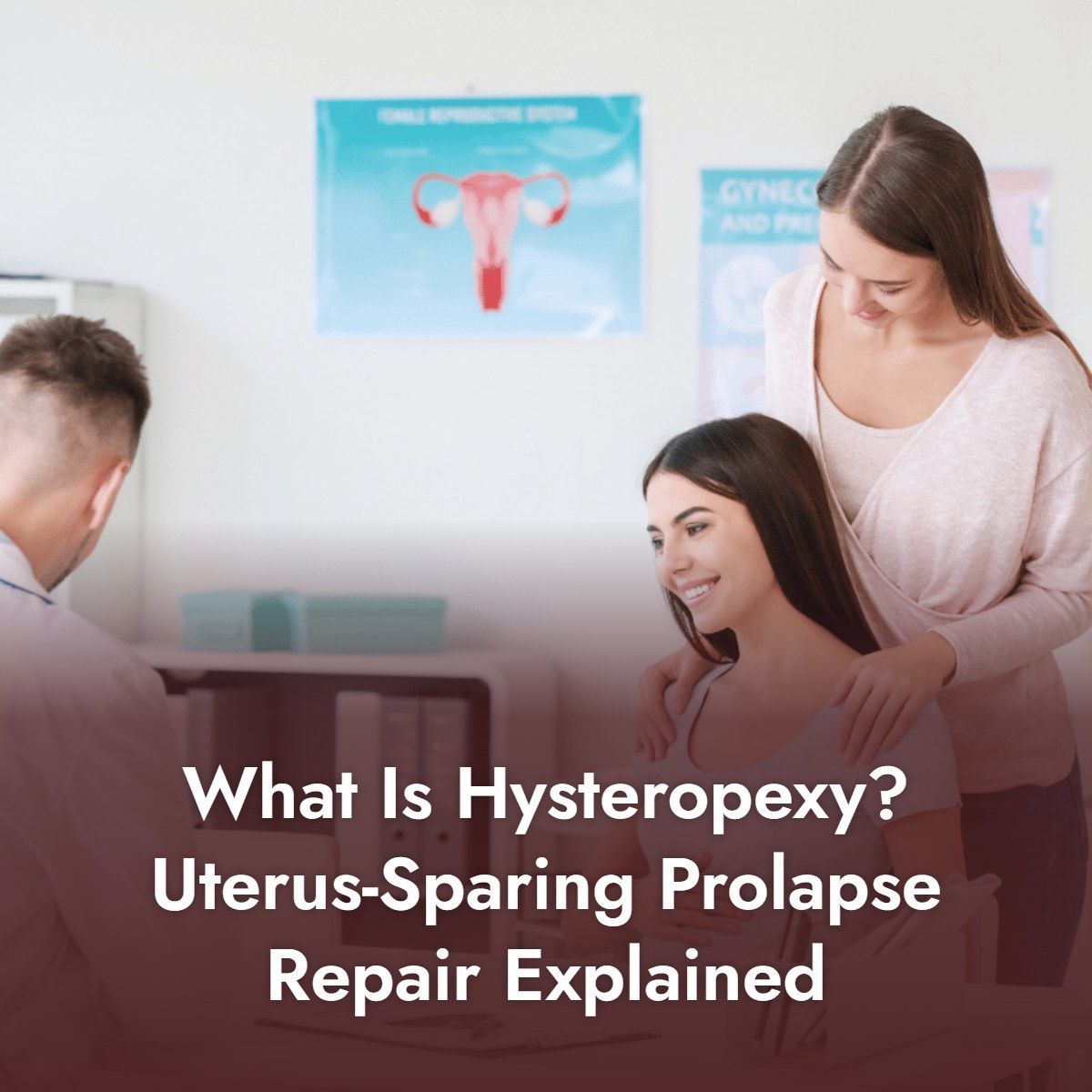
Hysteropexy is an operation that repairs uterine prolapse by lifting and securing the uterus in place instead of removing it. The surgeon attaches the cervix or uterus to strong ligaments or to the sacrum, either through the vagina or by keyhole surgery. For suitable women, it treats the bulge with outcomes broadly comparable to hysterectomy-based repair, while keeping the uterus.
What uterine prolapse is and why the uterus drops
The uterus is normally held high in the pelvis by a network of ligaments and connective tissue, mainly the uterosacral and cardinal ligaments, supported from below by the pelvic floor muscles. Pregnancy, vaginal birth, aging, menopause, chronic straining, heavy lifting and inherited tissue weakness can stretch or tear these supports. The uterus and cervix then descend into the vagina, sometimes reaching or passing the entrance.
Typical symptoms include a feeling of something coming down, a visible or palpable bulge, dragging discomfort that worsens through the day, and difficulty with bladder or bowel emptying. Prolapse is treated when it causes bothersome symptoms, not simply because it is seen on examination.
How hysteropexy differs from hysterectomy
For many years, removing the uterus was the routine first step of prolapse surgery. Yet the uterus is usually a passive passenger: it descends because its supports fail, not because it is diseased. Hysteropexy addresses the failed support directly and leaves the healthy uterus behind.
Reviews of the evidence, including a systematic review and clinical practice guidelines published in 2018 by the Society of Gynecologic Surgeons, suggest that uterine preservation can give similar improvement in prolapse symptoms in many women, often with shorter operating time and less blood loss. A Dutch randomized trial published in the BMJ in 2015 found sacrospinous hysteropexy was not inferior to vaginal hysterectomy with uterosacral suspension for apical prolapse at one year. Longer-term data are still accumulating, and results depend on technique and surgeon experience.
The main types of hysteropexy
Sacrospinous hysteropexy
Performed through the vagina, this technique stitches the back of the cervix to the sacrospinous ligament, a strong band of tissue in the pelvis. It avoids abdominal incisions and is one of the most studied uterus-sparing operations. Temporary buttock or thigh pain can occur because of nerves near the ligament.
Uterosacral hysteropexy
The uterosacral ligaments are shortened and reattached to the cervix, restoring the natural suspension. It can be done vaginally or laparoscopically.
Sacrohysteropexy
Usually done laparoscopically or robotically, this operation uses a strip of synthetic mesh to attach the uterus or cervix to the front of the sacrum. It gives strong apical support but adds the risks of abdominal surgery and of mesh, such as erosion, although the mesh is placed through the abdomen rather than the vagina.
Manchester procedure
A long-established vaginal operation that partly removes an elongated cervix and shortens the cardinal ligaments to support what remains. It is particularly considered when the cervix is long.
Who is a good candidate for hysteropexy?
Uterus-sparing surgery suits many, but not all, women with prolapse. It is commonly considered for:
- Women who wish to keep their uterus for personal, cultural or fertility-related reasons
- Women who prefer a less extensive operation with a possibly quicker recovery
- Those with a normal uterus, normal cervical screening and no abnormal bleeding
It is generally less suitable or needs extra caution in:
- Women with fibroids, adenomyosis or heavy periods that would themselves justify hysterectomy
- Women with abnormal cervical screening or postmenopausal bleeding that has not been fully investigated
- Women with a raised inherited risk of uterine cancer, such as Lynch syndrome
- Those who cannot attend future cervical screening or uterine assessment
Women planning further pregnancies should discuss timing carefully. Pregnancy and delivery after hysteropexy are possible, but they may stress the repair, and many surgeons advise delaying prolapse surgery until childbearing is complete, using a pessary or pelvic floor training in the meantime.
What to expect before, during and after surgery
The usual pathway looks like this:
- A detailed pelvic examination, often using the POP-Q system, to measure prolapse in each compartment.
- Checks of the uterus and cervix, such as cervical screening and sometimes an ultrasound.
- Assessment of bladder function, since repairing prolapse can unmask hidden stress incontinence.
- Surgery under general or regional anesthesia, often combined with repair of the front or back vaginal wall if they also bulge.
- A short hospital stay, commonly one or two nights, with a catheter for a short time in some cases.
- A recovery period of around six weeks with no heavy lifting, straining or intercourse.
Most women return to light activities within two weeks and to desk work within two to four weeks, depending on the extent of surgery.
Non-surgical options to consider first
Surgery is not the only answer, and many women try conservative treatment before deciding. A vaginal pessary, a removable silicone device fitted by a clinician, supports the uterus from below and can control symptoms well for years. Supervised pelvic floor muscle training can reduce symptoms in milder prolapse, and randomized evidence supports its benefit. Weight management, treating constipation and avoiding repeated heavy lifting also reduce the load on the pelvic floor. These options are especially useful for women who have not finished having children or who prefer to avoid or delay surgery.
Risks and the chance of recurrence
Like any operation, hysteropexy carries risks, including bleeding, infection, urinary retention, bladder or bowel injury, pain with sex, and anesthesia complications. Specific risks depend on the technique: temporary buttock pain after sacrospinous fixation, or mesh complications after sacrohysteropexy.
Prolapse can return after any repair, including hysterectomy-based repair. Recurrence may appear in the same area or another compartment. Factors that raise the risk include advanced prolapse before surgery, younger age at the time of surgery, obesity, chronic cough, constipation and heavy physical work. Keeping a healthy weight, preventing constipation and continuing pelvic floor exercises all help protect the result.
Frequently asked questions
Is hysteropexy as effective as hysterectomy for prolapse?
For carefully selected women, current evidence suggests broadly similar symptom relief in the short and medium term. Some studies show slightly different rates of recurrence at the top of the vagina depending on technique. Long-term comparisons are still limited, so your surgeon's experience with a particular method matters.
Can I get pregnant after hysteropexy?
Pregnancy is possible because the uterus and ovaries remain. However, pregnancy and vaginal birth may weaken the repair, and the best mode of delivery should be discussed with an obstetrician. Many women choose to complete their families before prolapse surgery.
Will I still have periods after hysteropexy?
Yes. Because the uterus is kept, periods continue as before until menopause. Cervical screening must also continue on the usual schedule.
Does hysteropexy use mesh?
Vaginal techniques such as sacrospinous and uterosacral hysteropexy use stitches only. Sacrohysteropexy places mesh through the abdomen to attach the uterus to the sacrum. Ask your surgeon exactly which material will be used and why.
Is hysteropexy suitable after menopause?
Yes, many postmenopausal women have hysteropexy, provided the uterus is healthy and any postmenopausal bleeding has been investigated. Vaginal estrogen may be recommended before and after surgery to improve tissue quality. The decision is individual.
References
- American College of Obstetricians and Gynecologists and American Urogynecologic Society. Practice Bulletin No. 214: Pelvic Organ Prolapse. Obstet Gynecol. 2019.
- Meriwether KV, Antosh DD, Olivera CK, et al. Uterine preservation vs hysterectomy in pelvic organ prolapse surgery: a systematic review with meta-analysis and clinical practice guidelines. Am J Obstet Gynecol. 2018.
- Detollenaere RJ, den Boon J, Stekelenburg J, et al. Sacrospinous hysteropexy versus vaginal hysterectomy with suspension of the uterosacral ligaments in women with uterine prolapse stage 2 or higher: multicentre randomised non-inferiority trial. BMJ. 2015.
- Maher C, Feiner B, Baessler K, Christmann-Schmid C, Haya N, Brown J. Surgery for women with apical vaginal prolapse. Cochrane Database Syst Rev. 2016.
This article is for general education and does not replace an examination by a qualified gynecologist. Individual results vary, and every procedure carries risks.