
Pelvic Organ Prolapse · Treatment
Vaginal Mesh Complication Revision and Native-Tissue Repair
Vaginal mesh complication revision is treatment for problems caused by synthetic mesh or implants placed during earlier prolapse or tightening surgery: exposure, pain, painful intercourse, infection or recurrent prolapse. At Somssi Women's Clinic in Gangnam, Seoul, Dr. Yoon Ho-joo removes accessible material through the vagina, reconstructs the support with your own tissue, and coordinates with hospital partners when mesh involves the bladder, bowel or deep pelvis.
Medically reviewed by Dr. Yoon Ho-joo, MD, PhD, OB/GYN specialist, Somssi Women's Clinic · Last updated October 2026

At a glance
Key facts
The essentials, based on how Somssi Women's Clinic performs this procedure or answers this question. Your plan is confirmed at consultation.
- Problems treated: mesh or implant exposure, pain, painful intercourse, infection, recurrent prolapse or laxity after implant surgery
- Approach: vaginal removal of accessible foreign material plus native-tissue reconstruction; no new mesh
- Assessment: examination, ultrasound, sexual-function and bladder review, measurement of vaginal length and wall thickness
- Anesthesia: sedation plus long-acting local; local only on request
- Hospital stay: none for clinic procedures; same-day discharge
- Complex cases: mesh involving bladder, urethra, bowel or deep pelvis is coordinated with hospital partners
- Performed by: Dr. Yoon Ho-joo, MD, PhD, revision surgery program since 2000
Mesh complication revision at a glance
Treats exposure, pain, infection or recurrence after mesh or implants: removal plus native-tissue reconstruction.
- vaginal mesh complications
- mesh removal Korea
- mesh exposure
- pain after mesh
- native tissue repair
- sling complication
- Exam + ultrasoundAssessment
- No new meshRepair
- Sedation + localAnesthesia
- Same dayDischarge (clinic cases)
- Map the materialExam and ultrasound locate mesh or implant.
- Remove what is reachableAccessible foreign material is taken out vaginally.
- Rebuild with own tissueWall and support reconstructed; no new mesh.
- Coordinate complex casesDeep or organ-involved mesh with hospital partners.
Illustration: Somssi Women's Clinic, Seoul. Schematic, not to scale; your plan is set by Dr. Yoon Ho-joo after examination.
What is vaginal mesh complication revision?
Synthetic mesh, bands and implants have been used in pelvic surgery to support a prolapse, tighten the vagina or treat incontinence. They help many women, but a proportion develop complications months or years later: the mesh wears through the vaginal wall (exposure or erosion), it contracts and causes pain, intercourse becomes painful for the woman or her partner, infection sets in, or the prolapse simply returns around the implant. Revision means assessing the problem, removing the material that is causing harm and rebuilding the support with your own tissue.
Somssi Women's Clinic is a surgical gynecology clinic in Gangnam, Seoul, founded in 2000 and led by Dr. Yoon Ho-joo, MD, PhD. The clinic has long followed a no-foreign-material philosophy for its own surgery and runs a revision program for women whose implant-based surgery elsewhere has caused problems. Our part is vaginal removal of accessible mesh or implants and native-tissue reconstruction; mesh that involves the bladder, urethra, bowel or deep pelvic ligaments is a hospital matter, and we coordinate that referral with you.
Who is a good candidate?
- You can feel a rough or hard edge inside the vagina, or your partner feels something during intercourse.
- Persistent discharge, bleeding after sex or recurrent infection began after a mesh or implant procedure.
- Pelvic, vaginal or groin pain started after the surgery and has not settled.
- Intercourse is painful or impossible since the implant was placed.
- A silicone or other implant used to tighten the vagina has moved, become exposed or feels like a foreign body.
- The prolapse or laxity has returned even though the mesh is still there.
- You simply want the material out and your anatomy restored with your own tissue.
Bring your operation notes if you have them. Knowing which product was used, where it was anchored and whether it was placed for prolapse or incontinence shapes the plan more than any other information. Our guide What Surgery Is Used for Pelvic Organ Prolapse? explains the different operations you may have had.
How Somssi approaches mesh complications
Assessment
Dr. Yoon examines the vagina for exposed or palpable material, tenderness and scarring, and measures total vaginal length, wall thickness and pelvic floor strength. A pelvic ultrasound checks the uterus and ovaries. We review bladder symptoms, bowel symptoms and sexual function in detail, because the pattern of pain tells us where the mesh is anchored. If there is any sign of bladder, urethral or bowel involvement, or a fistula, we arrange cystoscopy or imaging with a hospital partner before any surgery.
Removal of accessible material
Where the exposed or painful segment lies within the vaginal wall, it is removed through the vagina. Some women need only the exposed portion excised and the mucosa closed; others benefit from removing a larger segment. Mesh arms that pass through deep ligaments or near the bladder and bowel are not chased from the vagina, because the risk of injury outweighs the benefit, and those cases are referred for hospital-based excision.
Native-tissue reconstruction
Removing mesh leaves the original support problem behind, so Dr. Yoon rebuilds it with your own tissue in the same session where possible. Depending on findings this may include hysteropexy and culdoplasty to re-support a descended uterus, posterior colporrhaphy with the mucosa peeled to under 1 millimeter and the pelvic floor muscles gathered and closed in two layers, release of an opening narrowed to a painful "chin", and perineal reconstruction. No new mesh is used. The native tissue vaginal surgery page describes the method.
Staged treatment
Infected or heavily inflamed tissue is not reconstructed on the same day. We may treat infection first, remove the material, let the wall heal for a few months, and perform the reconstruction as a second step. This is slower but gives a more reliable result.
Anesthesia, duration and hospital stay
Clinic procedures are performed under sedation with a mixture of long-acting local anesthetics, or under local anesthesia alone if you prefer. Duration depends on how much material is removed and how much reconstruction is done; a simple exposure excision is short, while a combined removal and reconstruction takes around an hour. You go home the same day once you have urinated. Hospital-based excision for complex mesh is a separate admission arranged with the partner hospital.
Recovery timeline
| When | What you can do |
|---|---|
| Day of surgery | Walk, shower and go home; light activity. |
| Days 1 to 5 | Desk work and daily routines; prescribed medication for about 5 days. |
| 1 to 2 weeks | Absorbable sutures dissolve; a check of the vaginal wall before any long flight. |
| 6 weeks | Vigorous exercise, bathing, sauna and steam room. |
| 7 to 8 weeks | Intercourse may resume if reconstruction was performed; earlier only with the doctor's agreement after a simple excision. |
Patients living abroad can complete recovery at home and send photographs or have video reviews. Between zero and five short follow-up treatments may be advised.
Results and what to expect
Removing an exposed or contracted segment usually relieves the sharp, localized pain and discharge quickly. Pain with intercourse improves for most women once the rigid material is gone and the wall is rebuilt, although long-standing nerve pain can take months to fade and may not resolve completely. If the prolapse had recurred, native-tissue reconstruction restores support in the same way as a first-time repair; results vary with how much scarring the mesh left behind.
We are honest that revision surgery is harder than primary surgery. Scarred tissue bleeds more, planes are less clear and a second or third procedure is sometimes needed. Dr. Yoon's experience with revision cases since 2000 and his research on sexual function after pelvic floor repair inform the plan, but no one can guarantee that every symptom disappears.
Risks and how we reduce them
- Bleeding and infection: more likely in scarred tissue; managed with careful hemostasis and antibiotics.
- Injury to the rectum, bladder or urethra: the main risk when material lies close to these organs, which is why deep or periurethral mesh is referred rather than removed through the vagina.
- Incomplete removal and persistent pain: some mesh cannot be safely removed; we discuss beforehand what will and will not be taken out.
- Return of prolapse or incontinence: removing a sling or support mesh can bring back the problem it was treating; reconstruction and, where needed, a planned incontinence procedure address this.
- Wound separation, narrowing or altered sensation: reduced by peeling rather than excising mucosa and by sizing the canal to the cervix.
- Anesthesia reactions: rare with sedation; you are monitored throughout.
In 2019 the US FDA ordered manufacturers to stop selling mesh for transvaginal repair of pelvic organ prolapse, while mid-urethral slings for incontinence remain in use. If your mesh was a sling, the decision to remove it must weigh continence against pain, and we involve hospital urogynecology colleagues in that decision.
Why international patients choose Somssi
Women come to us from abroad specifically because they want foreign material removed and their anatomy restored with their own tissue. Consultation is in English, we review your records before you travel, and the clinic has been registered with the Ministry of Health and Welfare for foreign patients since 2011. Same-day discharge, dissolvable sutures and a location 100 meters from Gangnam Station Exit 1 make the logistics manageable. Dr. Yoon has treated pelvic floor problems since 2000 and presented at ESSM, WAS and ISSWSH meetings. See international patients or contact us with your operation report.
Private consultation
Talk it through with Dr. Yoon's team
English-speaking coordinators, a written treatment plan and a clear quote after your consultation. Same-day discharge for most procedures.
Mon, Tue, Wed, Fri, Sat 09:30–18:00 (KST). Closed Thu, Sun and holidays. 7F Sangkyung Building, 120 Teheran-ro, Gangnam-gu, Seoul.
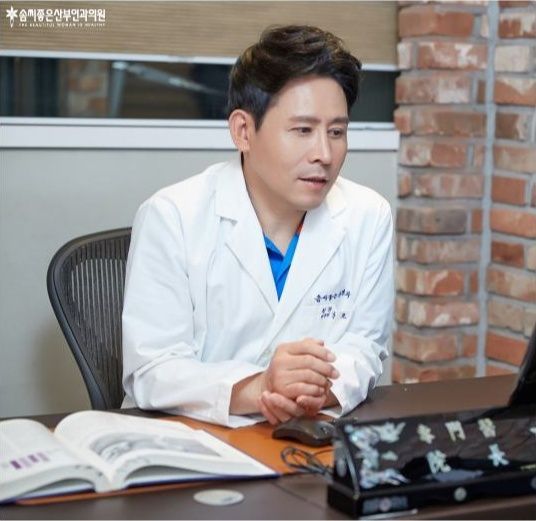
Dr. Yoon Ho-joo, MD, PhD
OB/GYN specialist, Catholic University of Korea. Founder of Somssi Women's Clinic (2000). Published on female sexual function after reconstructive vaginal surgery; speaker at ESSM, ISSWSH, WAS and SMSNA.
Questions patients ask
Frequently asked questions
Short, honest answers. For anything personal, a consultation is the right place to ask.
Does all the mesh have to come out?
Not always. Many women get relief when only the exposed or painful segment is removed and the wall is repaired. Complete removal is reserved for widespread pain, infection or contraction and is usually hospital surgery because the arms pass near the bladder, bowel and nerves. We tell you beforehand which approach we recommend and why.
Can mesh be removed years after it was placed?
Yes. Tissue grows into mesh over time, which makes removal more delicate, but exposure and pain often appear years later and are still treatable. The longer the interval, the more important it is to have your original operation notes and, sometimes, imaging before surgery.
Will my prolapse come back if the mesh is removed?
It can, because the mesh was holding something up. That is why removal is paired with native-tissue reconstruction, either in the same session or as a planned second stage once the tissue has healed. Reconstruction uses your own fascia and muscle, so there is nothing to erode again.
What if the problem is a silicone implant rather than mesh?
Implants placed to tighten the vagina can move, become exposed or feel like a foreign body. These are usually easier to remove through the vagina than mesh, and the canal is then reconstructed. The same assessment and recovery apply.
Will the pain go away completely?
Localized pain from an exposed edge usually improves quickly. Diffuse or nerve-type pain that has lasted years may improve gradually and sometimes incompletely. We are candid about this at consultation and can involve pain specialists at a partner hospital if needed.
Do you place new mesh during revision?
No. The clinic does not use mesh, bands or implants in any of its procedures. Support is rebuilt with your own tissue. If a situation genuinely calls for a synthetic sling for incontinence, we discuss it openly and coordinate with a hospital partner rather than place it here.
Keep reading
Related treatments and guides
- Can Pelvic Organ Prolapse Come Back After Surgery? — why repairs fail and what can be done
- What Surgery Is Used for Pelvic Organ Prolapse? — mesh and native-tissue operations compared
- Pelvic Organ Prolapse Treatment in Korea for Foreigners: Complete Guide — planning a revision visit from abroad
- Pelvic Reconstructive Surgery — how support is rebuilt after removal
- Native Tissue Vaginal Surgery — the no-implant approach
- Vaginal Filler Removal — if the foreign material is filler rather than mesh
- Dr. Yoon Ho-joo — the surgeon leading the revision program
Sources and medical review
- US Food and Drug Administration (FDA) — safety communications and 2019 order on surgical mesh for transvaginal pelvic organ prolapse repair.
- International Urogynecological Association (IUGA) / International Continence Society (ICS) — terminology and classification of complications related to prostheses and grafts in female pelvic floor surgery.
- Te Linde's Operative Gynecology (textbook) — management of complications of pelvic reconstructive surgery.
Next step
A consultation first. A decision only when you are ready.
Tell us what you are experiencing and what you hope to change. Dr. Yoon examines, measures and explains the options, including when no surgery is the right answer. International patients can start with an online consultation before travelling to Seoul.
