Labiaplasty in Korea for Foreigners: Complete Patient Guide
International patients can travel to Korea for labiaplasty after appropriate consultation and medical assessment. The complete process typically includes preliminary consultation, in-person examination, individualized surgical planning, surgery, early postoperative recovery, follow-up in Korea, and continued healing after returning home. At Somssi Women’s Clinic in Seoul, labiaplasty is planned according to each patient's anatomy, asymmetry, concerns, medical history, previous surgery, and desired degree of correction.
Labiaplasty in Korea for Foreigners
Korea has become an important destination for international patients researching cosmetic surgery, women's health treatments, and female intimate procedures.
For patients considering labiaplasty in Korea, traveling overseas creates additional questions beyond the surgery itself.
International patients commonly want to know:
- How labiaplasty works
- How to choose a surgeon in Korea
- How much labiaplasty costs
- Whether Korea is safe for surgery
- Which labiaplasty technique is best
- How long recovery takes
- How long to stay in Korea
- When it is safe to fly home
- Whether scars will be visible
- How postoperative follow-up works
This guide explains the complete process for foreigners considering labiaplasty in Seoul, Korea.
At Somssi Women’s Clinic, international patients can receive individualized consultation and surgical planning based on their anatomy and concerns rather than a standardized one-size-fits-all procedure.
What Is Labiaplasty?
Labiaplasty is a surgical procedure that reshapes or reduces tissue of the labia, most commonly the labia minora.
Patients may consider surgery because of cosmetic concerns, physical discomfort, asymmetry, or a combination of these factors.
Common concerns include:
- Enlarged labia minora
- Long labial tissue
- Significant asymmetry
- Irregular labial edges
- Tissue protrusion
- Friction from clothing
- Irritation during exercise
- Pulling or discomfort
- Postpartum anatomical changes
- Dissatisfaction after previous surgery
The appropriate treatment depends on individual anatomy.
Is It Normal to Have Uneven or Large Labia?
Yes.
There is a very wide range of normal vulvar anatomy.
Labia naturally differ in:
- Size
- Length
- Shape
- Thickness
- Color
- Symmetry
- Degree of visibility
One side can naturally be longer or more prominent than the other.
Having visible or asymmetric labia does not automatically mean there is a medical abnormality.
Labiaplasty is considered when the individual patient feels that the anatomy causes meaningful cosmetic concern, physical discomfort, or both.
Why Do International Patients Consider Labiaplasty in Korea?
Patients may consider Korea because of its established medical infrastructure and large cosmetic and elective treatment sector.
However, location alone should never determine where surgery is performed.
International patients should evaluate the individual:
- Doctor
- Clinic
- Surgical philosophy
- Consultation process
- Technique
- Safety protocols
- Follow-up system
The goal should be finding an appropriate surgeon and treatment plan rather than simply choosing Korea because it is known for cosmetic procedures.
Why International Patients Consider Somssi Women’s Clinic
Somssi Women’s Clinic in Seoul focuses on women's health and female intimate concerns.
For labiaplasty, the approach emphasizes:
- Individual anatomical assessment
- Personalized surgical planning
- Appropriate tissue preservation
- Management of asymmetry
- Careful tissue handling
- Precise suturing
- Private consultation
- Postoperative follow-up
The exact treatment plan is confirmed after medical evaluation.
Who May Consider Labiaplasty?
Patients may seek consultation because of concerns involving appearance or physical discomfort.
Potential reasons include:
- Labial tissue protruding beyond the outer labia
- Significant left-right asymmetry
- Irritation from tight clothing
- Friction while exercising
- Discomfort during certain activities
- Tissue catching or pulling
- Postpartum changes
- Previous unsatisfactory labiaplasty
Consultation helps determine whether surgery is an appropriate option.
Cosmetic vs Functional Labiaplasty
Not every patient has the same reason for surgery.
Cosmetic Concerns
Patients may want to improve:
- Length
- Protrusion
- Edge irregularity
- Asymmetry
- Overall contour
Functional Concerns
Other patients may experience:
- Friction
- Irritation
- Pulling
- Discomfort during exercise
- Discomfort from clothing
Some patients have both cosmetic and functional concerns.
The surgical plan should focus on the patient's actual goals rather than assuming everyone wants the same appearance.
How Do I Choose a Labiaplasty Surgeon in Korea?
Choosing the surgeon is one of the most important decisions.
International patients should consider:
- Relevant surgical experience
- Understanding of vulvar anatomy
- Tissue-preserving approach
- Experience correcting asymmetry
- Suturing technique
- Revision experience
- Communication
- Postoperative management
The doctor should be able to explain why a particular surgical approach is recommended for your anatomy.
Avoid selecting a clinic based only on advertising or discounted pricing.
What Qualifications Should I Look For?
Patients should investigate the doctor's:
- Medical education
- Clinical training
- Relevant specialty experience
- Experience with female genital procedures
- Labiaplasty experience
- Academic or clinical activities
- Surgical approach
Clinical research or academic experience may provide additional context when evaluating a physician.
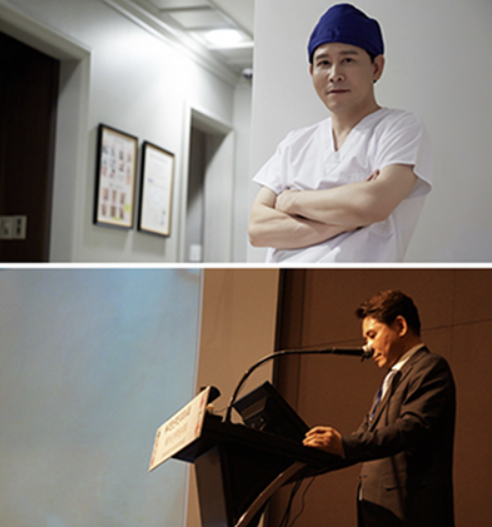
Somssi Women’s Clinic's Dr. Yoon Ho-joo has experience publishing clinical research in international medical literature.
Qualifications should be considered together with surgical experience, consultation quality, and treatment philosophy.
What Happens During a Labiaplasty Consultation?
A proper labiaplasty consultation should include more than receiving a surgery price.
The doctor may discuss:
- Main concerns
- Desired result
- Medical history
- Current medications
- Previous surgery
- Previous labiaplasty
- Allergies
- Anesthesia history
- Functional symptoms
An appropriate physical examination helps evaluate:
- Labial length
- Tissue thickness
- Edge contour
- Asymmetry
- Existing scars
- Previous surgical changes
- Amount of tissue requiring correction
The final surgical plan can then be discussed.
Can Foreign Patients Consult Before Coming to Korea?
A preliminary consultation may be possible before traveling.
International patients may be asked to provide:
- Age
- Nationality
- Medical history
- Current medication
- Previous surgery
- Main concerns
- Desired procedure
- Planned travel dates
Photos may sometimes help with preliminary evaluation when appropriate.
However, photographs cannot fully demonstrate tissue thickness, elasticity, scar quality, or three-dimensional anatomy.
Final surgical recommendations generally require appropriate in-person assessment.
What Is the Best Labiaplasty Technique?
There is no single best labiaplasty technique for everyone.
The appropriate surgical approach depends on:
- Labial shape
- Tissue thickness
- Excess tissue location
- Edge characteristics
- Pigmentation
- Asymmetry
- Previous surgery
- Desired reduction
Common surgical concepts include trim labiaplasty and wedge labiaplasty.
The correct question is therefore not:
“Which labiaplasty technique is best?”
but:
“Which technique is best for my anatomy?”
What Is Trim Labiaplasty?
Trim labiaplasty involves removing excess tissue along the outer labial edge.
It may be considered when the main concern involves:
- Long outer edges
- Irregular margins
- Excess tissue along the labial border
- Certain pigmentation concerns
After the appropriate amount of tissue is removed, the edge is carefully sutured.
The surgeon must avoid excessive tissue reduction.
What Is Wedge Labiaplasty?
Wedge labiaplasty involves removing a wedge-shaped portion of tissue while preserving more of the existing outer labial margin.
The remaining tissue is then brought together and sutured.
This approach may be appropriate for selected anatomical patterns.
The doctor must evaluate tissue thickness, blood supply, tension, and the location of excess tissue before determining whether wedge surgery is suitable.
Trim vs Wedge Labiaplasty: Which Is Better?
Neither is universally better.
Trim may provide more direct reshaping of the outer edge.
Wedge may preserve more of the natural labial margin.
The appropriate method depends on individual anatomy and surgical goals.
International patients should avoid choosing a technique based solely on online before-and-after pictures.
The surgeon should explain why one technique—or a customized approach—is more appropriate.
What Is Customized Labiaplasty?
Customized labiaplasty means the procedure is adapted to the anatomy rather than applying identical correction to every patient.
For example, one side may require more reduction than the other.
Different portions of the labia may also require different degrees of reshaping.
Customized planning can consider:
- Asymmetry
- Tissue thickness
- Edge contour
- Previous surgery
- Patient goals
- Tissue preservation
This individualized approach is important because natural anatomy is rarely perfectly symmetrical.
Why Tissue Preservation Matters
More tissue removal does not automatically mean a better result.
Over-resection can be difficult to correct.
A careful surgical plan considers:
- How much should be removed
- How much should remain
- Natural contours
- Symmetry
- Functional anatomy
- Long-term appearance
The objective should generally be appropriate correction rather than maximum reduction.
Why Suturing Technique Matters
Labiaplasty involves delicate tissue.
The method used to close the incision can influence early healing and final contour.
Precise suturing can help:
- Align tissue edges
- Control tension
- Support wound healing
- Reduce unnecessary irregularity
Somssi Women’s Clinic emphasizes careful tissue handling and precise closure as part of the surgical approach.
Is Labiaplasty in Korea Safe for Foreigners?
Labiaplasty can be considered by appropriately selected international patients, but no surgical procedure is completely risk-free.
Safety depends on:
- Patient selection
- Medical assessment
- Surgeon experience
- Surgical technique
- Sterile operating conditions
- Appropriate anesthesia
- Postoperative care
- Patient compliance
International patients also need to consider how long they will remain in Korea for postoperative monitoring.
What Are the Risks of Labiaplasty?
Possible risks can include:
- Swelling
- Bruising
- Bleeding
- Infection
- Temporary discomfort
- Delayed healing
- Wound separation
- Scarring
- Asymmetry
- Sensory changes
- Dissatisfaction
- Need for additional treatment
Individual risk varies according to anatomy, health, surgical technique, and recovery.
The doctor should discuss relevant risks before surgery.
What Medical Information Should I Tell the Clinic?
Disclose all relevant medical information.
This can include:
- Chronic medical conditions
- Previous surgery
- Current medications
- Prescription injections
- Supplements
- Medication allergies
- Previous anesthesia reactions
- Smoking or nicotine
- Pregnancy possibility
- History of poor wound healing
Do not stop prescription medications without appropriate medical guidance.
What Type of Anesthesia Is Used?
Depending on the planned procedure and patient, labiaplasty may be performed using local anesthesia.
The appropriate anesthesia method should be selected after medical assessment.
Tell the medical team about:
- Previous anesthesia reactions
- Medication allergies
- Relevant illnesses
- Current medication
The doctor can then determine an appropriate anesthesia plan.
Is Labiaplasty Same-Day Surgery?
Some patients may be able to return to their accommodation on the same day following an appropriate observation period.
However, same-day discharge does not mean recovery is complete.
Patients still need:
- Rest
- Medication
- Wound care
- Activity restrictions
- Follow-up
The discharge plan depends on the individual surgery and patient condition.
How Painful Is Labiaplasty Recovery?
Patients may experience:
- Tenderness
- Stinging
- Tightness
- Pressure
- Sensitivity
during early recovery.
The intensity differs by patient.
Discomfort is often more noticeable during the first several days and gradually improves.
Medication should be taken according to the clinic's instructions.
How Long Does Labiaplasty Recovery Take?
Recovery occurs gradually.
Many patients return to light daily activities within several days, although swelling and sensitivity can remain for longer.
A general recovery pattern may involve:
First few days: swelling, tenderness, rest.
First week: gradual return to light activity.
2–4 weeks: continued reduction in swelling and increased comfort.
Several weeks: gradual return to higher-impact activities when medically appropriate.
Several months: continued scar maturation and tissue settling.
Individual recovery varies.
How Long Does Swelling Last?
Swelling is usually most noticeable during the early postoperative period.
It gradually decreases over several weeks.
One side may temporarily appear more swollen than the other.
This does not automatically indicate a permanent asymmetry.
Patients should avoid judging the final surgical result during the first few weeks.
How Long Should Foreigners Stay in Korea After Labiaplasty?
There is no universal requirement.
International patients should remain long enough for initial recovery and the recommended postoperative follow-up.
The appropriate stay depends on:
- Surgical complexity
- Healing
- Revision vs primary surgery
- Additional procedures
- Travel distance
- Follow-up schedule
Some travelers may plan approximately a week or longer, while others may require a different schedule.
The treating doctor should advise the individual patient.
Is 7 to 10 Days in Korea Enough?
For some international patients, approximately 7–10 days may provide a practical period for early recovery and follow-up.
However, it should not be interpreted as a universal medical rule.
Patients undergoing more complex or revision procedures may require additional time.
Do I Need to Stay Two Weeks?
Not necessarily.
Some patients choose to remain in Korea for approximately two weeks because it allows additional recovery time.
A longer stay may be particularly useful for:
- Revision cases
- More extensive correction
- Combined procedures
- Long-distance travelers
- Patients who want additional postoperative observation
The appropriate duration should be individualized.
When Can I Fly After Labiaplasty?
The patient should discuss the planned flight with the treating doctor.
The decision depends on:
- Healing
- Swelling
- Bleeding
- Wound condition
- Flight duration
- Overall health
Long-haul travel is particularly important to plan carefully because it may involve prolonged sitting and extensive airport walking.
Can I Fly Home Immediately After Surgery?
International patients should not assume immediate long-distance travel is appropriate.
Even if the operation is outpatient surgery, the tissue still requires recovery.
The first few days are also when swelling and discomfort can be more noticeable.
Remaining near the clinic during early recovery can make postoperative management easier.
Can I Go Sightseeing After Labiaplasty?
Intensive sightseeing should generally be avoided during early recovery.
Seoul often involves substantial walking.
Excessive walking may increase:
- Swelling
- Friction
- Tenderness
- Discomfort
Light activity can gradually resume according to the patient's condition and medical advice.
Medical recovery should come before tourism.
When Can I Return to Work?
Patients with desk-based work may potentially return within several days to around one week depending on comfort.
More physically demanding jobs may require longer.
Patients should consider whether their work involves:
- Standing
- Heavy lifting
- Exercise
- Extensive walking
- Long periods of sitting
The individual recovery plan should determine the return date.
When Can I Exercise?
Exercise should be restricted during early healing.
Activities that produce friction, pressure, or stretching around the surgical area require additional recovery.
Examples include:
- Running
- Weightlifting
- Cycling
- Pilates
- Horseback riding
- High-intensity training
Return to exercise should be gradual and medically guided.
When Can I Have Sex After Labiaplasty?
Sexual activity generally requires more healing than ordinary walking or desk work.
Intercourse creates pressure, stretching, and friction around the surgical area.
Patients should wait until their surgeon confirms that the tissue has healed sufficiently.
This commonly requires several weeks, but the exact timing differs between patients.
Does Labiaplasty Leave Scars?
Yes.
Every surgical incision creates scar tissue.
However, scar visibility may decrease as healing progresses.
Scar appearance depends on:
- Technique
- Incision location
- Suturing
- Tissue tension
- Wound healing
- Infection
- Individual biology
Patients should avoid clinics promising completely “scarless” surgical labiaplasty.
How Long Do Labiaplasty Scars Take to Fade?
Scar maturation occurs over months.
During early recovery, the incision may appear:
- Pink
- Red
- Firm
- Slightly raised
- Irregular
The scar generally softens and becomes less noticeable with time.
Final scar appearance should not be judged during early recovery.
How Much Does Labiaplasty Cost in Korea?
The cost of labiaplasty in Korea varies according to the individual surgical plan.
Factors may include:
- Primary vs revision surgery
- One-sided vs bilateral correction
- Amount of tissue reduction
- Surgical complexity
- Anesthesia
- Additional procedures
- Postoperative care
Somssi Women’s Clinic confirms the final treatment cost after appropriate assessment.
International patients should ask what is included in the quotation rather than comparing advertised prices alone.
Is Labiaplasty Cheaper in Korea Than the USA?
Some patients find elective surgery in Korea competitively priced compared with major cities in the United States and other countries.
However, total medical-tourism cost also includes:
- Flights
- Accommodation
- Transportation
- Food
- Recovery time
- Follow-up
Price should not be the primary reason for choosing a surgeon.
Surgical experience, safety, communication, technique, and follow-up are more important considerations.
What Should Be Included in My Labiaplasty Quote?
Ask whether the quotation includes:
- Consultation
- Surgery
- Anesthesia
- Medication
- Postoperative examinations
- Suture management
- Additional treatment
- International patient assistance
Patients should understand the expected total treatment cost before scheduling surgery.
Should I Choose the Cheapest Clinic?
Not necessarily.
A low price does not guarantee poor surgery, and a high price does not guarantee excellent surgery.
Instead, compare:
- Doctor qualifications
- Surgical experience
- Treatment philosophy
- Technique
- Consultation
- Postoperative care
- Communication
- Total quotation
Labiaplasty removes tissue that may be difficult to restore, making careful first-time surgery particularly important.
What Should I Pack for Labiaplasty in Korea?
International patients should prioritize comfort.
Useful items may include:
- Loose pants
- Loose skirts or dresses
- Comfortable underwear
- Easy-to-wear clothing
- Prescription medication
- Medical records if relevant
- Passport and travel documents
- Phone charger
Avoid relying exclusively on tight jeans or restrictive clothing during early recovery.
Where Should I Stay in Seoul?
Convenient accommodation can make postoperative recovery easier.
Consider:
- Distance from the clinic
- Elevator access
- Private bathroom
- Comfortable bed
- Easy taxi pickup
- Nearby convenience stores
- Food delivery availability
Staying relatively close to the clinic may be preferable if several postoperative visits are planned.
Can I Travel Alone for Labiaplasty?
Some patients travel alone.
Whether this is appropriate depends on the patient's general health, surgery, comfort level, and postoperative needs.
Patients traveling alone should have:
- Reliable phone service
- Clinic contact details
- Convenient accommodation
- Transportation
- Food access
- Clear medication instructions
Ask the clinic whether a companion is recommended for the immediate postoperative period.
What Happens If I Have a Problem After Returning Home?
Before surgery, international patients should know how to contact the Korean clinic after leaving Korea.
Remote communication may be useful for routine recovery questions.
However, serious symptoms require appropriate local medical care.
Potential warning signs include:
- Significant bleeding
- Rapidly worsening swelling
- Severe or increasing pain
- Fever
- Increasing redness
- Significant discharge
- Wound separation
Urgent symptoms should not be managed solely through photographs or online messages.
Can I Have Online Follow-Up?
When available, online follow-up can help international patients communicate routine questions or recovery concerns after returning home.
Photos may sometimes help demonstrate healing.
However, remote communication does not replace an in-person examination when a meaningful complication is suspected.
What About Revision Labiaplasty in Korea?
Some foreign patients travel to Korea because they are dissatisfied with previous labiaplasty.
Revision surgery may involve:
- Scar tissue
- Asymmetry
- Residual excess tissue
- Excessive previous reduction
- Irregular contours
- Wound-related changes
Revision surgery can be more complicated because the surgeon must work with the remaining tissue.
An in-person examination is particularly important.
Can Over-Resected Labia Be Completely Restored?
Not always.
When excessive tissue has previously been removed, reconstructive options may be limited by the amount of remaining healthy tissue.
This is one reason conservative planning and tissue preservation are so important during primary labiaplasty.
Revision goals should focus on realistic improvement rather than guaranteed complete restoration.
What Questions Should Foreign Patients Ask Before Booking?
Important questions include:
Who will perform my surgery?
What technique do you recommend?
Why is that technique appropriate for my anatomy?
How much tissue will be removed?
How will asymmetry be corrected?
What type of anesthesia will be used?
What are the possible risks?
How long should I stay in Korea?
When can I fly home?
When can I exercise?
When can I have sex?
What does the price include?
How can I contact the clinic after returning home?
Clear answers help international patients make a more informed decision.
Red Flags When Choosing a Clinic in Korea
International patients should be cautious if a clinic:
- Guarantees perfect symmetry
- Promises zero scars
- Guarantees zero complications
- Cannot identify the surgeon
- Refuses to explain the surgical technique
- Avoids discussing risks
- Recommends aggressive surgery without proper examination
- Focuses only on discounts
- Pressures patients to book immediately
- Provides unclear postoperative instructions
Responsible cosmetic surgery requires realistic communication.
What Does a Good Labiaplasty Result Look Like?
There is no single ideal appearance.
A satisfactory result should be evaluated according to the patient's anatomy and original concerns.
Potential goals include:
- Improved symmetry
- Appropriate reduction
- More balanced contour
- Reduced unwanted protrusion
- Improved functional comfort when applicable
- Preservation of healthy tissue
Perfect anatomical symmetry should not be promised.
How Somssi Women's Clinic Approaches International Labiaplasty Patients
At Somssi Women’s Clinic in Seoul, international patient treatment begins with individualized evaluation.
The surgical plan considers:
- Patient concerns
- Individual anatomy
- Labial asymmetry
- Tissue thickness
- Previous surgery
- Medical history
- Desired degree of correction
- Tissue preservation
- Surgical technique
- Postoperative recovery
- International travel schedule
The clinic's approach emphasizes careful surgical planning and precise tissue handling rather than treating labiaplasty as a standardized procedure.
Example Labiaplasty Medical Tourism Journey
A typical international patient's journey may follow this general sequence:
Before Coming to Korea
Contact the clinic and provide relevant information for preliminary consultation.
Arrival in Seoul
Settle into accommodation and prepare for consultation.
In-Person Consultation
Meet the doctor, undergo appropriate examination, and confirm whether surgery is recommended.
Surgical Planning
Discuss technique, anesthesia, tissue correction, risks, expected recovery, and price.
Surgery
Undergo the planned labiaplasty procedure.
Early Recovery
Rest and follow postoperative wound-care and activity instructions.
Follow-Up
Return to the clinic according to the recommended schedule.
Return Home
Fly home once the treating medical team considers travel appropriate.
Continued Recovery
Continue following restrictions and postoperative instructions until healing is sufficiently complete.
Individual schedules vary.
Frequently Asked Questions About Labiaplasty in Korea for Foreigners
Can foreigners get labiaplasty in Korea?
Yes. International patients can seek consultation and surgery in Korea if they are medically suitable candidates.
Is labiaplasty in Korea safe for international patients?
It can be appropriately performed in selected patients, but all surgery carries risks. Surgeon selection, medical assessment, technique, postoperative care, and follow-up are important.
How much does labiaplasty cost in Korea?
Cost varies according to anatomy, surgical complexity, primary versus revision surgery, anesthesia, and other treatment factors. The final price should be confirmed after consultation.
What is the best labiaplasty technique?
There is no universally best technique. Trim, wedge, or customized surgical planning may be appropriate depending on the patient's anatomy.
Is trim or wedge labiaplasty better?
Neither is universally superior. The appropriate method depends on tissue characteristics, edge shape, asymmetry, and desired correction.
How long does labiaplasty recovery take?
Many patients resume light daily activity within several days, while swelling and tissue healing continue for several weeks or longer.
How long should I stay in Korea?
The ideal stay depends on the procedure and follow-up schedule. International patients should remain long enough for appropriate early recovery and postoperative assessment.
Is 7–10 days enough in Korea?
It may be practical for some uncomplicated cases, but individual medical guidance should determine the final schedule.
Can I fly immediately after surgery?
Patients should not assume immediate long-haul travel is appropriate. Discuss the departure date with the surgeon.
Does labiaplasty leave scars?
Yes. All surgical incisions create scars, although they may become less noticeable as healing progresses.
When can I exercise?
Exercise should be restricted during early recovery and resumed gradually according to medical guidance.
When can I have sex?
Sexual activity should wait until the surgical area has healed sufficiently and the treating doctor confirms it is appropriate.
Can I consult before traveling?
A preliminary online consultation may help with planning, but final surgical recommendations usually require appropriate in-person examination.
Can I get surgery on the same day as consultation?
This may sometimes be possible depending on medical suitability, required evaluation, and clinic availability, but surgery should not be guaranteed before examination.
Can I travel alone?
Some patients do, but the appropriateness depends on the procedure, health, and postoperative needs.
Can I go sightseeing after surgery?
Light activity may gradually resume, but extensive sightseeing and walking should be avoided during the early recovery period.
Can I have revision labiaplasty in Korea?
Revision surgery may be possible depending on remaining tissue, scars, anatomy, and previous procedures. Direct examination is especially important.
How do I choose the best labiaplasty surgeon in Korea?
Focus on relevant experience, understanding of anatomy, tissue preservation, precise surgical technique, realistic communication, and postoperative management rather than marketing claims alone.
What should I bring to Korea?
Bring identification, prescription medications, relevant medical information, comfortable loose clothing, travel documents, and any previous surgical records that may help the doctor.
What happens after I return home?
Continue your postoperative restrictions and follow the clinic's recovery instructions. Contact the clinic with routine concerns and obtain local in-person medical care when necessary.
Plan Labiaplasty in Korea With Somssi Women’s Clinic
For international patients, labiaplasty in Korea involves much more than booking surgery.
A well-planned medical journey includes:
preliminary consultation → in-person examination → individualized surgical planning → surgery → early recovery → postoperative follow-up → safe return home → continued healing
Patients should choose their surgeon carefully, understand the proposed technique, disclose their medical history, allow adequate recovery time, and maintain realistic expectations regarding swelling, scars, symmetry, and final results.
At Somssi Women’s Clinic in Seoul, labiaplasty planning is individualized according to anatomy, tissue characteristics, asymmetry, previous surgery, patient concerns, and desired outcome.
For foreigners traveling to Korea, the treatment plan can also incorporate travel dates, postoperative appointments, expected recovery, and the appropriate timing for returning home.