
Vaginoplasty & Tightening · Treatment
Vaginal Stenosis Treatment (Vaginal Opening Expansion) in Seoul
Vaginal stenosis is a narrowing of the vagina that makes intercourse or examination painful or impossible. It most often follows menopause, scarring after an over-tight vaginal surgery, or pelvic radiotherapy. Somssi Women's Clinic in Gangnam, Seoul treats it surgically with vaginal dilatation and opening expansion: scar tissue is released, the entrance or inner canal is widened and the area is closed with your own tissue so it heals supple. You go home the same day.
Medically reviewed by Dr. Yoon Ho-joo, MD, PhD, OB/GYN specialist, Somssi Women's Clinic · Last updated October 2026

At a glance
Key facts
The essentials, based on how Somssi Women's Clinic performs this procedure or answers this question. Your plan is confirmed at consultation.
- Procedure time: Under 1 hour
- Anesthesia: Sedation plus long-acting local, or local alone
- Hospital stay: None; discharged once you have urinated
- Back to work: Next day
- Intercourse: After 7–8 weeks, when the widened tissue is soft
- Types: Opening expansion, inner (mid-canal) dilatation, or full-length dilatation
- Who it suits: Post-menopausal narrowing, over-tight prior surgery, scarring at the entrance
Vaginal stenosis treatment at a glance
Widens a narrowed opening or canal after menopause, over-tight surgery or scarring, so intercourse is possible again.
- vaginal stenosis treatment
- narrow vagina after menopause
- painful intercourse
- vaginal opening expansion
- over-tight vaginoplasty
- vaginal atrophy Korea
- Under 1 hourProcedure time
- Sedation + localAnesthesia
- Same dayDischarge
- After 7–8 weeksIntercourse
- Locate the narrowingOpening, mid-canal or full length.
- Release scarTight bands divided.
- Expand and reconstructOpening expansion or dilatation.
- Keep it softEstrogen and gentle dilation after healing.
Illustration: Somssi Women's Clinic, Seoul. Schematic, not to scale; your plan is set by Dr. Yoon Ho-joo after examination.
What is vaginal stenosis?
Vaginal stenosis means the vagina has become narrower, shorter or less elastic than it should be. The entrance may be too small to allow intercourse, the mid-canal may be constricted by a band of scar, or the whole vagina may have shrunk and lost its folds. Women describe tearing pain at the opening, a feeling of hitting a wall, bleeding after intercourse, or pain during a speculum examination.
The commonest causes are the loss of estrogen after menopause, which thins and shrinks the vaginal lining; scarring after a previous vaginal operation that removed too much tissue at the entrance; healing after childbirth tears; and pelvic radiotherapy. Skin conditions such as lichen sclerosus can also narrow the opening. Somssi Women's Clinic, a surgical gynecology clinic in Gangnam, Seoul founded in 2000 and led by Dr. Yoon Ho-joo, MD, PhD, treats stenosis as part of its menopause and revision programs.
Stenosis after menopause develops gradually. Without estrogen the vaginal lining loses its folds, blood supply and elasticity, the canal shortens, and the entrance can shrink to the point where even a small speculum is painful. A long gap in sexual activity accelerates the process, which is why the clinic sees many women in their fifties and sixties who want to resume intimacy after years without it.
Who is a good candidate?
- Pain or inability to have intercourse because the entrance is too small, especially after menopause or a long gap in sexual activity
- A "chin-like" ridge or tight band at the opening after vaginal tightening or labial surgery elsewhere
- Repeated small tears or chronic wounds at the entrance that reopen with intercourse
- A canal that feels blocked part-way in, with the upper vagina still open
- Shortening and loss of elasticity after pelvic radiotherapy, once your oncology team agrees
- A narrowed entrance combined with a loose interior, which needs both widening and tightening
Mild post-menopausal dryness and tightness often respond to local estrogen and vaginal moisturizers before surgery is considered, and Dr. Yoon will discuss hormone options with you first where appropriate. See our pages on menopause treatments and hormone replacement therapy.
How Somssi performs vaginal stenosis surgery
Diagnosis
A gentle vaginal examination and pelvic ultrasound establish where the narrowing is, how thin or atrophic the mucosa has become, whether scar tissue is responsible, and what the rest of the canal looks like. Many women who were narrowed by surgery elsewhere turn out to have a tight entrance in front of a wide, untreated upper vagina.
Dr. Yoon also asks about your history in detail: what operation was done before and by whom, whether radiotherapy was given, how long since your last intercourse, and whether you have ever used local estrogen. These details change the plan.
Choosing the right dilatation
The clinic tailors the operation to the site of the problem:
- Opening expansion for an entrance that is too small or painful, with chronic wounds or swelling
- Inner dilatation when the canal is blocked or constricted in its middle or deep section
- Full dilatation when the whole vagina is too small for intercourse
Releasing scar and widening with your own tissue
Scar bands are released and excised, the narrowed segment is opened, and the edges of healthy mucosa are brought together across the gap with fine absorbable sutures so the widened area is lined by your own tissue rather than left raw. No grafts of foreign material, mesh or filler are used. If a loose interior is found behind a tight entrance, minimal mucosal peeling and pelvic muscle restoration can be added so the canal ends up one consistent size.
Hormonal support
After menopause the clinic may recommend estrogen, as tablets or vaginal cream, to help the lining thicken and stay supple after surgery, tailored to your history and any contraindications such as breast or endometrial cancer.
Anesthesia, duration and hospital stay
Stenosis surgery takes under an hour under sedation combined with long-acting local anesthetics, or under local anesthesia alone. A non-narcotic anti-inflammatory is injected at the end. You walk immediately and are discharged once you have urinated; there is no hospital stay. Fast for 2 hours beforehand if sedation is planned.
Recovery timeline
| When | What you can do |
|---|---|
| Same day | Shower, walk, go home |
| Days 1–5 | Daily life and desk work; medication for about 5 days |
| About 1 week | Sutures dissolve; light sport |
| 6 weeks | Vigorous exercise, bathing, sauna |
| 7–8 weeks | Intercourse, gently at first, once the tissue is soft |
Keeping the widened opening supple during healing matters; Dr. Yoon will advise you individually on moisturizers, local estrogen and whether any gentle stretching is appropriate as the scar matures. Follow-up can be done remotely for patients abroad.
Shower daily and pat the area dry. Avoid tight clothing, cycling and anything inserted into the vagina until the clinic clears you. If local estrogen cream has been prescribed, it is usually started once the wound has closed and continued long term to keep the lining supple.
Results and what to expect
The goal is an entrance and canal that admit intercourse and examination comfortably, lined by healthy tissue and in proportion to the rest of the vagina. Women whose only problem was a scar band at the opening usually notice the difference as soon as healing is complete. Women with atrophy after menopause see the best results when surgery is combined with hormonal support.
Women with a loose interior behind a tight entrance often report the greatest change, because both problems are corrected in one session and the canal ends up one consistent size from the cervix to the opening.
Results vary. Scar tissue can re-form, especially after radiotherapy or in women who form thick scars, and tissue continues to change with age. The clinic reviews your result at around eight weeks and adjusts aftercare if the opening is tightening again.
Risks and how we reduce them
Risks include bleeding, infection, wound separation, re-narrowing as the scar matures, a new tender scar, altered sensation, pain with intercourse, and, where the narrowing is deep, injury to the rectum or bladder. Women treated after radiotherapy heal more slowly and carry higher risks. Sedation carries standard anesthesia risks.
We reduce these risks by excising only scar, lining the widened area with your own mucosa rather than leaving a raw surface, avoiding any foreign material, supporting the tissue hormonally where appropriate, and reviewing healing early so re-narrowing can be addressed before it becomes fixed.
Why international patients choose Somssi
Dr. Yoon has treated post-menopausal and post-surgical stenosis for more than 25 years and has published research on sexual function in women attending a community gynecology clinic. The clinic has been registered with the Ministry of Health and Welfare for foreign patients since 2011, offers English consultations and same-day discharge, and is 100 meters from Gangnam Station Exit 1. See our international patients page or contact us to describe your situation.
Private consultation
Talk it through with Dr. Yoon's team
English-speaking coordinators, a written treatment plan and a clear quote after your consultation. Same-day discharge for most procedures.
Mon, Tue, Wed, Fri, Sat 09:30–18:00 (KST). Closed Thu, Sun and holidays. 7F Sangkyung Building, 120 Teheran-ro, Gangnam-gu, Seoul.
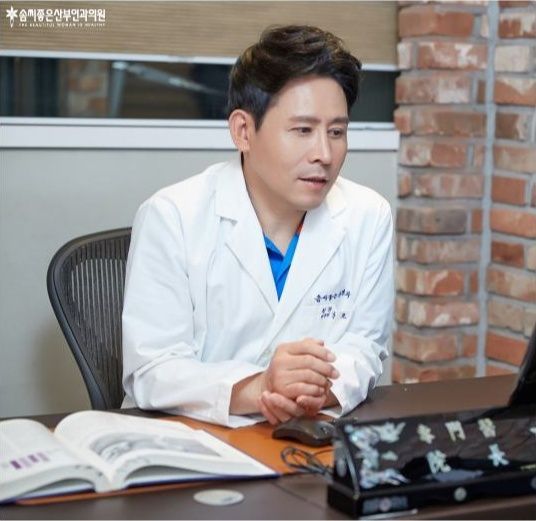
Dr. Yoon Ho-joo, MD, PhD
OB/GYN specialist, Catholic University of Korea. Founder of Somssi Women's Clinic (2000). Published on female sexual function after reconstructive vaginal surgery; speaker at ESSM, ISSWSH, WAS and SMSNA.
Questions patients ask
Frequently asked questions
Short, honest answers. For anything personal, a consultation is the right place to ask.
Can vaginal stenosis be treated without surgery?
Mild narrowing from menopause often improves with local estrogen, vaginal moisturizers and lubricants, and graded dilator use, and these are tried first when appropriate. Stenosis caused by a firm scar band or by an entrance that was surgically over-tightened rarely stretches open on its own, and surgery to release the scar is then the reliable option. Dr. Yoon will tell you which situation applies.
My previous vaginal surgery left the opening too tight. Can it be fixed?
Yes. This is one of the most common reasons women come to the clinic for revision. The scar band at the entrance is released and the opening is expanded to match the canal behind it. If the inside was never treated and is still loose, it can be tightened in the same session so the whole vagina ends up one consistent size.
I am in my sixties and have not had intercourse for years. Is it too late?
No. Many of the clinic's patients are post-menopausal women who want to resume intimacy after a long gap. The approach is to confirm how much is atrophy and how much is scarring, widen what needs widening, tighten any loose interior and support the lining with hormones where safe. Honest counseling about expectations is part of the consultation.
Will the vagina narrow again after surgery?
It can, particularly after radiotherapy or in women who form thick scars, and ongoing atrophy after menopause works against any repair. Lining the widened area with your own mucosa, hormonal support and early review reduce the chance of re-narrowing. If it does recur, a further release is possible.
Is stenosis surgery painful?
Long-acting local anesthetics and an anti-inflammatory injection mean most women are comfortable on waking and walk out the same day. Soreness at the entrance for the first week is normal and is managed with oral medication for about five days. Fever, heavy bleeding or increasing pain are not normal and should be reported to the clinic.
Keep reading
Related treatments and guides
- Vaginoplasty (Vaginal Tightening Procedure) — when a tight entrance hides a loose interior
- Perineal Scar Revision — releasing scar bands at the opening
- How Long Does Vaginoplasty Recovery Take? — the shared healing schedule
- Is Vaginoplasty in Korea Safe? — risks of vaginal surgery and how they are managed
- Who Is a Good Candidate for Vaginoplasty? — post-menopausal patients and combined repair
- Menopause Treatments — hormonal support for atrophic tissue
- International Patients — consultation and follow-up from abroad
Sources and medical review
- Yoon H.J. et al. Characteristics of hypoactive sexual desire disorder in Korean women attending a community gynecology clinic. Journal of Obstetrics and Gynaecology, 2018. DOI 10.1080/01443615.2017.1389866.
- Te Linde's Operative Gynecology (textbook), vaginal reconstruction and management of vaginal stricture.
- American College of Obstetricians and Gynecologists (ACOG), guidance on genitourinary syndrome of menopause and vaginal estrogen.
Next step
A consultation first. A decision only when you are ready.
Tell us what you are experiencing and what you hope to change. Dr. Yoon examines, measures and explains the options, including when no surgery is the right answer. International patients can start with an online consultation before travelling to Seoul.
