
General Gynecology · Treatment
Menopause Treatment in Seoul: Symptom Relief and Whole-Person Care
Menopause treatment relieves hot flashes, sleep disturbance, mood changes, vaginal dryness and painful sex, and protects long-term bone and heart health, using hormone therapy, non-hormonal medicines, local vaginal estrogen, lifestyle measures and, where atrophy or laxity has changed the vagina, reconstructive surgery. Somssi Women's Clinic in Gangnam, Seoul combines Dr. Yoon Ho-joo's postmenopausal program with individualized estrogen, progesterone and testosterone options so that care matches your symptoms, not a template.
Medically reviewed by Dr. Yoon Ho-joo, MD, PhD, OB/GYN specialist, Somssi Women's Clinic · Last updated October 2026

At a glance
Key facts
The essentials, based on how Somssi Women's Clinic performs this procedure or answers this question. Your plan is confirmed at consultation.
- Definition: 12 months without a period; average age about 50, with perimenopause often starting in the mid-40s
- First visit: history, examination, pelvic ultrasound and blood tests as needed, about 30–45 minutes
- Hormonal options: estrogen, estrogen plus progesterone, low-dose testosterone, tablets or vaginal creams
- Non-hormonal options: prescription medicines for hot flashes, moisturizers and lubricants, pelvic floor training
- Surgical options: vaginal dilatation, opening expansion or tightening for atrophy, stenosis or laxity; same-day discharge
- Who it suits: women in perimenopause, natural menopause, early menopause or after hysterectomy
- Performed by: Dr. Yoon Ho-joo, MD, PhD, OB/GYN specialist since 2000
Menopause treatment at a glance
Relief for hot flashes, sleep, mood and vaginal dryness, plus protection for long-term bone and heart health.
- menopause treatment Korea
- hot flashes Seoul
- perimenopause
- vaginal dryness menopause
- early menopause
- menopause clinic English
- 30–45 minFirst visit
- Hormonal or notOptions
- Vaginal estrogenLocal care
- Atrophy or stenosis repairSurgical options
- AssessHistory, ultrasound and blood tests.
- Choose therapyHormonal, non-hormonal or local.
- Treat the vaginaMoisturizers, estrogen or surgery.
- ReviewAdjust at 3 months, then yearly.
Illustration: Somssi Women's Clinic, Seoul. Schematic, not to scale; your plan is set by Dr. Yoon Ho-joo after examination.
What is menopause, and what does treatment involve?
Menopause is the point at which the ovaries stop releasing eggs and estrogen production falls; it is diagnosed after 12 consecutive months without a period, on average around age 50. The years of fluctuating hormones beforehand are called perimenopause, and the time afterward is postmenopause. Menopause can also arrive early, before 40, or abruptly after surgery or cancer treatment.
About three in four women have symptoms, and for roughly one in four they are severe enough to affect work, relationships and sleep. Treatment is not one medicine but a plan: relieving the symptoms that bother you most, protecting your bones, heart and pelvic floor, and addressing the vaginal and sexual changes that many women are never asked about.
Somssi Women's Clinic is a surgical gynecology clinic in Gangnam, Seoul, founded in 2000 and led by Dr. Yoon Ho-joo, MD, PhD. The clinic's postmenopausal program is unusual in treating both ends of the problem: hormone and non-hormone therapy for systemic symptoms, and reconstructive surgery for the vaginal atrophy, narrowing or laxity that medicine alone cannot reverse.
Who should seek menopause treatment?
- Hot flashes and night sweats that disturb sleep or daily life
- Low mood, anxiety, irritability or "brain fog" that began with cycle changes
- Vaginal dryness, burning, itching, pain with intercourse or recurrent urinary infections (the genitourinary syndrome of menopause)
- A vagina that has become too narrow or short for comfortable intercourse after years without sex
- Loss of sexual desire or difficulty with arousal and orgasm
- Urinary urgency, leakage or a feeling of pelvic heaviness
- Early menopause (before 45) or surgical menopause, where treatment is particularly important for bone and heart health
- Irregular, heavy or unpredictable bleeding in perimenopause, which should be evaluated rather than assumed to be normal
What happens at your first visit
Dr. Yoon takes a detailed history of your symptoms, cycles, medical and family history (breast cancer, blood clots, heart disease, osteoporosis) and sexual health. Examination includes a gentle vaginal inspection to assess the mucosa for thinning and atrophy, and a pelvic ultrasound of the uterus and ovaries. Blood tests are not needed to diagnose menopause after 45 but may be used in younger women or to check thyroid, lipids, glucose and vitamin D.
If you are due for cervical screening, it can be done in the same visit, and a mammogram and bone density scan can be arranged through partner facilities. You then leave with a written plan that may combine several of the options below.
Treatment options at a glance
| Problem | Options | Notes |
|---|---|---|
| Hot flashes, night sweats | Menopausal hormone therapy; non-hormonal medicines (certain antidepressants, gabapentin, neurokinin-receptor antagonists where available); cognitive behavioral therapy; cooling and trigger avoidance | Hormone therapy is the most effective; non-hormonal options suit women who cannot or prefer not to use hormones |
| Vaginal dryness, painful sex | Low-dose vaginal estrogen; regular moisturizers and lubricants; vaginal DHEA or ospemifene where available | Local estrogen is safe for most women, including many who cannot take systemic hormones |
| Narrow, short or scarred vagina | Dilators with local estrogen; surgical vaginal dilatation or opening expansion | Surgery is considered when dilators and estrogen are not enough |
| Vaginal laxity, prolapse, incontinence | Pelvic floor training; pessary; posterior vaginal repair with hysteropexy | Own-tissue repair; no mesh or implants |
| Low desire | Address pain and sleep first; counseling; low-dose testosterone for postmenopausal hypoactive sexual desire disorder | Testosterone given at a fraction of male doses, with monitoring |
| Bone and heart health | Calcium, vitamin D, weight-bearing exercise, bone density monitoring; hormone therapy prevents bone loss | Especially important in early menopause |
Hormone therapy
Menopausal hormone therapy (MHT, also called HRT) remains the most effective treatment for hot flashes and night sweats and also treats vaginal symptoms and prevents bone loss. Estrogen is given alone after hysterectomy and with progesterone when the uterus is present, by tablet, patch, gel or vaginal cream. For most healthy women who start before 60 or within 10 years of menopause, benefits outweigh risks. The clinic also offers low-dose testosterone for postmenopausal low desire, an area Dr. Yoon has researched and published on.
Hormone therapy is not for everyone: a history of breast cancer, blood clots, stroke or unexplained bleeding changes the calculation. Our hormone replacement therapy page explains the types, routes, benefits, risks and who should avoid it in detail, and our hormonal imbalance treatments page covers the wider hormonal picture.
Non-hormonal care
If hormones are unsuitable or unwanted, several prescription medicines reduce hot flashes by roughly half, and cognitive behavioral therapy improves both flashes and sleep. For the vagina, regular use of a moisturizer two or three times a week plus a lubricant for intercourse makes a real difference, and pelvic floor physiotherapy helps urgency, mild leakage and pain. Sleep hygiene, strength training, limiting alcohol and stopping smoking all reduce symptoms and protect long-term health.
When the vagina itself has changed: surgical options
Years of low estrogen thin the vaginal lining, reduce blood flow and can narrow or shorten the canal, especially after a long gap without intercourse. At the same time, earlier childbirth and aging may have loosened the pelvic floor, so some women experience both dryness and laxity, or a tight opening with a loose interior. Hormones and dilators often help, but when they do not, Dr. Yoon's postmenopausal program offers customized surgery:
- Vaginal dilatation of the opening, the inner canal or both, for a vagina that is too small or blocked for comfortable intercourse; see vaginal stenosis
- Vaginal opening expansion for a small, painful entrance that tears or swells
- Tightening of a loose interior with minimal mucosal peeling and pelvic muscle restoration, as described on our vaginoplasty page
These are own-tissue procedures lasting about an hour under sleep plus local anesthesia, with same-day discharge. The clinic reports that in the thickened lower wall, blood vessels and nerves regenerate over the following months, with improved sensation and lubrication; results vary, and the usual surgical risks of bleeding, infection and altered sensation apply. Dr. Yoon's 2005 study of colpoperineoplasty and sexual function informs this approach.
Results and what to expect
Most women notice hot flashes easing within two to four weeks of starting hormone therapy and vaginal symptoms improving over six to twelve weeks of local estrogen. Non-hormonal medicines take several weeks. Surgical results for stenosis or laxity are judged at about eight weeks, once swelling has settled. Menopause care is reviewed at least once a year, and treatment is adjusted as your needs change; there is no fixed end date, only an ongoing conversation about benefits and risks.
Risks and how we reduce them
- Hormone therapy: small increases in breast cancer risk with combined therapy beyond several years, blood clots (lower with transdermal estrogen), stroke and gallbladder disease; reduced by individual risk assessment, the lowest effective dose and annual review
- Unopposed estrogen with a uterus: endometrial thickening and cancer, prevented by adding progesterone or a hormonal IUD
- Non-hormonal medicines: nausea, drowsiness, dry mouth or dizziness in some women
- Surgery: bleeding, infection, wound separation, over- or under-correction, altered sensation, pain with intercourse, rectal or cul-de-sac injury for posterior repair, anesthesia reactions; reduced by careful measurement, minimal mucosal peeling and two-layer closure
- Missed diagnosis: bleeding after menopause is never assumed to be hormonal; it is investigated
Why international patients choose Somssi
Menopause care abroad often means fragmented visits and no one to ask about sex. At Somssi Women's Clinic one specialist handles hormones, pelvic health and surgical options, in English, 100 m from Gangnam Station Exit 1. The clinic has been a Ministry of Health and Welfare registered institution for foreign patients since 2011, a Seoul Medical Tourism cooperation clinic since 2016, and Dr. Yoon has presented on menopause, prolapse and sexual function at international congresses.
Hormone prescriptions can be reviewed remotely once you are stable, and surgical patients are discharged the same day with follow-up from abroad. Learn more on our international patients page, read about Dr. Yoon Ho-joo, or contact the clinic to arrange a consultation.
Private consultation
Talk it through with Dr. Yoon's team
English-speaking coordinators, a written treatment plan and a clear quote after your consultation. Same-day discharge for most procedures.
Mon, Tue, Wed, Fri, Sat 09:30–18:00 (KST). Closed Thu, Sun and holidays. 7F Sangkyung Building, 120 Teheran-ro, Gangnam-gu, Seoul.
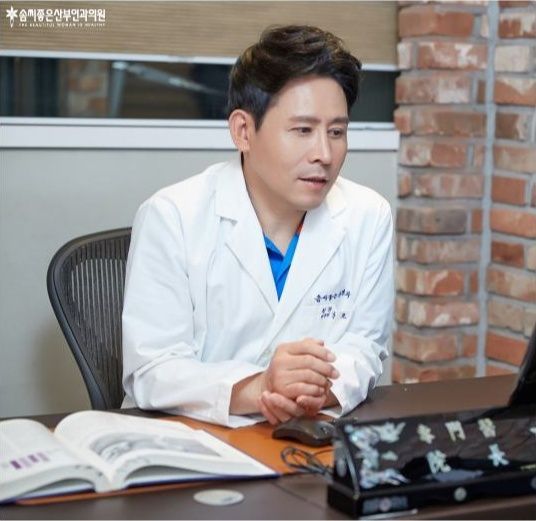
Dr. Yoon Ho-joo, MD, PhD
OB/GYN specialist, Catholic University of Korea. Founder of Somssi Women's Clinic (2000). Published on female sexual function after reconstructive vaginal surgery; speaker at ESSM, ISSWSH, WAS and SMSNA.
Questions patients ask
Frequently asked questions
Short, honest answers. For anything personal, a consultation is the right place to ask.
How do I know I am in menopause rather than just stressed?
Over 45, the pattern tells the story: cycles becoming irregular, then stopping, with hot flashes, night sweats, sleep change or vaginal dryness. Blood tests are unreliable in perimenopause because hormones swing day to day, so we rarely need them. Under 45, or after hysterectomy, hormone tests help confirm the diagnosis and rule out thyroid or other causes.
Do I have to take hormones to treat menopause?
No. Hormone therapy is the most effective option for hot flashes, but several non-hormonal medicines, cognitive behavioral therapy and lifestyle measures also help. For vaginal dryness, moisturizers and lubricants work for many women, and low-dose vaginal estrogen is considered safe even for many who cannot take systemic hormones. We tailor the plan to your preferences and health history.
Can painful sex after menopause be fixed?
Usually, yes. Most cases respond to regular moisturizers, lubricants and low-dose vaginal estrogen, sometimes with dilators. If the vagina has become too narrow, short or scarred for these to work, Dr. Yoon offers surgical dilatation or opening expansion with own tissue and same-day discharge. If the problem is looseness rather than tightness, a posterior vaginal repair can restore tone.
Is surgery still possible after menopause?
Yes. Age itself is not a barrier; what matters is overall health and the condition of the tissue. Thin, atrophic mucosa is often prepared with a few weeks of local estrogen before surgery to improve healing. Many of the clinic's vaginal repair patients are postmenopausal, and procedures are done under sleep plus local anesthesia with same-day discharge.
Does menopause treatment help with low libido?
Often. Desire usually improves once pain, dryness, poor sleep and hot flashes are treated. If low desire persists and is distressing, low-dose testosterone can be prescribed for postmenopausal hypoactive sexual desire disorder, with blood monitoring. Dr. Yoon has published research on sexual desire disorder in Korean women and discusses this openly rather than treating it as a taboo.
How long will I need treatment?
There is no fixed limit. Hot flashes last an average of seven years, longer for some women, and vaginal symptoms persist without treatment. Guidelines recommend reviewing hormone therapy at least yearly and continuing while benefits outweigh risks for you, rather than stopping at an arbitrary age. Local vaginal estrogen can generally be continued long term.
Keep reading
Related treatments and guides
- HRT (Hormone Replacement Therapy) — types, routes, benefits, risks and who should not take hormones
- Can Vaginal Rejuvenation Help With Menopause-Related Changes? — what non-surgical options can and cannot do for atrophy
- Can Vaginal Stem Cell Therapy Help With Menopause and Vaginal Dryness? — an honest look at regenerative claims
- Vaginal Stenosis — surgical dilatation when the vagina has narrowed after menopause
- Vaginoplasty (Vaginal Tightening Procedure) — own-tissue repair for laxity and mild prolapse
- Hormonal Imbalance Treatments — the clinic's wider hormonal care for women of all ages
- Dr. Yoon Ho-joo — the specialist's research on menopause, prolapse and sexual function
Sources and medical review
- American College of Obstetricians and Gynecologists (ACOG), Practice Bulletin on management of menopausal symptoms
- Dr. Yoon Ho-joo, study of hypoactive sexual desire disorder in 217 Korean women attending a community gynecology clinic, Journal of Obstetrics and Gynaecology (SCI), 2018, DOI 10.1080/01443615.2017.1389866
- Dr. Yoon Ho-joo, perineal plastic surgery (colpoperineoplasty) and female sexual function, Korean Journal of Obstetrics and Gynecology, vol. 48 no. 6, 2005
- Te Linde's Operative Gynecology — vaginal reconstructive surgery in the postmenopausal patient
Next step
A consultation first. A decision only when you are ready.
Tell us what you are experiencing and what you hope to change. Dr. Yoon examines, measures and explains the options, including when no surgery is the right answer. International patients can start with an online consultation before travelling to Seoul.
