
Labiaplasty · Treatment
Labiaplasty Revision in Seoul: Correcting a Previous Result
Labiaplasty revision is a second operation to correct an unsatisfactory first labiaplasty: a wrinkled or scalloped edge, notches, asymmetry, persistent irritation or an over-trimmed, hollow appearance. At Somssi Women's Clinic in Gangnam, Seoul, Dr. Yoon first assesses honestly what can be improved, then re-contours the edge, releases scar tissue or balances the two sides under local anesthesia in about 40–60 minutes. Over-reduced labia have fewer options, so conservative planning matters.
Medically reviewed by Dr. Yoon Ho-joo, MD, PhD, OB/GYN specialist, Somssi Women's Clinic · Last updated October 2026

At a glance
Key facts
The essentials, based on how Somssi Women's Clinic performs this procedure or answers this question. Your plan is confirmed at consultation.
- Procedure time: About 40–60 minutes, depending on complexity
- Anesthesia: Local (long-acting); sedation optional
- Hospital stay: None; home the same day
- Timing: Usually after the first surgery has fully healed, around six months
- Sutures: Fine absorbable micro-sutures
- Healing: About 2 weeks; intercourse after 2–3 weeks
- Who it suits: Uneven, bumpy, notched, painful or asymmetrical results from a previous labiaplasty
Labiaplasty revision at a glance
Corrects a previous labiaplasty: scalloped or notched edges, asymmetry, irritation or an over-trimmed result.
- labiaplasty revision
- failed labiaplasty
- labiaplasty correction Korea
- asymmetric labia repair
- over-resected labia
- revision surgery Seoul
- 40–60 minProcedure time
- ~6 months afterTiming after first surgery
- Local, sedation optionalAnesthesia
- Same dayDischarge
- Review the first resultEdges, scars and remaining tissue are mapped.
- Plan with what is leftRevision uses the tissue available; expectations are set honestly.
- Smooth and rebalanceNotches and asymmetry corrected with micro-sutures.
- HealAbout 2 weeks; intercourse after 2–3 weeks.
Illustration: Somssi Women's Clinic, Seoul. Schematic, not to scale; your plan is set by Dr. Yoon Ho-joo after examination.
What is labiaplasty revision?
Labiaplasty revision is surgery to improve the result of an earlier labiaplasty. Women come to us with edges that healed bumpy or wrinkled, a visible notch where a wedge did not close evenly, one side noticeably longer than the other, scar tissue that pulls or hurts, inflammation that never settled, or labia that were trimmed so short the vulva looks hollow and exposed.
Revision is a different operation from a first labiaplasty. There is less tissue to work with, the blood supply has been altered by the first surgery, and expectations have often been shaped by disappointment. The first task is therefore an honest conversation about what can and cannot be changed. Somssi Women's Clinic is a surgical gynecology clinic in Gangnam, Seoul, founded in 2000 and led by Dr. Yoon Ho-joo, MD, PhD, and revision of genital surgery performed elsewhere has long been part of its work.
Who is a good candidate?
You may benefit from revision if, at least several months after your first labiaplasty, you have:
- A scalloped, wrinkled or irregular free edge that looks obviously operated.
- A notch or step where a wedge was closed, or where the edge meets the clitoral hood.
- Clear asymmetry: one labium longer, thicker or shaped differently from the other.
- Tender scar bands, persistent redness or recurring inflammation along the edge.
- Residual excess on one side, or a clitoral hood that now looks bulky next to the reduced labia.
- An over-trimmed, flattened or hollow appearance that leaves the vaginal opening exposed.
If your concern is mild asymmetry within the first weeks, waiting is often the right advice, because swelling resolves unevenly and many irregularities soften on their own. Our safety guide, Is labia minora reduction safe?, explains what normal healing looks like.
How Somssi approaches revision
Honest assessment first
Dr. Yoon examines the labia standing and lying, maps the scars and the remaining tissue, and compares them with your photographs from before the first surgery if you have them. He then explains which of your concerns surgery can correct, which it can only soften, and which are best left alone. Some women leave this consultation deciding not to operate, and that is a good outcome too.
Re-contouring an irregular edge
A bumpy or scalloped edge is usually the result of coarse or widely spaced stitches and uneven tension in the first closure. Revision removes a very narrow strip along the border, taking the irregular scar with it, and re-closes the edge with fine absorbable micro-sutures placed close together so it heals flat. Where enough tissue remains, a small wedge can convert a notch into a continuous border.
Balancing asymmetry
When one side was left longer or thicker, it is reduced to match the other using the same design-first principle we use in a primary labia minora reduction. Matching the character of the two edges, not just their length, is what makes the result look natural.
Releasing scars and treating the hood
Tight scar bands are released and re-sutured without tension. If the first surgeon left excess clitoral hood, a conservative clitoral hood reduction restores proportion. All cutting is done with a laser for a clean edge and controlled bleeding.
When the labia were over-reduced
This is the hardest situation and we are candid about it. Labial tissue that has been removed cannot be put back, and attempts to rebuild the labia minora with grafts rarely look natural. What often helps is improving the surrounding frame: smoothing residual irregularities, correcting the hood, and in some women adding volume to deflated labia majora with the patient's own fat so the inner labia no longer look exposed. See labia augmentation for that option.
Anesthesia, duration and hospital stay
Most revisions take 40 minutes to one hour and are performed under long-acting local anesthesia; sedation is available if you prefer to sleep. Complex cases involving both sides, the hood and scar release can take longer. There is no hospital stay. You go home the same day, usually with only one or two clinic visits needed in total.
Recovery timeline
| When | What you can do |
|---|---|
| Day of surgery | Shower and go home. Start the clinic ointment with a cotton swab about four times a day; ice pack for three days. |
| Days 1–3 | Light activity and desk work. Swelling is normal and may again be uneven between sides. |
| Weeks 1–2 | Swelling settles; absorbable stitches dissolve. Avoid cycling, tight clothing and friction. |
| Weeks 2–3 | Edges healed; intercourse may resume when comfortable. |
| 3–6 months | Scar firmness softens and the revised contour is final. Judge the result at this point, not earlier. |
Healing after revision tends to be slightly slower than after a first labiaplasty because of scar tissue, so give yourself a little more time at each stage. The general timeline is in How long does labia minora reduction recovery take?
Results and what to expect
A successful revision gives a smoother, better-matched edge, relief from tender scars, and a vulva that no longer looks operated on. For irregular edges and asymmetry, the improvement is usually clear. For over-trimmed labia, the realistic goal is better balance and comfort rather than the original anatomy.
Results vary, and more than in primary surgery. Scarred tissue heals less predictably, and symmetry can only be as good as the tissue that remains allows. We take photographs before and after and discuss them with you so expectations are grounded in your own anatomy.
Risks and how we reduce them
Revision carries the same risks as a first labiaplasty, including bleeding, infection, wound separation, asymmetry, further scarring, over- or under-correction, altered sensation and pain with intercourse during healing, plus anesthesia risks. Wound separation and delayed healing are somewhat more likely because scar tissue has a poorer blood supply, and every revision removes tissue that cannot be replaced.
We reduce these risks by waiting until the first surgery has fully matured, by planning the most conservative correction that achieves your goal, by preserving blood supply during dissection, and by closing with fine, tension-free absorbable sutures. Written aftercare and prompt review of any concern complete the picture.
Why international patients choose Somssi
Many women who had labiaplasty at home are reluctant to return to the same surgeon. At Somssi you consult directly with Dr. Yoon in English, receive a frank assessment with photographs, and if surgery is appropriate it can usually be arranged within days. Same-day discharge and absorbable sutures make a short stay in Seoul practical, with follow-up by message or video from abroad.
The clinic is 100 m from Gangnam Station Exit 1, has operated since 2000, and is registered with Korea's Ministry of Health and Welfare for foreign patients. Read our guide for foreigners, learn more about Dr. Yoon, or send us your questions.
Private consultation
Talk it through with Dr. Yoon's team
English-speaking coordinators, a written treatment plan and a clear quote after your consultation. Same-day discharge for most procedures.
Mon, Tue, Wed, Fri, Sat 09:30–18:00 (KST). Closed Thu, Sun and holidays. 7F Sangkyung Building, 120 Teheran-ro, Gangnam-gu, Seoul.
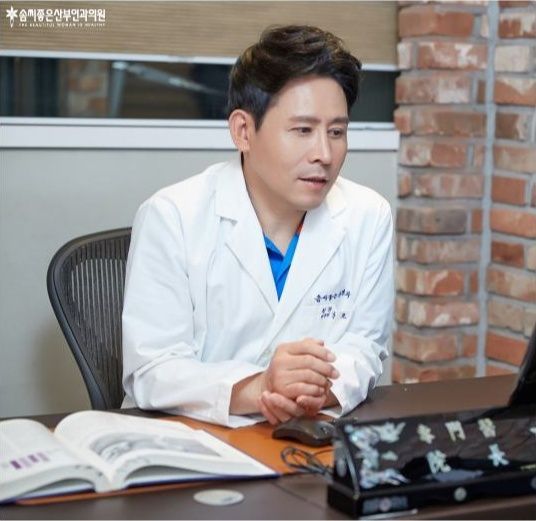
Dr. Yoon Ho-joo, MD, PhD
OB/GYN specialist, Catholic University of Korea. Founder of Somssi Women's Clinic (2000). Published on female sexual function after reconstructive vaginal surgery; speaker at ESSM, ISSWSH, WAS and SMSNA.
Questions patients ask
Frequently asked questions
Short, honest answers. For anything personal, a consultation is the right place to ask.
How long should I wait before revising a labiaplasty?
As a general rule, wait until the first surgery has fully healed and the scars have matured, which is usually around six months. Swelling settles unevenly and edges soften considerably between three and six months, so many early irregularities improve without surgery. Revising too early means operating on inflamed tissue and risks correcting something that would have resolved on its own.
Can over-trimmed labia minora be rebuilt?
Only to a limited degree. Tissue that has been removed cannot be replaced, and grafts to recreate labia minora rarely look natural. The realistic approach is to improve the frame: smooth residual irregularities, correct an untreated clitoral hood, and sometimes add volume to the labia majora with your own fat so the vulva looks less exposed. Dr. Yoon will tell you plainly what is achievable.
Why did my first labiaplasty heal with a bumpy edge?
The most common reasons are coarse or widely spaced stitches, uneven tension along the closure, and swelling that pulled the edge into a scalloped pattern while it healed. Removing too much tissue so the closure was tight can also contribute. Revision removes a very narrow strip with the irregular scar and re-closes the edge with fine, closely placed absorbable sutures.
Is revision more painful or harder to recover from?
Pain is similar to a first labiaplasty and well controlled with long-acting local anesthetic, an ice pack and simple pain relief. Healing can be slightly slower because scarred tissue has a poorer blood supply, so we ask you to allow a little more time before friction, exercise and intercourse. Most women are back at desk work within a few days.
Can you fix a labiaplasty performed in another country?
Yes. A large part of revision work involves surgery done elsewhere. Bring any operative notes and before-and-after photographs you have; they help us understand what was removed. If you are abroad, you can send photographs and questions to us before deciding whether to travel, and we will give you a frank preliminary opinion.
Will revision leave more scars?
Any surgery leaves a scar, but the goal of revision is to replace a visible, irregular scar with a fine line hidden at the natural edge or within a fold. Laser cutting, fine absorbable sutures and a tension-free closure help the new edge heal flat. Our guide on scarring explains what to expect at each stage.
Keep reading
Related treatments and guides
- Does Labia Minora Reduction Leave Scars? — what a well-healed edge looks like and why some do not
- Is Labia Minora Reduction Safe? — normal healing versus a result that needs revision
- How Long Does Labia Minora Reduction Recovery Take? — the recovery stages you will go through again
- How Do I Choose the Best Labiaplasty Surgeon in Korea? — questions to ask before a second operation
- Labiaplasty (Labia Reshaping Surgery) — the primary procedure and how Somssi performs it
- Labia Augmentation — restoring volume to the labia majora after over-reduction
- International Patients — sending photographs, travel and follow-up from abroad
Sources and medical review
- Te Linde's Operative Gynecology (textbook) — principles of vulvar surgery and wound healing
- American College of Obstetricians and Gynecologists (ACOG) — elective female genital cosmetic surgery
- Yoon HJ. Perineal plastic surgery (colpoperineoplasty) and female sexual function. Korean Journal of Obstetrics and Gynecology. 2005;48(6).
Next step
A consultation first. A decision only when you are ready.
Tell us what you are experiencing and what you hope to change. Dr. Yoon examines, measures and explains the options, including when no surgery is the right answer. International patients can start with an online consultation before travelling to Seoul.
