
Labiaplasty · Patient guide
Does Labia Minora Reduction Leave Scars?
Labia minora reduction leaves a scar, but on the labia it usually heals into a fine, soft line that is hard to see because the tissue is thin, moist and well supplied with blood. Visible scarring, scalloped edges or notches come mainly from coarse suturing, tension or wound separation. At Somssi Women's Clinic in Gangnam, Seoul, Dr. Yoon uses laser cutting and fine absorbable micro-sutures so the healed edge looks like natural tissue.
Medically reviewed by Dr. Yoon Ho-joo, MD, PhD, OB/GYN specialist, Somssi Women's Clinic · Last updated October 2026

At a glance
Key facts
The essentials, based on how Somssi Women's Clinic performs this procedure or answers this question. Your plan is confirmed at consultation.
- Scar location: Along the new edge (trim) or across the labium within folds (wedge)
- Appearance when healed: Usually a fine, soft, pale line that blends with the edge
- Healing: Wound closed in about 2 weeks; scar softens over 3–6 months
- Main causes of visible scars: Coarse or widely spaced sutures, tension, wound separation, infection
- Sutures used at Somssi: Fine absorbable micro-sutures; no removal needed
- Cutting: Laser for a clean edge and controlled bleeding
Yes, labia minora reduction leaves a scar, but in most women it heals into a fine line that is difficult to see even on close inspection, because labial tissue is thin, moist and heals exceptionally well. Whether the scar stays invisible or becomes a bumpy, scalloped edge depends far more on how the wound is closed than on the fact of surgery itself.
Why labial scars usually heal so well
The labia minora are made of thin, elastic tissue with a rich blood supply and no thick layer of fat or dense dermis. Wounds there close quickly and the resulting scar is soft rather than raised. The area is also naturally textured and slightly ruffled, so a fine line at the edge or within a fold blends in. This is very different from scarring on the abdomen or chest, where tension and thick skin produce visible lines.
Where the scar lies in each technique
| Technique | Where the scar is | What it looks like when healed |
|---|---|---|
| Trim (edge) method | Along the full length of the new free edge | A fine, pale line that becomes the new border; ideally indistinguishable from a natural edge |
| Wedge method | A line running across the labium from edge to base | Hidden within the natural folds; the original edge is preserved |
| Clitoral hood reduction | Within the lateral folds beside the hood | Tucked into existing creases |
The trim versus wedge guide explains how the choice is made; neither technique is inherently more scar-prone.
Color is part of what people call scarring. With an edge trim, the darker rim is removed and the new border is formed from lighter inner tissue, so the edge often looks paler than before; this is the tissue's natural color, not a scar. With a wedge, the original edge and its color are kept.
What causes visible scarring
- Coarse or widely spaced stitches. Large sutures pull the edge into a scalloped pattern as it heals, leaving a wavy or bumpy border. This is the most common cause of a result that looks operated on.
- Tension on the closure. Removing too much tissue and pulling the edges together under strain thickens the scar and can cause the wound to separate.
- Wound separation. A gap that heals by itself leaves a notch or a wider scar, most often at the point of a wedge.
- Infection or hematoma. Both delay healing and worsen the scar.
- Early friction. Cycling, tight clothing or intercourse before the edge has healed can reopen it.
- Individual healing. A small number of women form thicker scars anywhere on the body, although true keloids on the labia are rare.
How Somssi keeps the scar invisible
Somssi Women's Clinic is a surgical gynecology clinic in Gangnam, Seoul, founded in 2000 and led by Dr. Yoon Ho-joo, MD, PhD. His approach to the labial edge rests on a few consistent principles:
- Design before anesthesia. The new edge is drawn at a normal size so the closure is never under tension.
- Laser cutting. A laser gives a clean, even edge and controls bleeding, reducing hematoma and swelling.
- Fine absorbable micro-sutures. Stitches are small and placed close together without pulling, which is what keeps the edge flat. In Dr. Yoon's experience, suturing skill accounts for most of the result; poor suturing causes visible marks.
- Layered closure where the tissue is thick, so the surface edge does not bear the strain.
- Aftercare designed to protect the edge: ointment four times a day, an ice pack for three days, loose cotton underwear and no friction for two weeks.
The full technique is described on the labia minora reduction page.
What the scar looks like over time
- Weeks 1–2: The edge is swollen, pink and slightly irregular; the sutures are visible as tiny knots until they dissolve. Do not judge the result now.
- Weeks 3–6: Swelling resolves, sutures have gone, and the edge is pink but smooth.
- Months 3–6: The line fades to pale, firmness along the edge softens, and the final appearance is set.
Most women find that by three months they can no longer locate the scar without looking closely, and partners are not aware of it. The recovery guide gives a day-by-day timeline.
If a scar does become visible
A scalloped edge, notch or thick band after a labiaplasty elsewhere can usually be improved. Labiaplasty revision removes a narrow strip with the irregular scar and re-closes the edge with fine sutures, or converts a notch into a continuous border. Revision should wait until the first scar has matured, usually around six months, and is planned conservatively because tissue removed cannot be returned.
Bottom line
Labia minora reduction leaves a scar, but with a clean cut, fine tension-free absorbable sutures and careful aftercare it heals into a soft, pale line that is very hard to see. Visible scars are almost always a suturing or healing problem rather than an inevitable result. To see what a healed edge looks like and discuss your own case, contact us or read more about labiaplasty at Somssi.
Private consultation
Talk it through with Dr. Yoon's team
English-speaking coordinators, a written treatment plan and a clear quote after your consultation. Same-day discharge for most procedures.
Mon, Tue, Wed, Fri, Sat 09:30–18:00 (KST). Closed Thu, Sun and holidays. 7F Sangkyung Building, 120 Teheran-ro, Gangnam-gu, Seoul.
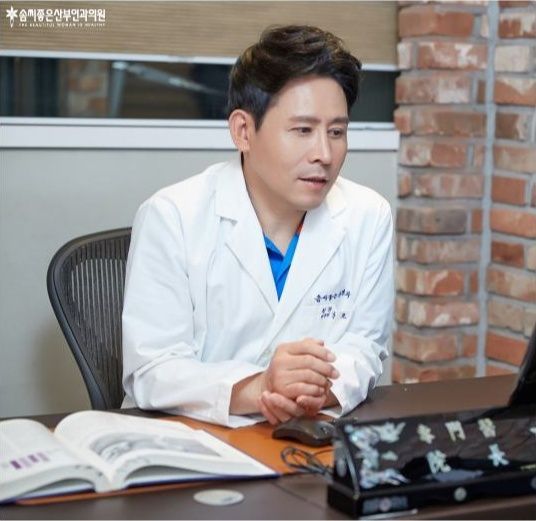
Dr. Yoon Ho-joo, MD, PhD
OB/GYN specialist, Catholic University of Korea. Founder of Somssi Women's Clinic (2000). Published on female sexual function after reconstructive vaginal surgery; speaker at ESSM, ISSWSH, WAS and SMSNA.
Questions patients ask
Frequently asked questions
Short, honest answers. For anything personal, a consultation is the right place to ask.
Will my partner be able to see the scar?
In most cases no. Once healed, the scar is a fine pale line at the edge or within a fold, in an area that is naturally textured and moist. Partners generally notice only that the labia are smaller and more even. During the first few weeks the edge is swollen and pink, which is why we recommend waiting two to three weeks before intimacy.
Why do some labiaplasties heal with a scalloped edge?
Scalloping comes from large or widely spaced sutures that pull the edge into waves as it heals, often combined with tension from removing too much tissue. It is a closure problem, not a feature of the operation. Fine absorbable micro-sutures placed close together without tension keep the edge flat.
Does laser cutting reduce scarring?
It helps. A laser gives a clean, even edge and seals small vessels as it cuts, which reduces bleeding, hematoma and swelling, all of which worsen scars. The laser is a cutting tool rather than a scar treatment, though; the closure and aftercare still determine most of the final appearance.
Can I use scar creams or silicone on the labia?
They are not usually needed and the moist labial environment makes silicone sheets impractical. The clinic ointment applied about four times a day for the first two weeks, followed by simply keeping the area clean and friction-free, gives the best result. If you have a history of thick scars elsewhere, tell Dr. Yoon at consultation.
Do absorbable stitches leave marks?
Fine absorbable sutures dissolve on their own within a couple of weeks and do not leave track marks. Larger, slowly absorbing sutures can leave small dots or irritation, which is one reason the choice of suture matters. If any knots remain at two weeks and bother you, they can be removed at a check-up.
Can an old labiaplasty scar be fixed?
Usually, yes. A scalloped edge or notch can be revised by removing a narrow strip with the scar and re-closing it finely, provided enough tissue remains. Revision waits until the first scar has matured, around six months. If the labia were over-trimmed, options are more limited and Dr. Yoon will say so plainly.
Keep reading
Related treatments and guides
- Labia Minora Reduction — the closure technique that determines the scar
- Labiaplasty (Labia Reshaping Surgery) — overview of labial surgery at Somssi
- Trim vs Wedge Labia Minora Reduction: Which Is Better? — where the scar lies in each method
- How Long Does Labia Minora Reduction Recovery Take? — how the edge changes week by week
- Is Labia Minora Reduction Safe? — wound separation and other risks that affect scarring
- Labiaplasty Revision — correcting a visible scar from previous surgery
- Does Labia Majora Reduction Leave Scars? — scarring on the outer labia, where skin is thicker
Sources and medical review
- Te Linde's Operative Gynecology (textbook) — wound healing and vulvar surgery
- American College of Obstetricians and Gynecologists (ACOG) — elective female genital cosmetic surgery
- Yoon HJ. Perineal plastic surgery (colpoperineoplasty) and female sexual function. Korean Journal of Obstetrics and Gynecology. 2005;48(6).
Next step
A consultation first. A decision only when you are ready.
Tell us what you are experiencing and what you hope to change. Dr. Yoon examines, measures and explains the options, including when no surgery is the right answer. International patients can start with an online consultation before travelling to Seoul.
