
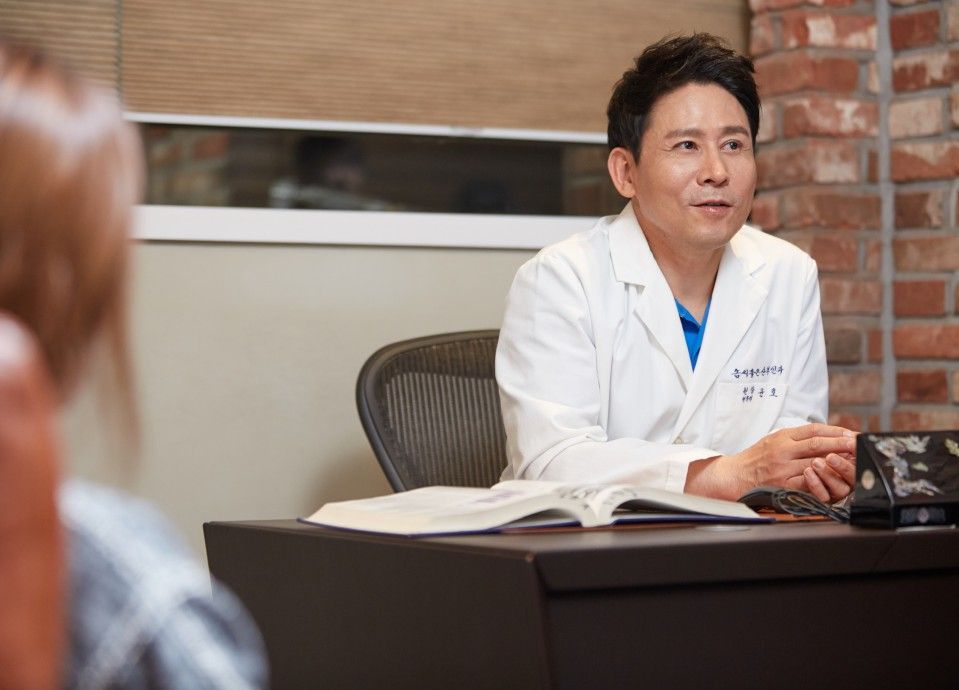
Reconstructive gynecologic surgery · Gangnam, Seoul · Since 2000
Complex gynecologic reconstruction, from prolapse to revision surgery
Some problems can't be solved by tightening: a uterus that has dropped, a bladder or bowel pressing into the vagina, filler that has to come out, or a first surgery that left pain. Dr. Yoon Ho-joo, MD, PhD, has spent 26 years rebuilding that anatomy with your own tissue, with no mesh and no implants, so you can stand, move and be intimate without thinking about it.
26 years
Reconstructive pelvic surgery
MD, PhD
Catholic University of Korea
SCI-published
J. Obstet. Gynaecol., 2018
26
years of reconstructive pelvic surgery, by one surgeon
8
peer-reviewed papers and international congress presentations
0
mesh, bands or implants: your own tissue only
1 day
local anesthesia with sedation, home the same day
2011
registered by Korea's Ministry of Health and Welfare for international patients
Why women choose Somssi
Not only how it looks. How it works, every day.
Somssi Women's Clinic is a surgical gynecology clinic in Gangnam, Seoul, founded in 2000 and led by Dr. Yoon Ho-joo, MD, PhD. Appearance matters, but most of our patients come with functional problems: a heavy, dragging feeling when they stand, leaking urine, difficulty emptying the bowel, pain during intercourse, or complications from an earlier procedure.
Our work is restoring the structure behind those symptoms: posterior colporrhaphy vaginoplasty that starts deep at the cervix rather than at the opening, uterine prolapse repair that keeps the uterus, native-tissue repair of cystocele and rectocele, removal of fillers, implants and slings followed by reconstruction, and labiaplasty designed around normal anatomy.
Dr. Yoon measured and published what this surgery does for women's sexual function in 2005, and has presented the clinic's results at sexual-medicine congresses in Europe, North America, South America and Australia. Every nurse on our team is a registered nurse. Every plan starts with measurement, not a sales pitch.
What surgery should give back
Four functions we rebuild, not just one appearance
Good reconstructive surgery is judged in daily life: how you stand and walk, how you use the toilet, how intimacy feels and how you feel about your own body.
01
Support
Organs held where they belong
A descended uterus, bladder (cystocele) or rectum (rectocele) is lifted and re-anchored with your own ligaments and muscle, treating the heavy, falling-out feeling at its source.
02
Continence
Bladder and bowel control
Stress leakage, urgency and difficulty emptying the bowel often share one cause, lost pelvic support, so they are assessed and repaired together rather than one at a time.
03
Comfort
Pain-free daily life and intercourse
Foreign material is removed, over-tight scars are released, and thin, narrowed tissue after menopause is reconstructed instead of being tightened further.
04
Intimacy
Sensation and confidence
Length, width and wall thickness are measured before and after surgery, because sexual function depends on the whole canal and pelvic floor, not only the opening.
Complex & revision cases
The difficult cases are our everyday work
Many patients reach us after a first surgery elsewhere, after being told a hysterectomy is the only option, or after years of being told to live with it. These are the cases Dr. Yoon has built his practice around.
Uterus-preserving
Advanced uterine prolapse
Stage 2 and 3 prolapse is commonly treated by hysterectomy. Dr. Yoon lifts the uterus with its own ligaments, closes the cul-de-sac and rebuilds the back wall; for many women the uterus can stay, and no mesh is used.
Multi-compartment
Cystocele, rectocele and leakage together
When the bladder, bowel and uterus have all descended, repairing one wall is not enough. Support is rebuilt as one system, which is why urinary and bowel symptoms are treated alongside the prolapse.
Foreign-body removal
Filler, implant, sling and mesh problems
Lumps, migration, infection, odour or pain after vaginal filler, implants, 'magic tape' or slings. The material is removed and the wall is rebuilt with your own tissue in the same plan.
Revision surgery
After an unsatisfying vaginoplasty
A tight, painful entrance with a loose interior, a scar ridge, or no change at all. Revision means redesigning the full length of the canal and the muscle beneath it, not narrowing the opening again.
After menopause
Atrophy, stenosis and hardened scars
Thinning tissue after menopause can turn an old repair hard and narrow, until intercourse becomes impossible. Scar is released and the canal reconstructed, with hormone or regenerative care where it helps.
Scar & labial revision
Birth injuries and over-resection
Episiotomy or tear scars that pull or hurt, and labiaplasty results that are uneven or over-trimmed, are corrected with tissue-sparing technique and absorbable micro-sutures.
Send previous operative notes or scan reports before you travel. Dr. Yoon reviews complex cases himself.
Self-check
Does any of this sound familiar?
Prolapse and pelvic floor damage progress slowly, so many women adapt and lose years before asking for help. If you recognise yourself in any group below, an examination with measurement is worth doing, even if the answer is that you do not need surgery.
Group 01
Pelvic support
- A heavy, dragging or falling-out feeling when standing or walking
- A bulge you can see or feel at the vaginal opening
- Told you have uterine prolapse, a cystocele or a rectocele
Group 02
Bladder and bowel
- Leaking urine when you cough, laugh or exercise
- Pressing on the vaginal wall to empty your bowel
- Feeling you need to urinate or pass stool during intercourse
Group 03
Intimacy and sensation
- Feeling loose or numb since childbirth
- Air escaping from the vagina during intercourse
- Your partner slipping out repeatedly
Group 04
After menopause
- Pain, burning or tearing on penetration
- Dryness that lubricants no longer solve
- An old surgery site that has become hard or narrow
Group 05
After surgery elsewhere
- The entrance is tight and painful but inside still feels loose
- No difference after vaginoplasty, or intercourse is worse
- Repeated operations without satisfaction
Group 06
After filler or implants
- Lumps, hardness or a foreign-body feeling
- Recurrent infection, discharge or odour
- Filler, implants, 'magic tape' or a sling you want removed
Treatments
What we treat, and how
Each page explains the procedure, who it suits, anesthesia, recovery and the honest risks, the way Dr. Yoon explains it in consultation.
Flagship procedure
Vaginoplasty (posterior colporrhaphy)
Tightening that begins at the posterior fornix, lifts the uterus, thickens the back wall by 2–3 cm with your own tissue and restores the pelvic floor. About an hour, home the same day.
Volume & contour
Labia majora surgery
Reduction of lax, wrinkled outer labia, or restoration of lost volume with your own fat. About an hour; intercourse after roughly four weeks.
Keep your uterus
Uterine & pelvic organ prolapse repair
Hysteropexy, cul-de-sac closure and native-tissue vaginal repair for a descended uterus, cystocele or rectocele, without mesh and in most cases without hysterectomy.
Revision & removal
Vaginal filler removal & revision surgery
Lumps, migration or pain after filler or implants elsewhere; over-tight openings or loose interiors after a previous vaginoplasty. We remove, then rebuild with your own tissue.
Shape & comfort
Labiaplasty
Labia minora reduction designed to normal size first, with trim or wedge technique, nerve-sparing dissection and absorbable micro-sutures. 40–60 minutes under local or light sedation.
Private & discreet
Hymenoplasty
A short, confidential procedure under local anesthesia or sedation, with same-day discharge and clear, honest counselling about what it can and cannot guarantee.
Infographic
How Dr. Yoon rebuilds the pelvic floor
Most tightening procedures work at the opening. Laxity and prolapse start deep inside, at the cervix and the ligaments that hold it, so Dr. Yoon works from the top of the vagina outward. This is the sequence, and what it is designed to give back.
- 1
Measure before planning
Vaginal length, width and wall thickness, prolapse stage (POP-Q) and pelvic floor strength are recorded first.
- 2
Re-anchor the uterus
Hysteropexy lifts a descended uterus and fixes it with its own ligaments, so in suitable cases it can stay.
- 3
Close the cul-de-sac
The deep pouch behind the cervix, where organs and bowel slip down, is closed at the posterior fornix.
- 4
Lift the lining, don't cut it
The back-wall lining is peeled in a layer under 1 mm, keeping nerves and blood supply in place.
- 5
Two-layer muscle repair
Separated pelvic floor muscle is drawn to the midline, then the lining is folded closed over it.
- 6
Rebuild the perineum
The body between vagina and anus is reconstructed, with figure-8 strengthening at the opening if needed.
- Adds bulk; does not repair support or prolapse
- Can harden, migrate or become infected
- Often has to be removed later
- Narrows the entrance, leaves the deep canal loose
- Prolapse behind it is left untreated
- Scar at the opening can cause pain, especially after menopause
- Rebuilt from the cervix outward, full length
- Your own tissue only: no mesh, no implants
- Designed around support, continence, comfort and sensation
Illustration by Somssi Women's Clinic, Seoul. Every plan is individual: Dr. Yoon Ho-joo decides which of these steps you need after examination, and some women need none of them.
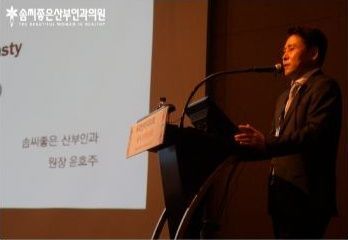
In the operating room
Minimum surgical scope, maximum structural repair
Most vaginal tightening starts at the opening and stops halfway. Ours starts at the posterior fornix, in front of the cervix, and works outward, because laxity and prolapse begin deep inside.
- Measure first. Vaginal length, width, wall thickness and pelvic floor strength are assessed and photographed before any plan is made.
- Hysteropexy and cul-de-sac closure. A descended uterus is lifted and fixed by its own supporting tissue; the deep pouch that lets organs drop is closed.
- Mucosal peeling under 1 mm. With micro ophthalmic instruments, the lining of the back wall is lifted, not cut, so nerves and blood supply stay where they belong.
- Two-layer suturing. Pelvic floor muscle is gathered first, then the mucosa is folded and closed in a fusiform pattern, creating a thicker, ridged back wall that does not stretch back.
- Figure-8 pelvic floor strengthening at the opening and, where needed, perineal reconstruction.
The front wall, urethra and bladder are left alone. Surgery takes about an hour under sedation plus long-acting local anesthesia; absorbable PDS sutures support the repair while it heals, and you walk out the same day once you have passed urine.
Your surgeon
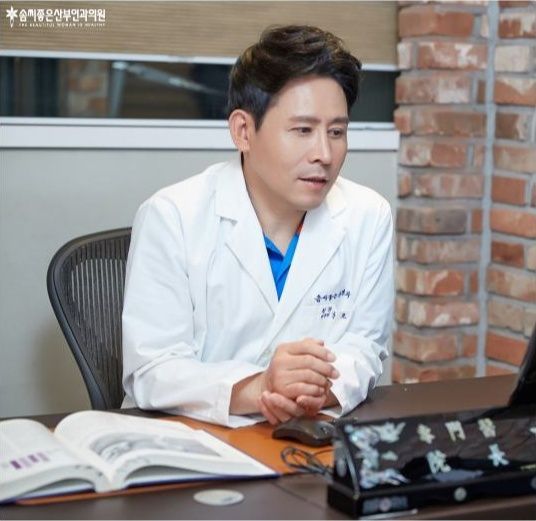
Dr. Yoon Ho-joo, MD, PhD
Korean board-certified obstetrician-gynecologist, trained at the Catholic University of Korea, and founder and director of Somssi Women's Clinic since 2000. He performs every operation himself and has spent 26 years on one problem: restoring the pelvic floor so that women can live, move and love without discomfort.
- MD, master's and PhD in obstetrics and gynecology, Catholic University of Korea; former clinical professor there
- Former academic director, Korean Association of Obstetricians and Gynecologists and Korean Society of Women's Sexual Medicine
- Member, Korean Society of Obstetrics and Gynecology, Korean Society for Sexual Medicine, Korean Society of Aesthetic Surgery and Korean Society of Urogynecology
- Research presented in Buenos Aires, Lisbon, Vienna, Sydney, San Diego and New Orleans; SCI-indexed paper in the Journal of Obstetrics and Gynaecology (2018)
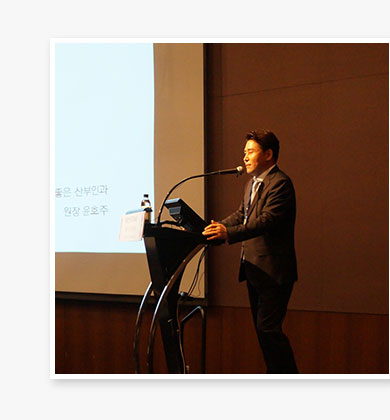
- Invited to teach his posterior fornix technique to Korean and Chinese surgeons, including a live surgical demonstration (2015)
Also published as Ho Ju Yun (Yun Ho-ju).
Research
Published evidence behind the technique
Dr. Yoon has measured his outcomes with validated questionnaires since 2004 and presented them to international peers. Here is what the data shows, with sources you can check.
View as a table
| Measure (share of women) | Before | 4 months after |
|---|---|---|
| Orgasm in more than half of encounters | 29% | 70% |
| Adequate lubrication in more than half of encounters | 44% | 82% |
| Arousal in more than half of encounters | 34% | 69% |
| Intercourse at least once a week | 18% | 63% |
| Desire about half the time or more | 18% | 45% |
Publications and congress presentations
- 2018 · Journal of Obstetrics and Gynaecology (SCI-indexed): low sexual desire in 217 Korean women; earlier vaginal tightening surgery was one linked factor
- 2013 · SMSNA, New Orleans: vaginal length, width and wall thickness compared with sexual symptoms in 135 women
- 2008 · ISSWSH, San Diego: posterior colpoperineorrhaphy for pelvic floor dysfunction in 150 women, with urinary, bowel and sexual outcomes at three months
- 2007 · World Congress of Sexology (WAS), Sydney: genital prolapse and female sexual function
- 2006 · 9th ESSM Congress, Vienna: mild prolapse and sexual function in 280 women (POP-Q and FSFI)
- 2006 · ISSWSH, Lisbon: genital reconstruction and sexual desire
- 2005 · Korean Journal of Obstetrics and Gynecology 48(6) and IPFDS, Buenos Aires: colpoperineoplasty and female sexual function
Teaching other surgeons
- 2015 · Course on his posterior fornix technique for the Korean Association of Obstetricians and Gynecologists
- 2015 · Invited lecture and live surgical demonstration on pelvic floor strengthening, Chinese aesthetic surgery society
- 2014 · Invited lecture, Hunan Provincial Health and Family Planning Commission, China
Inside the clinic
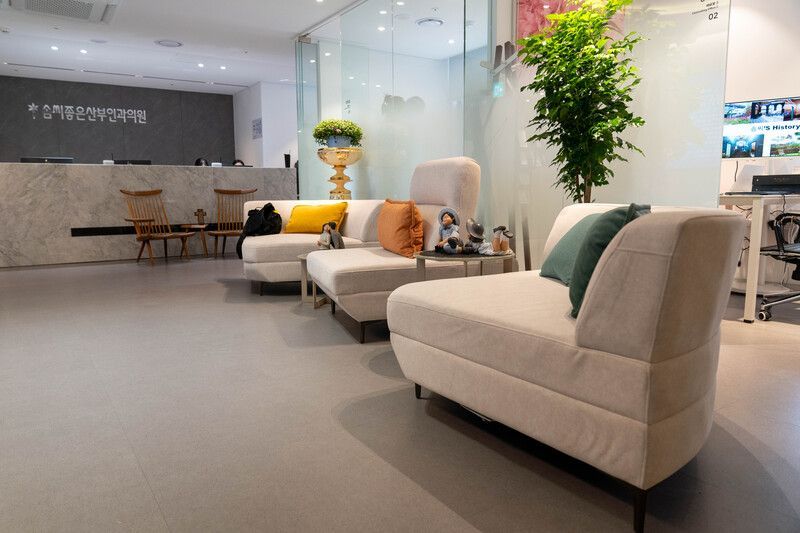
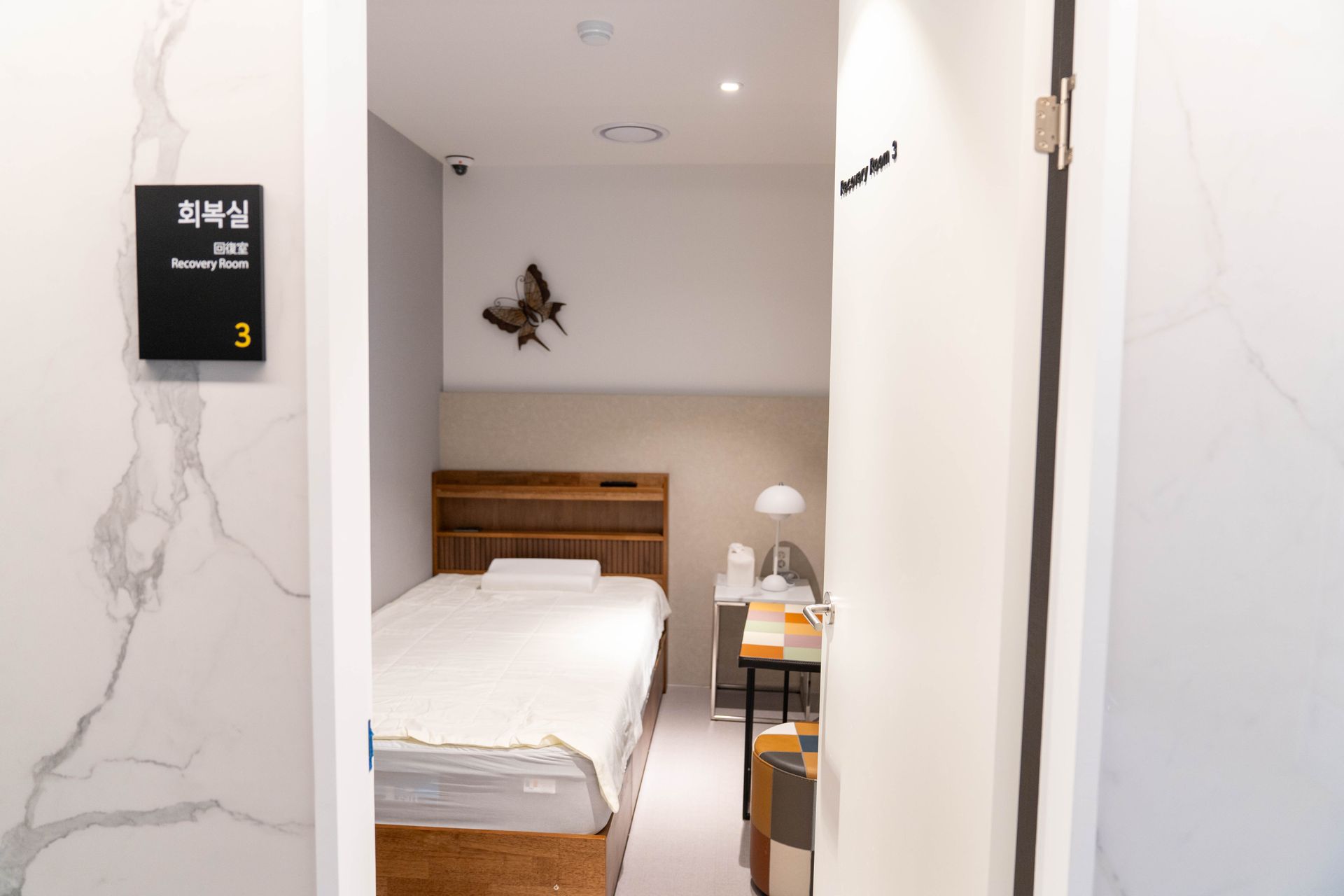
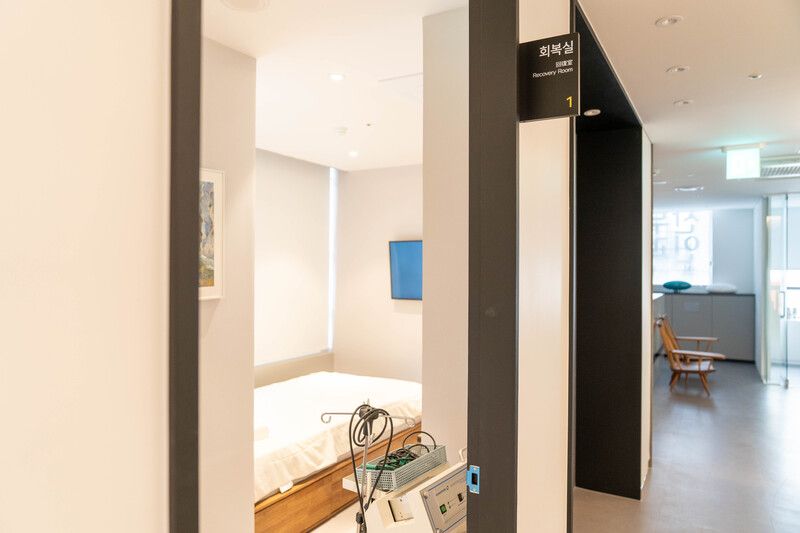
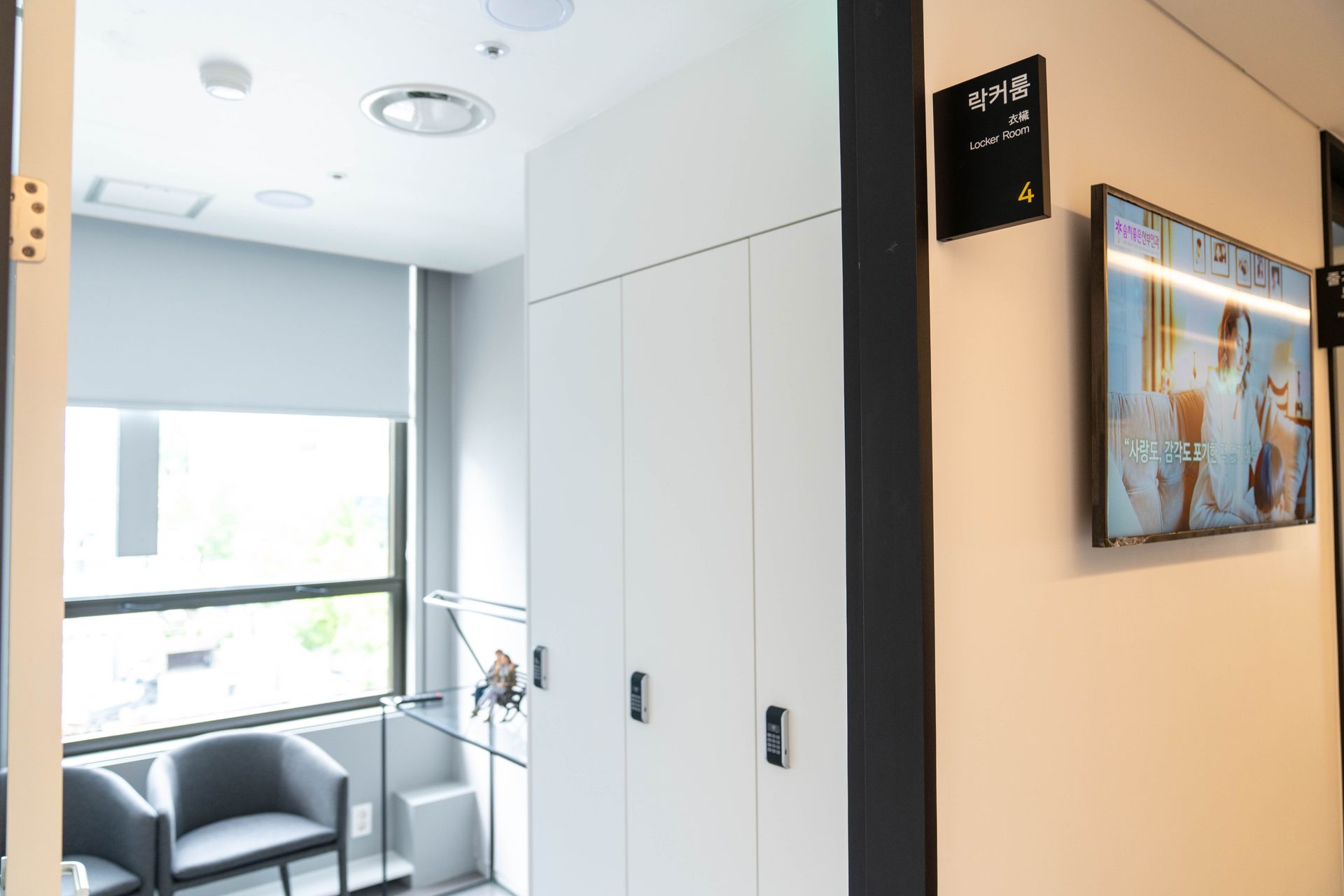
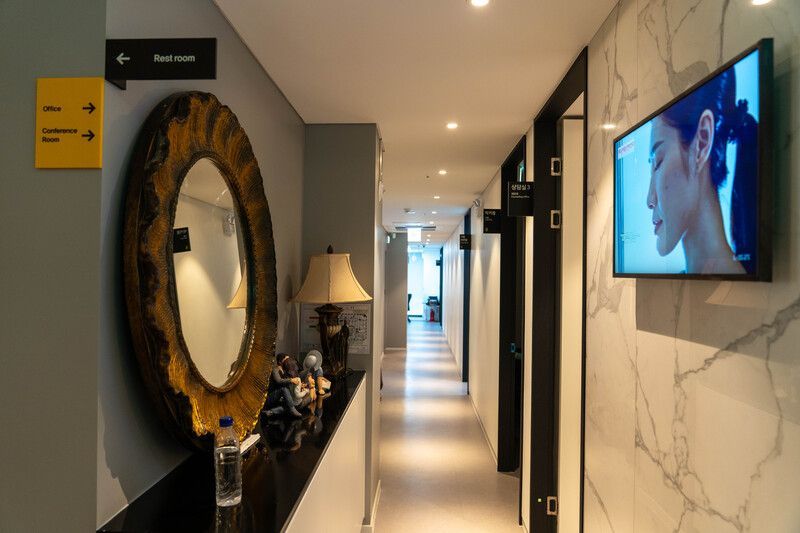
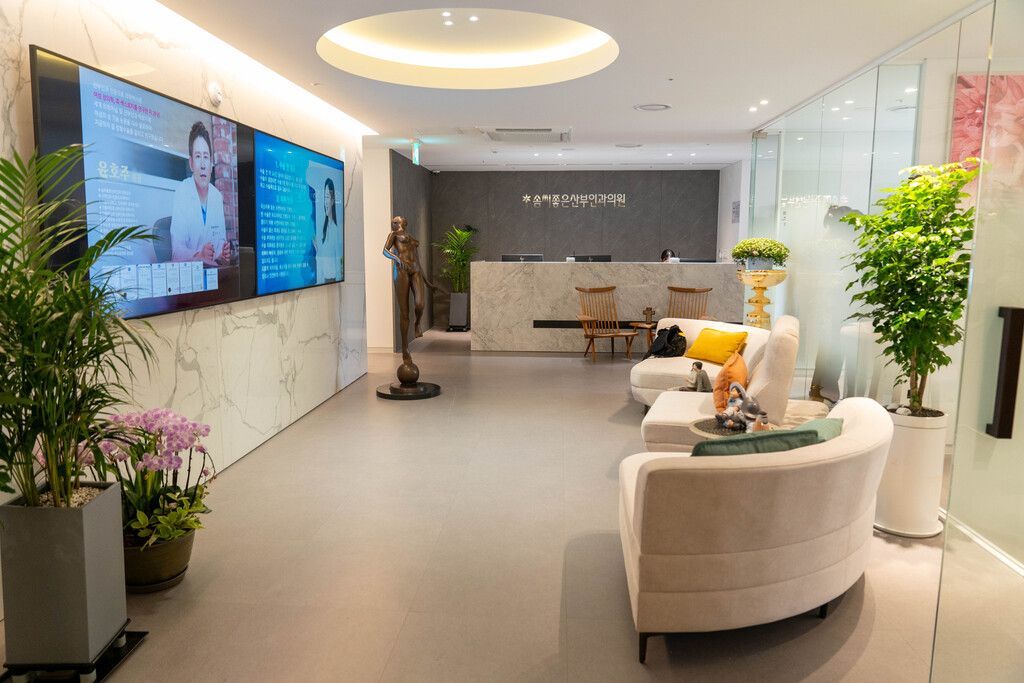
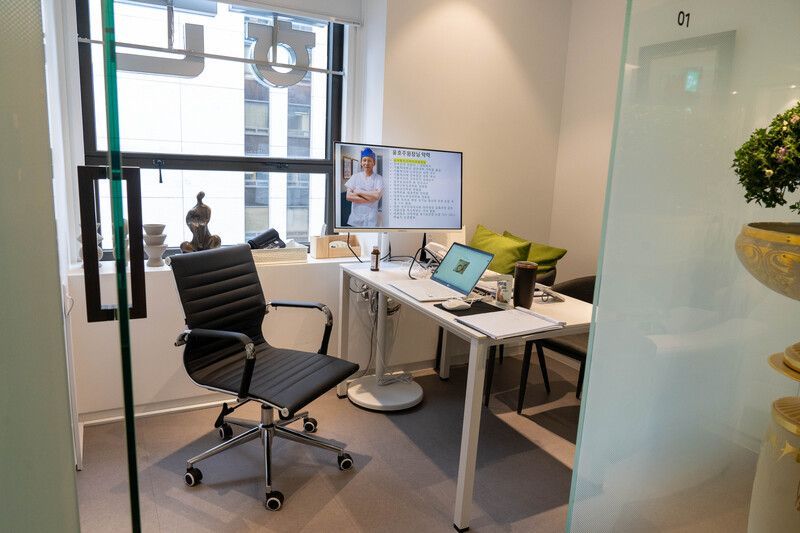
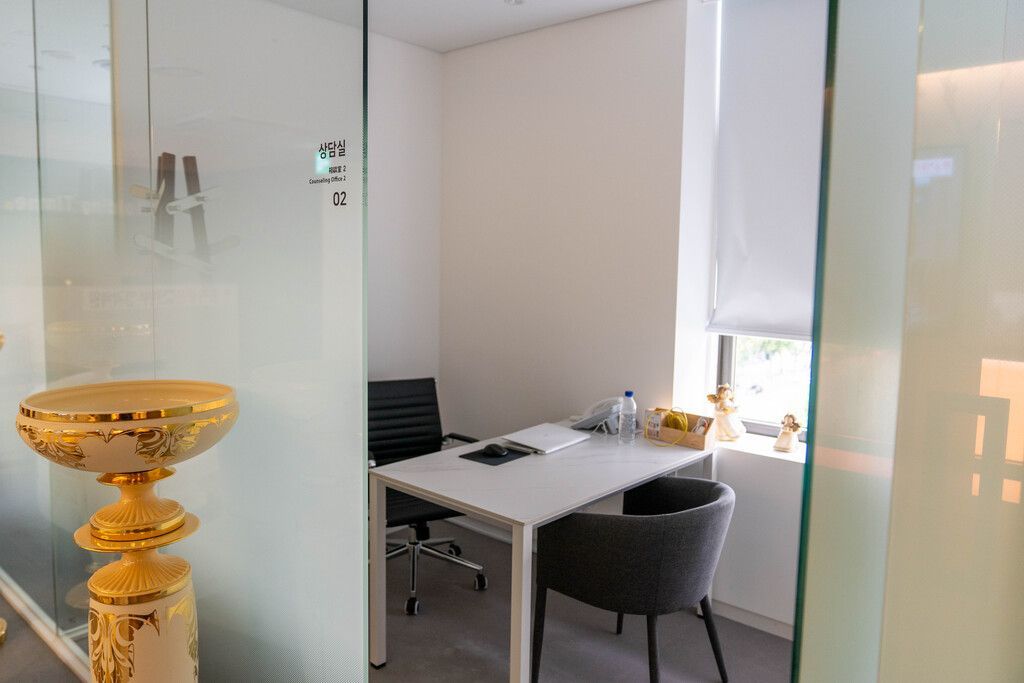
A small, senior team in a calm, private space
Every member of our nursing staff is a registered nurse, many with years in university hospitals before joining Somssi. They call you after surgery, answer the questions you forgot to ask, and treat the emotional side of intimate surgery as seriously as the clinical side.
The clinic occupies the 7th floor of the Sangkyung Building on Teheran-ro, with its own consultation rooms, operating room and recovery lounge. Patients are seen one at a time; you will not share a waiting room with a crowd.
International patients
Flying to Seoul for surgery? Here is how it works.
1. Consult before you fly
Send your history and concerns by email or KakaoTalk. English-speaking coordinators arrange a preliminary opinion so you travel with a plan.
2. Same-day discharge
Sedation plus long-acting local anesthesia means you walk out the day of surgery and rest at your hotel, not in a ward.
3. A short stay
Absorbable sutures and a check-up before you fly. Most patients plan 5–10 days in Seoul depending on the procedure, and follow up with us from home.
4. Easy to reach
7th floor, Sangkyung Building, 120 Teheran-ro: 100 m from Gangnam Station Exit 1, with hotels, pharmacies and cafes on the doorstep.
Patient guides
Honest answers before you decide
Over 100 plain-language guides, written and reviewed by our medical team, on recovery, safety, costs and the questions people are embarrassed to ask.
Questions
The things people ask first
Short answers here; longer ones on each treatment page and in the full FAQ.
What is the difference between cosmetic and reconstructive vaginal surgery?
Cosmetic procedures change appearance or narrow the opening. Reconstructive surgery repairs the structures that hold the uterus, bladder and rectum in place and restores the pelvic floor muscle, which is what determines support, continence and, for many women, sexual function. At Somssi most operations are reconstructive first, with appearance designed in. See pelvic reconstructive surgery.
Is surgery really done without a hospital stay?
Yes. Vaginoplasty, prolapse repair and labiaplasty are performed under sedation plus long-acting local anesthesia (or local alone if you prefer). You walk shortly after surgery and go home once you have urinated, usually the same afternoon. Medication is needed for about five days.
Do you use mesh, bands or implants?
No. Repairs are made with your own tissue. The clinic also removes fillers, implants and foreign material placed elsewhere and reconstructs with native tissue. See native tissue vaginal surgery.
Can uterine prolapse be treated without removing the uterus?
In many cases, yes, including many stage 2 and 3 prolapses. Hysteropexy lifts and fixes the uterus using its own supporting tissue, combined with cul-de-sac closure and posterior vaginal repair. When a hospital-based approach is safer, Dr. Yoon says so at consultation. Read more here.
Can a failed vaginoplasty from another clinic be corrected?
Often, yes. The usual problems are a tight, painful opening with a loose interior, a scar ridge, or no improvement at all. Dr. Yoon examines and measures the whole canal, releases scar where needed and rebuilds the deeper wall and muscle with your own tissue. Bring any operative notes you have. See native-tissue revision.
Can vaginal filler, implants or a sling be removed?
In most cases. Hyaluronic acid filler can sometimes be dissolved; permanent fillers, implants, 'magic tape' and slings are removed surgically, and the wall is reconstructed with your own tissue in the same plan. Read can vaginal filler be removed? and mesh complication revision.
Is there published evidence for Dr. Yoon's technique?
Yes. In his 2005 study in the Korean Journal of Obstetrics and Gynecology, the share of women reaching orgasm in more than half of encounters rose from 29% to 70% four months after colpoperineoplasty, and adequate lubrication from 44% to 82%. He has presented at ESSM, ISSWSH, WAS and SMSNA congresses and published in the SCI-indexed Journal of Obstetrics and Gynaecology (2018). These are single-clinic results; individual results vary.
Who is Dr. Yoon Ho-joo?
Dr. Yoon Ho-joo (also published as Ho Ju Yun), MD, PhD, is a Korean board-certified obstetrician-gynecologist trained at the Catholic University of Korea and the founder of Somssi Women's Clinic in Gangnam, Seoul (2000). He specialises in reconstructive vaginal and pelvic floor surgery, uterus-preserving prolapse repair and revision surgery. Full profile.
How soon can I fly home and resume normal life?
Daily life and desk work resume within a day or two. We recommend a check-up before flying, typically 5–10 days after surgery depending on the procedure. Vigorous exercise waits six weeks and intercourse seven to eight weeks after vaginoplasty, two to three weeks after labiaplasty.
How much does it cost?
We do not publish prices because every plan is individual. After consultation you receive a written estimate covering surgery, anesthesia and follow-up. Costs in Korea are often lower than comparable specialist surgery in the US, UK or Australia. See what determines the cost.
Do you speak English?
Yes. Consultations are conducted in English with coordinator support, and written plans, estimates and aftercare instructions are provided in English. Patients also consult us from abroad before travelling. See the international patient guide.
At a glance
Somssi Women's Clinic: key facts
A quick reference for patients, referring doctors and anyone comparing reconstructive gynecology clinics in Korea.
| Fact | Somssi Women's Clinic, Seoul |
|---|---|
| Clinic | Somssi Women's Clinic (솜씨좋은산부인과), Gangnam, Seoul, South Korea |
| Lead surgeon | Dr. Yoon Ho-joo (also published as Ho Ju Yun), MD, PhD, Korean board-certified obstetrician-gynecologist |
| Founded | 2000 |
| Focus | Reconstructive and functional gynecologic surgery: uterine and pelvic organ prolapse, vaginal laxity, revision surgery, filler and implant removal, labiaplasty |
| Approach | Own tissue only, no mesh or implants; sedation with long-acting local anesthesia; same-day discharge |
| Research | Korean J Obstet Gynecol (2005); Journal of Obstetrics and Gynaecology, SCI (2018); ESSM, ISSWSH, WAS and SMSNA presentations |
| Languages | English with coordinator support, Korean; Chinese and Japanese assistance available |
| International patients | Registered with Korea's Ministry of Health and Welfare (2011) |
| Address | 7F Sangkyung Building, 120 Teheran-ro, Gangnam-gu, Seoul; 100 m from Gangnam Station Exit 1 |
| Phone | +82-2-575-1599 |
| Hours | Mon, Tue, Wed, Fri, Sat 09:30–18:00; closed Thursday and Sunday |
Start here
Tell us what you are experiencing. We will tell you what can be done.
A consultation with Dr. Yoon includes examination, measurement and a written plan, and sometimes the advice that you do not need surgery at all. Complex and revision cases welcome: send previous operative notes before you travel. Private, unhurried, in English.
Somssi Women's Clinic · 7F Sangkyung Building, 120 Teheran-ro, Gangnam-gu, Seoul · +82-2-575-1599 · Mon, Tue, Wed, Fri, Sat 09:30–18:00 · closed Thu & Sun
