
Vaginoplasty & Tightening · Treatment
Native Tissue Vaginal Surgery (No Mesh) in Gangnam, Seoul
Native tissue vaginal surgery repairs vaginal laxity, rectocele and uterine descent using only your own tissue and absorbable sutures, with no synthetic mesh, bands or implants. Somssi Women's Clinic in Gangnam, Seoul has used this approach for every vaginal procedure since 2000: posterior colporrhaphy, hysteropexy, culdoplasty and perineoplasty are all performed by rebuilding your existing wall and muscle. It avoids mesh-specific complications such as erosion, and allows same-day discharge.
Medically reviewed by Dr. Yoon Ho-joo, MD, PhD, OB/GYN specialist, Somssi Women's Clinic · Last updated October 2026
At a glance
Key facts
The essentials, based on how Somssi Women's Clinic performs this procedure or answers this question. Your plan is confirmed at consultation.
- Materials: Your own vaginal wall, muscle and supporting tissue; absorbable sutures only
- Procedures: Posterior colporrhaphy, hysteropexy, culdoplasty, perineoplasty, revision after implants or filler
- Procedure time: 50 minutes to 1 hour
- Anesthesia: Sedation plus long-acting local, or local alone
- Hospital stay: None; discharged after urinating
- Intercourse: After 7–8 weeks
- Performed by: Dr. Yoon Ho-joo, MD, PhD, member of the Korean Society of Urogynecology
Native tissue vaginal surgery at a glance
Laxity, rectocele and uterine descent repaired with your own tissue and absorbable sutures only.
- native tissue vaginal surgery
- no mesh vaginal repair
- own tissue reconstruction
- revision vaginoplasty Korea
- mesh-free prolapse repair
- vaginal surgery Seoul
- Own tissue onlyMaterials
- 50–60 minProcedure time
- Same dayDischarge
- After 7–8 weeksIntercourse
- MeasureCanal and support assessed.
- Remove what does not belongFiller or implants, if present.
- RebuildColporrhaphy, hysteropexy, culdoplasty, perineoplasty.
- RecoverNo synthetic material left behind.
Illustration: Somssi Women's Clinic, Seoul. Schematic, not to scale; your plan is set by Dr. Yoon Ho-joo after examination.
What is native tissue vaginal surgery?
Native tissue surgery means repairing the vagina and pelvic floor with the patient's own tissue: the vaginal wall, the pelvic floor muscles and the ligaments that support the uterus are re-approximated and reinforced with sutures, and nothing synthetic is left behind. It is the traditional, textbook approach to posterior colporrhaphy, perineorrhaphy and uterine suspension.
The alternative, placing a synthetic mesh or tape through the vagina to hold tissue in place, became common in the 2000s. Since then regulators, including the US FDA, have issued safety communications about transvaginal mesh for prolapse because of erosion, chronic pain and infection, and in 2019 the FDA ordered manufacturers to stop selling such products for prolapse repair in the United States. Native tissue repair avoids these device-specific problems.
Somssi Women's Clinic is a surgical gynecology clinic in Gangnam, Seoul, founded in 2000 and led by Dr. Yoon Ho-joo, MD, PhD. The clinic's stated policy is that no foreign material, whether mesh, bands, silicone implants or filler, is used in any of its vaginal procedures, from simple laxity to advanced uterine descent.
Who is a good candidate?
- Vaginal laxity after childbirth or menopause that you would like corrected without implanted material
- Rectocele or mild to moderate uterine descent where you wish to keep your uterus
- A short or gaping perineum after obstetric injury
- Complications from a previous implant, mesh or filler procedure elsewhere: pain, exposure, infection, a hard or shifting lump, or a result that did not help
- A preference for an operation that can be revised or repeated later without having to remove a device
Women with severe stress incontinence may still be offered a mid-urethral tape by a urogynecologist, since that is a different problem with its own evidence base; Dr. Yoon will advise honestly if your needs lie outside what native tissue repair can achieve. See also Pelvic Organ Prolapse Repair.
Native tissue surgery is also the natural choice for women who may need further surgery in the future. Tissue continues to age and another vaginal birth can stretch a repair; a native repair can be revised with the same technique, whereas revising a mesh repair means dealing with the mesh first.
How Somssi performs native tissue vaginal surgery
Precise measurement
Every operation is planned from measurements of vaginal length, width and wall thickness, pelvic floor contraction and the position of the cervix, with a pelvic ultrasound of the uterus and ovaries. A normal vagina is about 8 to 9 cm long; when the cervix has descended toward the midpoint, uterine suspension is included.
Restoring position, then muscle, then wall
The clinic's reconstruction follows a fixed order. First, a descended uterus is lifted by about 2 to 4 cm and fixed by suturing its own supporting tissues (hysteropexy), and the cul-de-sac behind the cervix is closed (culdoplasty). Second, the pelvic floor muscles on either side are gathered toward the center. Third, the posterior vaginal mucosa, peeled to under 1 mm with ophthalmic micro-scissors rather than cut, is folded and closed with a two-layer fold and fusiform suture, thickening the wall by 2 to 3 cm.
Reinforcing the opening
At the entrance the pubococcygeus muscles are reinforced with the clinic's figure-8 suturing pattern, and the perineal body is rebuilt where it is short. All sutures are absorbable and dissolve in about a week, leaving only your own healed tissue. The anterior wall, urethra and bladder are not operated on.
Revision after implants or filler
For women who have had silicone implants, synthetic material or vaginal filler placed elsewhere, the foreign material is removed first and the tissue is restored with the same native repair. Read more under Vaginal Mesh Complication Revision and Vaginal Filler Removal.
Anesthesia, duration and hospital stay
Native tissue repair at Somssi takes about 50 minutes to 1 hour under sedation combined with a mix of long-acting local anesthetics, or under local anesthesia alone. A non-narcotic anti-inflammatory is injected at the end. There is no hospital stay: you walk immediately and go home once you have urinated. Before sedation your medical history, medications and any previous anesthesia reactions are reviewed; fast for 2 hours before your visit, wear loose clothing and remove nail polish.
Recovery timeline
| When | What you can do |
|---|---|
| Same day | Shower, walk, go home |
| Days 1–5 | Work and daily life; medication for about 5 days; no sitz bath needed |
| 1 week | Sutures absorbed; golf |
| 6 weeks | Vigorous exercise, bathing, sauna |
| 7–8 weeks | Intercourse; final internal photographs |
Because nothing synthetic needs to integrate, there is no device-related healing phase; the limiting factor is simply the time your own tissue needs to knit. Follow-up (0–5 sessions) can be arranged remotely.
Results and what to expect
You can expect a restored vaginal length and diameter, a thicker posterior wall, a stronger pelvic floor squeeze and, where the uterus was descended, relief of the heavy, dragging sensation. In the clinic's experience, preserving nerves and vessels means sensation and lubrication are maintained and often improve over five to six months as the thickened wall gains blood supply.
Native tissue repairs can loosen again over the years, particularly after another vaginal birth or with advancing age, and some studies report higher anatomical recurrence than mesh repairs for advanced prolapse. The trade-off is that recurrence after native repair can be treated with a further native repair, whereas mesh complications can be very hard to reverse. Results vary with tissue quality and hormonal status.
The clinic reports that its own review of 150 women treated for pelvic organ prolapse, presented at the Korean Society for Sexual Medicine in 2026, found that about three quarters chose uterus-preserving native tissue surgery and most reported improved quality of life. These are the clinic's own reported figures rather than independent data.
Risks and how we reduce them
Risks include bleeding, infection, wound separation, over- or under-correction, scarring, altered sensation, painful intercourse and recurrence. Posterior repair carries a small risk of rectal or cul-de-sac injury, and uterine suspension carries a small risk of injury to nearby structures. Sedation involves standard anesthesia risks.
The absence of mesh removes the risks of erosion, device infection and chronic mesh pain entirely. The remaining risks are reduced by peeling rather than cutting the mucosa, operating only on the posterior wall, preserving vaginal length and sizing the canal to the cervix. Our guide Is Vaginoplasty in Korea Safe? covers each point.
Why international patients choose Somssi
Dr. Yoon has performed native tissue vaginal surgery exclusively for more than 25 years and has presented research on pelvic floor repair and sexual function at ESSM, ISSWSH, WAS and SMSNA. The clinic has been registered for foreign patients with the Ministry of Health and Welfare since 2011, provides English consultations, same-day discharge and remote follow-up, and is 100 meters from Gangnam Station Exit 1. See international patients, meet Dr. Yoon or contact us.
Private consultation
Talk it through with Dr. Yoon's team
English-speaking coordinators, a written treatment plan and a clear quote after your consultation. Same-day discharge for most procedures.
Mon, Tue, Wed, Fri, Sat 09:30–18:00 (KST). Closed Thu, Sun and holidays. 7F Sangkyung Building, 120 Teheran-ro, Gangnam-gu, Seoul.
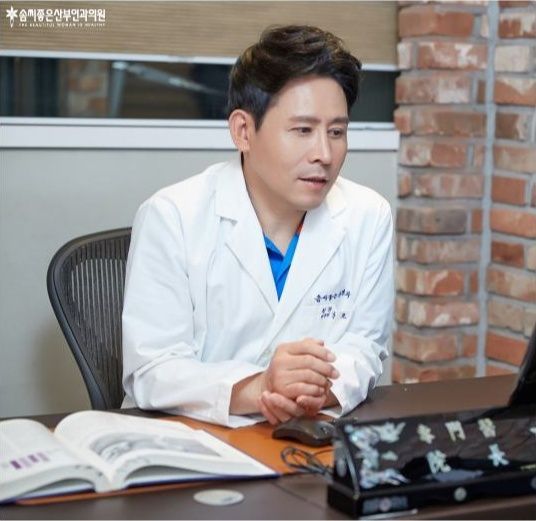
Dr. Yoon Ho-joo, MD, PhD
OB/GYN specialist, Catholic University of Korea. Founder of Somssi Women's Clinic (2000). Published on female sexual function after reconstructive vaginal surgery; speaker at ESSM, ISSWSH, WAS and SMSNA.
Questions patients ask
Frequently asked questions
Short, honest answers. For anything personal, a consultation is the right place to ask.
Is native tissue repair as strong as mesh?
For posterior wall and perineal repair, native tissue is the standard and performs well. For advanced anterior or apical prolapse, some studies show mesh holds anatomy better but at the cost of erosion and pain that can be hard to treat. Native tissue repair can be revised if it loosens; mesh complications often cannot be fully undone. Many urogynecologists now favor native tissue first.
Why does Somssi refuse to use mesh or implants?
The clinic's position is that the vaginal wall is thin and mobile, and any permanent foreign body inside it can be felt, migrate, become exposed or infected. Its own revision program includes removing such material placed elsewhere. Rebuilding with the patient's own wall and muscle avoids these problems, and the clinic reports it has never needed implants even for advanced uterine descent.
Can I keep my uterus with native tissue surgery?
Usually, yes. Hysteropexy lifts and fixes a descended uterus using its own supporting tissue, combined with closure of the cul-de-sac. Hysterectomy is reserved for genuine uterine disease. Very advanced prolapse is assessed individually and may require staged treatment, which Dr. Yoon will explain at consultation. Our guide on hysteropexy versus hysterectomy compares the options.
Can native tissue surgery fix problems from my previous filler or implant?
In many cases. The foreign material is removed, the damaged tissue is assessed, and the wall and pelvic floor are rebuilt with your own tissue. Outcomes depend on how much scarring the earlier procedure left, so a detailed examination, and ideally the records of what was placed, are needed before a plan can be made.
Will my body reject my own tissue?
No. Because nothing foreign is implanted, there is no rejection or device reaction to consider. The sutures are absorbable and are gone within about a week. Healing follows the normal course of any surgical wound, with the usual risks of infection or separation but none of the device-specific complications of mesh.
Does native tissue repair last?
The repair is intended to be permanent, but tissue continues to age and another vaginal birth can stretch it again. The clinic reports that its two-layer suturing is designed so the repair does not stretch back, and it preserves vaginal length because a shortened vagina is more likely to prolapse again. If laxity does recur years later, a further native repair is possible.
Keep reading
Related treatments and guides
- Vaginoplasty (Vaginal Tightening Procedure) — the clinic's flagship native tissue operation
- Is Vaginoplasty in Korea Safe? — risks compared with and without mesh
- What Does Vaginoplasty Actually Repair? — the tissues that are rebuilt
- How Do I Choose the Best Vaginoplasty Surgeon in Korea? — questions to ask about materials
- Vaginal Mesh Complication Revision — removing mesh placed elsewhere
- Uterine Prolapse Surgery — uterus-preserving suspension
- Dr. Yoon Ho-joo — 25 years of own-tissue surgery
Sources and medical review
- US Food and Drug Administration, safety communications and 2019 order on surgical mesh for transvaginal repair of pelvic organ prolapse.
- Te Linde's Operative Gynecology (textbook), native tissue repair of pelvic organ prolapse.
- International Urogynecological Association (IUGA), patient information on prolapse surgery with and without mesh.
- Yoon H.J. Perineal plastic surgery (colpoperineoplasty) and female sexual function. Korean Journal of Obstetrics and Gynecology, vol. 48, no. 6, 2005.
Next step
A consultation first. A decision only when you are ready.
Tell us what you are experiencing and what you hope to change. Dr. Yoon examines, measures and explains the options, including when no surgery is the right answer. International patients can start with an online consultation before travelling to Seoul.
