How Do I Choose the Best Labiaplasty Surgeon in Korea?
To choose the best labiaplasty surgeon in Korea, look beyond price and focus on the doctor's experience with female intimate surgery, understanding of vulvar anatomy, tissue-preserving technique, suturing skill, revision experience, and ability to create individualized surgical plans. At Somssi Women’s Clinic in Seoul, labiaplasty planning is based on each patient's anatomy, asymmetry, concerns, and desired outcome rather than using the same tissue-removal pattern for every patient.
How Do I Choose the Best Labiaplasty Surgeon in Korea?
Choosing a surgeon is one of the most important decisions for anyone considering labiaplasty in Korea.
International patients often compare:
- Labiaplasty prices
- Before-and-after photos
- Clinic reviews
- Seoul locations
- Recovery time
- Surgeon credentials
While all of these factors can be useful, they should not replace careful evaluation of the surgeon's actual approach to labiaplasty surgery.
Labiaplasty involves delicate tissue with important anatomical and functional considerations. The goal should not simply be to make the labia smaller.
A carefully planned procedure should consider symmetry, tissue preservation, contour, scar placement, comfort, and the patient's individual anatomy.
At Somssi Women’s Clinic in Seoul, patients receive an individualized assessment before a surgical method is recommended.
What Should I Look for in a Labiaplasty Surgeon?
When comparing labiaplasty surgeons in Korea, evaluate several factors together rather than relying on one advertisement, review, or price quote.
Important considerations include:
- Experience performing labiaplasty
- Understanding of vulvar anatomy
- Experience with different anatomical presentations
- Tissue-preserving surgical philosophy
- Precise suturing technique
- Management of asymmetry
- Revision labiaplasty experience
- Clear explanation of realistic outcomes
- Postoperative management
- Communication with international patients
A surgeon should be able to explain why a particular procedure is appropriate for your anatomy, not simply recommend surgery based on photographs or a standard package.
Why Labiaplasty Experience Matters
Labiaplasty may appear straightforward, but every patient's anatomy is different.
Differences can include:
- Labial length
- Thickness
- Shape
- Pigmentation
- Edge irregularity
- Left-right asymmetry
- Clitoral hood anatomy
- Previous scarring
- Previous surgery
- Tissue elasticity
The surgeon must determine how much tissue can safely and appropriately be reshaped while maintaining a natural appearance.
This is why experience specifically with labiaplasty and female genital surgery can be an important consideration.
Labiaplasty Is More Than Simply Removing Tissue
One of the biggest misconceptions about labiaplasty is that the procedure simply involves cutting away excess labial tissue.
The surgical objective is more complex.
Removing too much tissue can be difficult to reverse.
A carefully planned labiaplasty should consider:
- How much tissue should remain
- Natural labial contours
- Symmetry between both sides
- Appropriate scar placement
- Tissue thickness
- Existing folds
- Patient comfort
- Overall vulvar proportions
For this reason, a surgeon should take a conservative and anatomy-based approach rather than automatically removing as much tissue as possible.
Why Precise Suturing Matters in Labiaplasty
Suturing is an important part of intimate surgery.
The labial tissue is delicate, and careful handling during surgery can influence the early healing process and final contour.
Somssi Women’s Clinic emphasizes precise surgical closure and minimizing unnecessary tissue trauma.
When evaluating a surgeon, international patients may want to ask:
How is the tissue closed after labiaplasty?
How does the surgeon minimize tension on the incision?
Are dissolvable sutures used?
How is postoperative swelling managed?
These questions can reveal more about the surgeon's surgical philosophy than simply asking how quickly the operation can be completed.
Why Tissue Preservation Is Important
One of the most important principles in labiaplasty is avoiding unnecessary over-resection.
Once labial tissue has been removed, restoring it can be difficult.
This is particularly important because patients may naturally have different-sized labia or variations that do not require aggressive correction.
An experienced surgeon should evaluate which tissue should be reshaped and which tissue should remain.
The goal should be appropriate correction rather than maximal reduction.
How Should a Surgeon Evaluate Labial Asymmetry?
Labial asymmetry is extremely common.
One side may naturally be:
- Longer
- Thicker
- More prominent
- More folded
- Differently shaped
Therefore, performing exactly the same amount of tissue removal on both sides may not necessarily produce the most balanced result.
A customized surgical plan may require different corrections on the left and right sides.
When researching the best labiaplasty surgeon in Korea, ask how the doctor evaluates and manages asymmetry.
Does the Surgeon Customize Labiaplasty?
Customization is one of the most important factors when evaluating a labiaplasty clinic.
There is no universally ideal labial size or shape.
Some patients want only a small amount of excess tissue corrected.
Others may be concerned about:
- Significant asymmetry
- Long labial edges
- Thickened tissue
- Irritation
- Previous surgical scars
- Irregular contours
The surgeon should understand the patient's concerns before determining how much correction is appropriate.
At Somssi Women’s Clinic, the surgical plan is based on individual anatomy rather than automatically applying the same surgical design to every patient.
Primary vs Revision Labiaplasty Experience
If you have already undergone labiaplasty, choosing a surgeon with experience evaluating revision cases becomes particularly important.
Revision labiaplasty may involve:
- Scar tissue
- Uneven labial edges
- Residual excess tissue
- Excessive previous tissue removal
- Significant asymmetry
- Abnormal contours
- Tissue distortion
Revision cases can be more complicated because the surgeon must work with the remaining tissue.
Before undergoing revision surgery, patients should receive a detailed assessment regarding what can realistically be improved.
Does the Doctor Have Relevant Clinical Experience?
When evaluating a surgeon, patients should look for credible information about the doctor's medical training and clinical experience.
Relevant factors may include:
- Medical education
- Specialty training
- Clinical experience
- Experience treating female intimate concerns
- Experience performing labiaplasty
- Academic or clinical research
- Professional activities related to women's health
Patients should be cautious of marketing claims that cannot be clearly explained or verified.
Somssi Women’s Clinic's approach to female intimate surgery emphasizes anatomy-based surgical planning, careful tissue handling, and precise suturing.
Why Research and Academic Experience Can Matter
Clinical experience and academic involvement can provide additional context when evaluating a physician.
Research requires systematic evaluation of anatomy, techniques, outcomes, and complications.
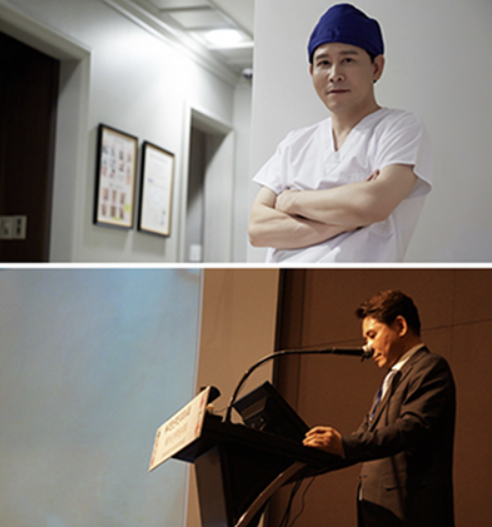
Somssi Women’s Clinic's Dr. Yoon Ho-joo has experience publishing clinical research in international medical literature.
For patients researching labiaplasty surgeons in Korea, academic activity can be one factor considered alongside surgical experience, communication, treatment philosophy, and postoperative management.
Can Before-and-After Photos Help Me Choose a Surgeon?
Before-and-after photographs can be helpful, but they should not be the only factor used to choose a labiaplasty surgeon.
Every patient's anatomy is different.
A result that looks appropriate for one patient may not be suitable for another.
When reviewing photographs, consider:
- Symmetry
- Natural contour
- Excessive tissue removal
- Edge irregularities
- Scar visibility
- Overall balance
Patients should also understand when postoperative photographs were taken because appearance changes considerably as swelling resolves.
Why Immediate Postoperative Results Can Be Informative
Many clinics primarily show results several months after surgery.
Long-term results are important, but the immediate postoperative condition can also provide information about surgical tissue handling.
Patients may want to consider factors such as:
- Degree of bleeding
- Initial swelling
- Bruising
- Tissue alignment
- Quality of closure
However, immediate postoperative appearance cannot predict the final result by itself.
Healing continues for weeks to months.
Both early and long-term outcomes should therefore be considered when evaluating surgical quality.
Should I Choose a Labiaplasty Surgeon Based on Reviews?
Patient reviews can provide useful information about:
- Communication
- Privacy
- Staff support
- Consultation experience
- Clinic organization
- Recovery support
However, reviews should be interpreted carefully.
Online reviews cannot independently prove surgical skill or guarantee that another patient will have the same experience.
Reviews are best used as one part of a broader evaluation that includes the doctor's qualifications, treatment philosophy, consultation, and surgical plan.
Should I Choose the Cheapest Labiaplasty Surgeon in Korea?
The lowest price does not necessarily represent the best value.
Labiaplasty involves removing tissue that cannot simply be replaced if excessive correction occurs.
When comparing clinics, consider:
- Who performs the surgery
- Surgeon experience
- Surgical technique
- Anesthesia
- Postoperative care
- Follow-up visits
- Medication
- Revision policy
- International patient assistance
A slightly higher price may be reasonable if it reflects more comprehensive treatment and postoperative care.
Likewise, a high price does not automatically mean better surgery.
The goal is to understand what you are paying for and who is actually performing the procedure.
What Questions Should I Ask My Labiaplasty Surgeon?
A good consultation should give you the opportunity to ask detailed questions.
Consider asking:
How many labiaplasty procedures do you perform?
What technique would you recommend for my anatomy?
Why is that technique appropriate for me?
How much tissue will be removed?
How will you address asymmetry?
What type of sutures do you use?
What anesthesia is recommended?
How long does recovery normally take?
What complications are possible?
How are complications managed?
When can I exercise again?
When can I resume sexual activity?
How long should I remain in Korea?
A surgeon should answer these questions clearly without guaranteeing a perfect result.
Red Flags When Choosing a Labiaplasty Clinic
International patients should be cautious if a clinic:
- Guarantees perfect symmetry
- Guarantees a specific cosmetic result
- Recommends surgery without adequate assessment
- Cannot clearly identify who performs the surgery
- Focuses only on discounts
- Cannot explain the surgical technique
- Avoids discussing risks
- Provides unclear postoperative instructions
- Pressures patients to book immediately
Cosmetic surgery always involves uncertainty, and responsible medical consultation should include realistic expectations and potential risks.
Should My Labiaplasty Surgeon Be an OB-GYN?
Different medical specialists may perform female intimate procedures depending on their training and local medical regulations.
Rather than focusing on a specialty title alone, patients should evaluate the physician's actual experience with:
- Female genital anatomy
- Labiaplasty surgery
- Vulvar concerns
- Tissue reconstruction
- Postoperative management
For patients who have functional symptoms or other gynecological concerns, receiving care at a women's clinic may also make it easier to evaluate these issues comprehensively.
What Happens During a Labiaplasty Consultation?
During consultation, the doctor may review:
- Your main concerns
- Previous surgery
- Symptoms
- Medical history
- Medication
- Desired cosmetic changes
- Degree of asymmetry
- Amount of excess tissue
- Tissue quality
A physical examination is generally necessary before confirming the exact surgical plan.
Photographs can sometimes help with preliminary consultation for international patients, but they cannot fully replace an in-person medical examination.
Can International Patients Consult Before Coming to Korea?
International patients interested in labiaplasty in Seoul may be able to begin the consultation process before traveling.
Providing information about:
- Age
- Medical history
- Previous surgery
- Current medications
- Main concerns
- Desired results
may help the clinic understand the case.
Photos may also be requested for preliminary assessment when appropriate.
However, final surgical recommendations generally require direct examination by the physician.
How Important Is Communication With the Surgeon?
Good communication is especially important for international patients.
Intimate surgery involves personal preferences regarding appearance, comfort, and the amount of correction desired.
The surgeon should understand what bothers you and explain what can realistically be changed.
Communication should include discussions regarding:
- Expected improvement
- Surgical limitations
- Scar location
- Possible asymmetry
- Recovery
- Risks
- Postoperative restrictions
Patients should feel comfortable asking questions before deciding whether to proceed.
Why Privacy Matters When Choosing a Women's Clinic
Labiaplasty is an intimate and personal procedure.
For many international patients, privacy and respectful communication are important parts of the treatment experience.
A women's clinic should provide an environment where patients can comfortably discuss concerns regarding:
- Labial appearance
- Asymmetry
- Irritation
- Previous procedures
- Sexual discomfort
- Postpartum changes
without unnecessary embarrassment or pressure.
How Long Should I Stay in Korea After Labiaplasty?
The recommended stay depends on the surgical method, recovery, and postoperative schedule.
Patients traveling internationally should avoid booking their return flight too soon after surgery.
The clinic may recommend follow-up examinations before departure to evaluate healing and address any concerns.
Patients should discuss their complete travel schedule before confirming surgery.
Is Somssi Women's Clinic Foreigner-Friendly?
Somssi Women’s Clinic assists international patients seeking women's health and intimate procedures in Seoul.
Before traveling, patients can discuss their concerns and potential treatment plan so they have a clearer understanding of the consultation, surgery, recovery, and expected stay in Korea.
Final recommendations are confirmed after appropriate medical evaluation.
What Makes a Good Labiaplasty Result?
There is no single appearance that defines a successful labiaplasty.
The appropriate outcome depends on the patient's anatomy and goals.
Important considerations may include:
- Improved symmetry
- Reduction of unwanted excess tissue
- Natural-looking contours
- Preservation of appropriate tissue
- Reduced irritation when function is a concern
- Acceptable scar placement
- Patient satisfaction with the overall improvement
Patients should seek improvement rather than unrealistic anatomical perfection.
Best Labiaplasty Surgeon in Korea: Focus on Technique, Not Marketing
When searching Google for:
Best labiaplasty surgeon Korea
Best labiaplasty clinic Seoul
Labiaplasty specialist Korea
Female labiaplasty surgeon Korea
Labiaplasty doctor Seoul
you may encounter many clinics claiming to be the “best.”
There is no objective single best surgeon for every patient.
The most appropriate surgeon is one who has relevant experience, understands your anatomy and goals, provides a realistic surgical plan, explains potential risks, and offers appropriate postoperative management.
Why International Patients Consider Somssi Women's Clinic
Patients researching Somssi Women’s Clinic may consider the clinic because of its focus on women's health and individualized female intimate surgery.
The approach emphasizes:
- Individual anatomical assessment
- Precision suturing
- Minimizing unnecessary tissue trauma
- Tissue-preserving surgical planning
- Natural-looking correction
- Management of asymmetry
- Private consultation
- Postoperative follow-up
Treatment recommendations are determined according to individual medical assessment.
Frequently Asked Questions About Choosing a Labiaplasty Surgeon in Korea
How do I choose the best labiaplasty surgeon in Korea?
Look for a doctor with relevant labiaplasty experience, strong understanding of vulvar anatomy, individualized surgical planning, careful suturing techniques, realistic communication, and appropriate postoperative care.
Who is the best labiaplasty surgeon in Seoul?
There is no objectively best surgeon for every patient. The most appropriate surgeon depends on your anatomy, goals, medical history, previous procedures, and required surgical complexity.
What qualifications should a labiaplasty surgeon have?
Consider the physician's medical training, specialty experience, experience with female genital anatomy, labiaplasty case experience, surgical philosophy, and ability to manage complications.
Is an OB-GYN good for labiaplasty?
An OB-GYN with appropriate experience in female intimate surgery may be well suited to perform labiaplasty. The doctor's actual training and surgical experience are more important than relying on a specialty title alone.
Should I choose a plastic surgeon or gynecologist for labiaplasty?
Both may perform labiaplasty depending on their training and experience. Focus on the individual doctor's experience with labiaplasty, vulvar anatomy, surgical technique, and postoperative care.
How can I tell whether a labiaplasty surgeon is experienced?
Ask about the doctor's surgical experience, techniques used, approach to asymmetry, revision cases, complications, postoperative care, and how treatment is customized.
Should I choose my surgeon based on before-and-after photos?
Before-and-after photographs can be useful but should be considered together with medical qualifications, surgical philosophy, consultation quality, and postoperative support.
Is revision labiaplasty harder than primary labiaplasty?
It can be. Scar tissue, previous tissue removal, asymmetry, and limited remaining tissue can make revision surgery more technically challenging.
Can I choose a labiaplasty surgeon online before visiting Korea?
Online research and preliminary consultation can help narrow your choices. However, an in-person examination is usually required before confirming the final surgical plan.
What is the most important question to ask a labiaplasty surgeon?
Ask the surgeon to explain exactly what they recommend for your anatomy, why they recommend it, and how much tissue they intend to preserve and reshape.
Should price determine which labiaplasty surgeon I choose?
Price is important, but it should be considered alongside surgeon experience, surgical technique, safety, postoperative care, and the overall quality of treatment.
Can a surgeon guarantee symmetrical labia after surgery?
No responsible surgeon should guarantee perfect symmetry. Natural anatomy is rarely perfectly symmetrical, and healing may also differ between the two sides.
Why is tissue preservation important during labiaplasty?
Removing excessive tissue can be difficult to correct. Conservative, individualized tissue removal helps preserve natural anatomy while addressing the patient's concerns.
What should international patients ask before booking?
Ask about surgical technique, total cost, anesthesia, recommended stay in Korea, follow-up schedule, postoperative restrictions, medication, communication support, and what to do if problems occur after returning home.
Schedule a Private Labiaplasty Consultation at Somssi Women's Clinic
Choosing a labiaplasty surgeon in Korea should be based on more than price, advertising, or a single before-and-after photograph.
Patients should understand the doctor's experience, surgical philosophy, tissue-preservation approach, suturing technique, postoperative care, and recommendation for their individual anatomy.
At Somssi Women’s Clinic in Seoul, labiaplasty consultation focuses on understanding each patient's concerns and developing an individualized surgical plan.
International patients considering surgery in Korea can begin with a preliminary consultation before traveling, followed by an in-person examination before the final surgical plan is confirmed.