
Vaginal Rejuvenation · Treatment
Cryotherapy in Gynecology: Cervical Lesions, Warts and Cold Aftercare
Cryotherapy in gynecology means destroying abnormal tissue with controlled cold, most often precancerous cells on the cervix or external genital warts, or simply using cold packs to ease swelling after intimate surgery. It is an office procedure with no hospital stay. At Somssi Women's Clinic in Gangnam, Seoul, Dr. Yoon Ho-joo uses cold mainly as an aftercare measure and discusses cryotherapy alongside laser, radiofrequency and excision when a cervical lesion or wart needs treatment.
Medically reviewed by Dr. Yoon Ho-joo, MD, PhD, OB/GYN specialist, Somssi Women's Clinic · Last updated October 2026
At a glance
Key facts
The essentials, based on how Somssi Women's Clinic performs this procedure or answers this question. Your plan is confirmed at consultation.
- Used for: precancerous cervical lesions (CIN), external genital warts, and cold-pack aftercare after surgery
- Procedure time: typically 10–15 minutes for cervical cryotherapy; a few minutes per wart session
- Anesthesia: usually none; local anesthetic on request
- Hospital stay: none; office procedure, walk out afterward
- After cervical cryotherapy: watery discharge for 2–4 weeks; no intercourse or tampons for about 4 weeks
- Cold aftercare at Somssi: ice packs for the first 3 days after labia minora reduction
- Performed by: Dr. Yoon Ho-joo, MD, PhD, OB/GYN specialist
Gynecologic cryotherapy at a glance
Controlled cold treatment for precancerous cervical lesions and genital warts, done as a short office procedure.
- cryotherapy cervix
- CIN treatment Korea
- genital wart freezing
- cervical lesion treatment Seoul
- HPV follow-up
- office gynecology procedure
- 10–15 minCervical cryotherapy
- Usually noneAnesthesia
- Walk outOffice procedure
- About 4 weeksNo intercourse or tampons
- Confirm the diagnosisPap, HPV or colposcopy findings reviewed.
- Freeze the areaA cold probe treats the abnormal tissue.
- Expect dischargeWatery discharge for 2–4 weeks is normal.
- Follow-up testRepeat screening confirms clearance.
Illustration: Somssi Women's Clinic, Seoul. Schematic, not to scale; your plan is set by Dr. Yoon Ho-joo after examination.
What is cryotherapy?
Cryotherapy means treating tissue with controlled cold. In gynecology it is used in two very different ways: as an ablative treatment that destroys abnormal cells by freezing them, and as simple cold therapy, an ice pack applied to limit swelling and pain after surgery.
The ablative form uses a metal probe cooled by compressed nitrous oxide or carbon dioxide, or liquid nitrogen applied to the skin. Ice crystals form inside the abnormal cells, which die and are shed over the following weeks while healthy tissue regrows underneath.
Somssi Women's Clinic is a surgical gynecology clinic in Gangnam, Seoul, founded in 2000 and led by Dr. Yoon Ho-joo, MD, PhD. This page explains where cryotherapy fits in women's health, what the evidence says, and how we use cold in our own practice, so that you can ask informed questions at your consultation.
Who is a good candidate?
Cryotherapy may be discussed if you have:
- A precancerous cervical lesion (cervical intraepithelial neoplasia, CIN) found on a Pap smear, HPV test and colposcopy, where the whole lesion is visible on the outer cervix and does not extend into the cervical canal.
- External genital warts caused by HPV types 6 and 11 that are small, few in number, or have not responded to topical treatment.
- Swelling and discomfort in the first days after an intimate surgery such as labia minora reduction, where cold packs are the standard comfort measure.
Cryotherapy is usually not the right choice for a large lesion, a lesion that reaches into the cervical canal, a result that suggests glandular changes or invasive disease, or during pregnancy, when cervical treatment is deferred until after delivery. In those cases excisional methods that give the pathologist a tissue sample, such as LEEP or conization, are preferred. For warts, laser, electrosurgery or excision may be chosen instead.
How cryotherapy is performed
Cervical cryotherapy
You lie as for a Pap smear. A speculum is placed, the cervix is cleaned, and the lesion is identified, often after a vinegar (acetic acid) wash that makes abnormal areas stand out. A probe tip matched to the size of the cervix is placed against the lesion and cooled to roughly minus 50 to minus 80 degrees Celsius.
The usual protocol is a double freeze: about three minutes of freezing, a five-minute thaw, then a second three-minute freeze. The ice ball should extend a few millimeters beyond the edge of the lesion. The visit takes 10–15 minutes, and most women describe cramping similar to a period rather than sharp pain, so anesthesia is rarely needed.
Genital wart cryotherapy
Liquid nitrogen is applied with a spray or cotton-tipped applicator for a few seconds until a thin frozen halo forms around each wart. Sessions are repeated every one to two weeks until the warts clear, typically over several visits. Local anesthetic is optional for sensitive areas.
Cold therapy after surgery
At Somssi, cold is used mainly as an aftercare tool. After labia minora reduction we advise an ice pack over a clean cloth for the first three days to limit swelling and bruising. Cold is not applied inside the vagina after vaginoplasty; there, a long-acting local anesthetic mix and an anti-inflammatory injection at the end of surgery manage early discomfort.
What Somssi offers
Our core work is reconstructive and cosmetic vaginal surgery. Cervical screening, HPV testing and Gardasil 9 vaccination are part of our general gynecology service, and the clinic performs radiofrequency conization for chronic cervicitis. If a screening result or a wart needs treatment, Dr. Yoon explains the options, cryotherapy, laser, radiofrequency, electrosurgery or excision, and recommends the one that fits your findings. See cervical screening and genital wart removal.
Anesthesia, duration and hospital stay
Cervical cryotherapy and wart freezing are office procedures: no fasting, no sedation, no hospital stay. You can take the subway home from Gangnam Station afterward. If you are anxious or very sensitive, a local anesthetic can be applied. Allow 30–45 minutes at the clinic, including consultation.
Recovery timeline
| When | What to expect and what you can do |
|---|---|
| Day of treatment | Mild cramping for a few hours; normal activity, work and walking |
| Days 1–14 | Heavy watery, sometimes blood-tinged discharge as frozen cervical tissue sheds; use pads, not tampons |
| Weeks 2–4 | Discharge tapers off; avoid intercourse, tampons, swimming and bathing for about 4 weeks while the cervix heals |
| Wart sessions | Blister and small scab over 1–2 weeks per session; keep the area clean and dry; repeat visits as scheduled |
| Cold aftercare | Ice packs 15–20 minutes at a time for 3 days after labiaplasty; shower the same day |
| 4–6 months | Repeat Pap smear or HPV test to confirm the cervical lesion has cleared |
Results and what to expect
For small, fully visible cervical lesions, cryotherapy clears the abnormality in the large majority of women, and the World Health Organization endorses it in screen-and-treat programs for eligible lesions. Success is lower for large lesions or those reaching into the canal, which is why careful selection matters more than the freezing itself.
Genital warts respond well to freezing, but recurrence is common because the virus persists in surrounding skin; several sessions and a follow-up plan are normal. Gardasil 9 protects against future infection with the wart-causing HPV types but does not treat existing warts.
Cold packs after surgery do not change the surgical result; they make the first days more comfortable and reduce visible swelling. Results of any treatment vary from person to person.
Risks and how we reduce them
Cervical cryotherapy is safe, but not without downsides: prolonged watery discharge, cramping, light bleeding, rarely infection, and, after deep or repeated freezing, narrowing of the cervical canal (stenosis) that can make future smears or childbirth more difficult. Because no tissue is removed for the laboratory, there is a small risk that a more serious lesion is missed; colposcopy and biopsy therefore come first, and excision is preferred whenever there is doubt.
Wart cryotherapy can cause pain, blistering, temporary lightening or darkening of the skin and, rarely, scarring. Over-icing after surgery can injure numbed skin, so we advise a cloth barrier and timed applications.
We reduce risk through proper selection, matching the probe to the lesion, reserving ablation for lesions with a clear biopsy result, and scheduling follow-up testing. For patients abroad, results can be reviewed remotely.
Why international patients choose Somssi
- English-language consultation and clear written aftercare instructions.
- Office procedures with no hospital stay, 100 m from Gangnam Station Exit 1.
- A gynecology clinic since 2000, registered for foreign patients with Korea's Ministry of Health and Welfare (2011).
- Screening, HPV vaccination and surgical treatment under one roof, with follow-up from abroad.
Read more on our international patients page, or contact the clinic with your screening results to find out which treatment fits.
Private consultation
Talk it through with Dr. Yoon's team
English-speaking coordinators, a written treatment plan and a clear quote after your consultation. Same-day discharge for most procedures.
Mon, Tue, Wed, Fri, Sat 09:30–18:00 (KST). Closed Thu, Sun and holidays. 7F Sangkyung Building, 120 Teheran-ro, Gangnam-gu, Seoul.
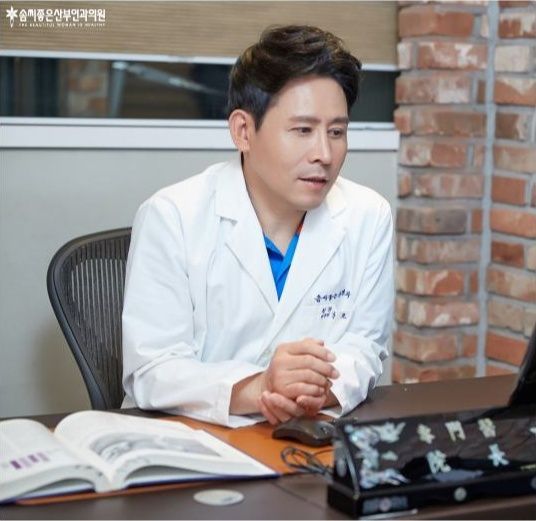
Dr. Yoon Ho-joo, MD, PhD
OB/GYN specialist, Catholic University of Korea. Founder of Somssi Women's Clinic (2000). Published on female sexual function after reconstructive vaginal surgery; speaker at ESSM, ISSWSH, WAS and SMSNA.
Questions patients ask
Frequently asked questions
Short, honest answers. For anything personal, a consultation is the right place to ask.
Does cervical cryotherapy hurt?
Most women feel period-like cramping during the freeze and for a few hours afterward, sometimes with a warm flush. Sharp pain is unusual because the cervix has few pain nerves of the type that respond to cold. Taking an ordinary pain reliever an hour beforehand helps, and a local anesthetic can be used if you are anxious. You can go home immediately.
Can I get pregnant after cervical cryotherapy?
Yes. Cryotherapy does not affect the ovaries or the uterus itself, and fertility is generally unchanged. The rare complication is cervical stenosis, a narrowing of the canal after deep or repeated freezing, which can occasionally make conception or labor more difficult. Tell your doctor if you plan a pregnancy so the gentlest effective method is chosen.
How long after cryotherapy can I have sex?
After cervical cryotherapy, wait about four weeks, or until the watery discharge has fully stopped, so the healing surface is not disturbed or exposed to infection. After wart freezing, wait until the blisters and scabs have healed, usually one to two weeks, and use condoms since the virus can still be present. Cold packs after labiaplasty do not change the surgical timeline.
Is cryotherapy better than LEEP?
Neither is better in every case. Cryotherapy is simpler, cheaper and needs no electricity or anesthesia, but it destroys tissue without providing a specimen. LEEP removes the lesion with a thin electrical loop and sends it to pathology, which is why it is preferred for larger or higher-grade lesions and whenever invasion cannot be excluded. Your colposcopy and biopsy results decide.
Do genital warts come back after freezing?
They can. Freezing removes visible warts but not the HPV in the surrounding skin, so new warts may appear for months afterward. Several sessions are normal, and a review visit after clearance is sensible. Not smoking, avoiding friction and completing HPV vaccination lower the chance of new lesions from other types.
Should I use ice after labiaplasty?
Yes, for the first three days. Wrap an ice pack in a clean cloth and apply it for 15–20 minutes at a time with breaks in between; never place ice directly on numbed skin. Combined with the ointment we provide and loose clothing, this keeps swelling and bruising down. Showering is allowed the same day.
Can cryotherapy treat vaginal laxity?
No. Freezing destroys abnormal surface cells; it does not tighten muscle or rebuild a thin vaginal wall. Laxity, uterine descent and a loose opening are structural problems treated surgically at Somssi with your own tissue. Cryotherapy sits in this category only because it belongs to the broader women's health services around rejuvenation surgery.
Keep reading
Related treatments and guides
- What Is Vaginal Rejuvenation and What Does It Treat? — how cold therapy fits into the wider category
- Is Non-Surgical Vaginal Rejuvenation Safe? — safety of office-based treatments compared
- Vaginal Rejuvenation in Korea for Foreigners: Complete Guide — planning a clinic visit from abroad
- Vaginal Rejuvenation — the clinic's main surgical and menopause programs
- Genital Wart Removal — freezing, laser and excision options for HPV warts
- Cervical Screening (Pap Smear Test) — the test that finds the lesions cryotherapy treats
- International patients — consultation and follow-up for visitors to Seoul
Sources and medical review
- World Health Organization: guidelines on screening and treatment of cervical pre-cancer lesions, including cryotherapy eligibility.
- US Centers for Disease Control and Prevention: HPV and genital wart treatment guidance.
- American College of Obstetricians and Gynecologists (ACOG): management of abnormal cervical cancer screening results.
- Te Linde's Operative Gynecology (textbook): ablative and excisional treatment of cervical intraepithelial neoplasia.
Next step
A consultation first. A decision only when you are ready.
Tell us what you are experiencing and what you hope to change. Dr. Yoon examines, measures and explains the options, including when no surgery is the right answer. International patients can start with an online consultation before travelling to Seoul.
