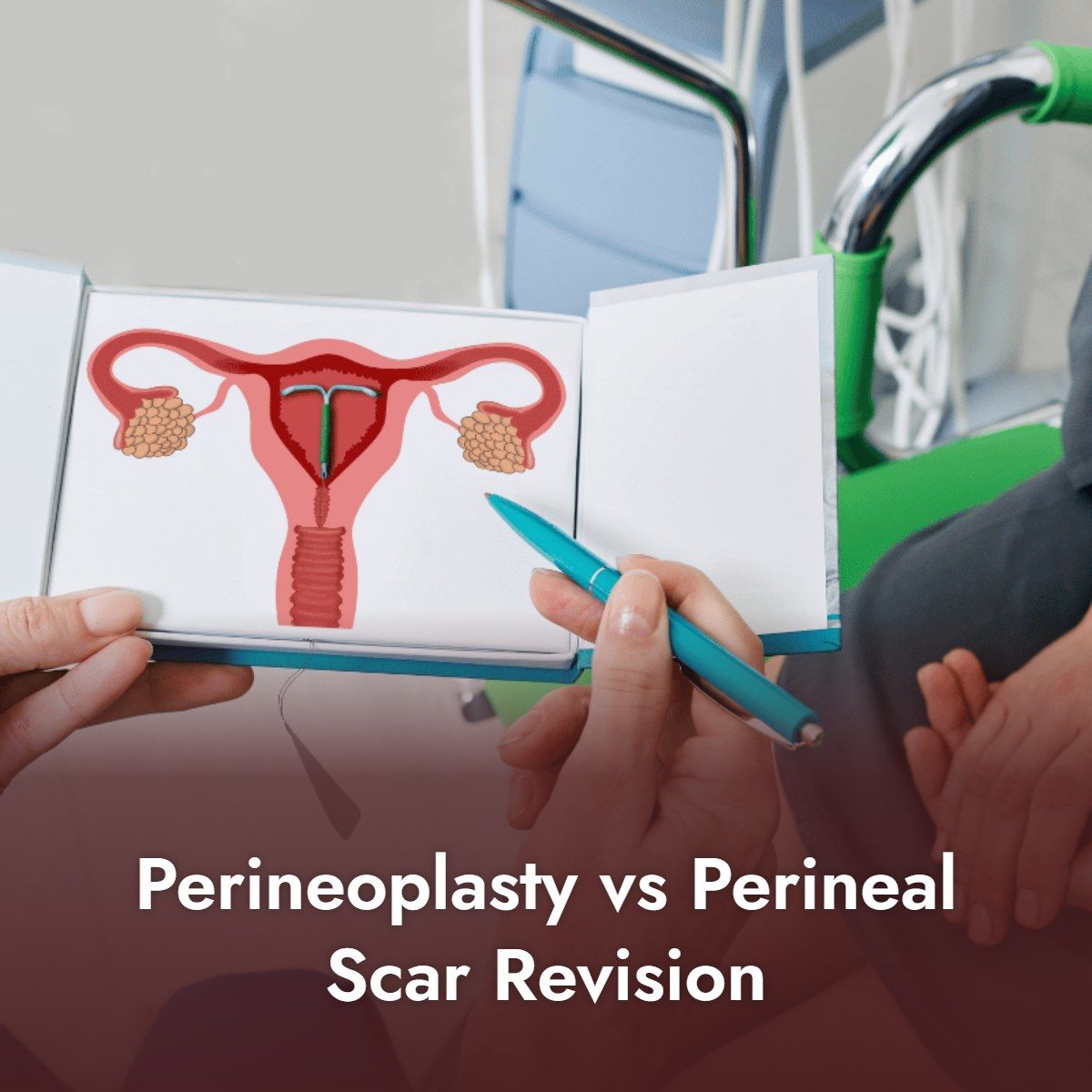
Perineoplasty rebuilds the perineal body and vaginal opening, while perineal scar revision targets a specific painful or tight scar. Scar revision is usually smaller and focused on symptoms such as pain during sex, whereas perineoplasty addresses wider separation, gaping or weakened support after childbirth. The right choice depends on examination findings, symptoms and whether deeper muscles were injured.
What is the perineum, and why does it get damaged?
The perineum is the area of skin and muscle between the vaginal opening and the anus. Beneath the skin lies the perineal body, a central point where several pelvic floor muscles and connective tissue meet. It supports the lower vagina and helps the anal sphincter work properly.
During vaginal birth the perineum stretches a great deal. Many women experience a tear or an episiotomy, a planned cut to enlarge the opening. Most heal well after repair, but some are left with problems such as:
- A tender, thick or tight scar that makes sex painful
- A gaping vaginal opening or a feeling of looseness
- Skin tags, uneven edges or a visible notch
- Weakened support between the vagina and rectum
- In more severe tears, problems controlling gas or stool
What is perineal scar revision?
Perineal scar revision is a targeted operation to remove or release scar tissue that is causing symptoms. The surgeon cuts out the hard, painful or narrowed scar and closes the healthy tissue edges with fine dissolvable stitches, sometimes reshaping the line of closure to reduce tension. In some cases a small skin flap is used to widen an opening that has become too tight.
It is typically chosen when the main complaint is localized pain, a tight band at the vaginal entrance, or a small cosmetic irregularity, and the deeper support muscles are reasonably intact.
What is perineoplasty?
Perineoplasty, also called perineorrhaphy, is a broader reconstruction. The surgeon removes a wedge of excess or scarred skin at the back of the vaginal opening, identifies the separated muscles of the perineal body, and brings them back together in layers. This rebuilds the bulk between the vagina and anus and narrows a gaping opening.
It is often recommended when examination shows that the perineal body is thin or separated. It may be combined with a posterior vaginal wall repair if there is a rectocele, or with anal sphincter repair if the sphincter was damaged.
Side-by-side comparison
Perineal scar revision:
- Focus: a specific painful, tight or irregular scar
- Extent: usually smaller, limited to skin and superficial tissue
- Typical goals: reduce pain with sex, release tightness, smooth the scar
- Anesthesia: often local with sedation or a short general anesthetic
- Recovery: usually shorter
- Main risks: recurrence of scarring, pain, infection, wound separation
Perineoplasty:
- Focus: rebuilding the perineal body and vaginal opening
- Extent: deeper, layered repair of muscle and skin
- Typical goals: restore support, reduce gaping, improve appearance and comfort
- Anesthesia: regional or general anesthesia is common
- Recovery: longer, with more activity restrictions
- Main risks: pain, infection, bleeding, wound breakdown, overtightening that causes painful sex
How doctors decide which surgery fits
A careful assessment is essential because the symptoms of these problems overlap. Pain with sex, for example, can come from a scar, from overtightening during the original repair, from vaginal dryness during breastfeeding, from pelvic floor muscle spasm, or from nerve irritation.
- The doctor takes a detailed history of the birth, the type of tear and any earlier repairs.
- Symptoms are reviewed: pain, tightness, looseness, bowel or bladder changes, and their effect on daily life.
- A gentle examination maps the scar, assesses perineal body thickness and checks pelvic floor muscle tone.
- If bowel control is affected, additional tests such as endoanal ultrasound may be suggested to check the anal sphincter.
- Non-surgical options are discussed before deciding on surgery.
Should you try non-surgical options first?
Many perineal symptoms improve with time and conservative care, especially in the first year after birth. Doctors commonly suggest:
- Pelvic floor physiotherapy, including scar massage, muscle relaxation and strengthening
- Vaginal moisturizers or lubricants, and local estrogen if dryness is present during breastfeeding or later in life
- Topical numbing agents before intercourse for short-term relief
- Treating any granulation tissue in the scar with simple office measures
Surgery is generally considered when symptoms persist despite these steps, once tissues have fully healed. Many surgeons prefer to wait at least six to twelve months after childbirth.
Recovery and what to expect
After scar revision, many women return to desk work within about a week, though tenderness can persist longer. After perineoplasty, recovery is usually a few weeks, with sitting discomfort early on. Common advice includes sitz baths or gentle rinsing, stool softeners to avoid straining, avoiding heavy lifting and strenuous exercise, and waiting about six weeks or until cleared by the surgeon before intercourse or tampon use.
Final results take several months as swelling settles and scar tissue softens. Some women notice tightness or tenderness at first that gradually eases; gentle scar massage, once the surgeon approves it, can help the tissue become more supple. Report fever, increasing pain, foul-smelling discharge or a wound that opens, as these may signal infection or breakdown that needs prompt review. Pelvic floor physiotherapy after surgery can help restore comfortable muscle function.
Future births after perineal surgery
If you plan more children, discuss timing carefully. Another vaginal birth may stretch or tear the repaired area. Some surgeons advise delaying elective perineal surgery until family planning is complete. Women with a previous severe tear or sphincter repair should discuss birth options with their obstetrician, as guidelines recommend individualized counseling about future delivery.
Which should you choose?
If your main problem is a single tender, tight or irregular scar and your support muscles are intact, scar revision is often the less invasive and more appropriate option. If the perineal body is thin or separated, the opening gapes, or you have wider support problems, perineoplasty is more likely to address the cause. In both cases, choose a surgeon who examines you carefully, considers non-surgical care first and explains realistic outcomes, including the risk that pain may not fully resolve.
Frequently asked questions
Can perineal scar revision make sex painless?
It often reduces pain caused by a specific scar, but results vary. Pain can have several causes, so some women also need physiotherapy or treatment for dryness.
Is perineoplasty the same as vaginoplasty?
Not exactly. Perineoplasty focuses on the perineal body and vaginal opening, while vaginoplasty usually refers to tightening the vaginal canal. They are sometimes performed together.
How soon after childbirth can I have surgery?
Most surgeons recommend waiting until healing is complete and breastfeeding-related hormonal changes have settled, often six to twelve months or more.
Can surgery make the opening too tight?
Yes. Overtightening is a recognized complication that can cause painful intercourse. Clear discussion of goals and a careful technique reduce this risk.
References
- American College of Obstetricians and Gynecologists. Practice Bulletin No. 198: Prevention and Management of Obstetric Lacerations at Vaginal Delivery. 2018.
- Royal College of Obstetricians and Gynaecologists. Green-top Guideline No. 29: The Management of Third- and Fourth-Degree Perineal Tears. 2015.
- American College of Obstetricians and Gynecologists. Committee Opinion No. 795: Elective Female Genital Cosmetic Surgery. 2020.
- Haylen BT, et al. An International Urogynecological Association (IUGA)/International Continence Society (ICS) joint report on the terminology for female pelvic floor dysfunction. 2010.
This article is for general education and does not replace an examination by a qualified gynecologist. Individual results vary, and every procedure carries risks.