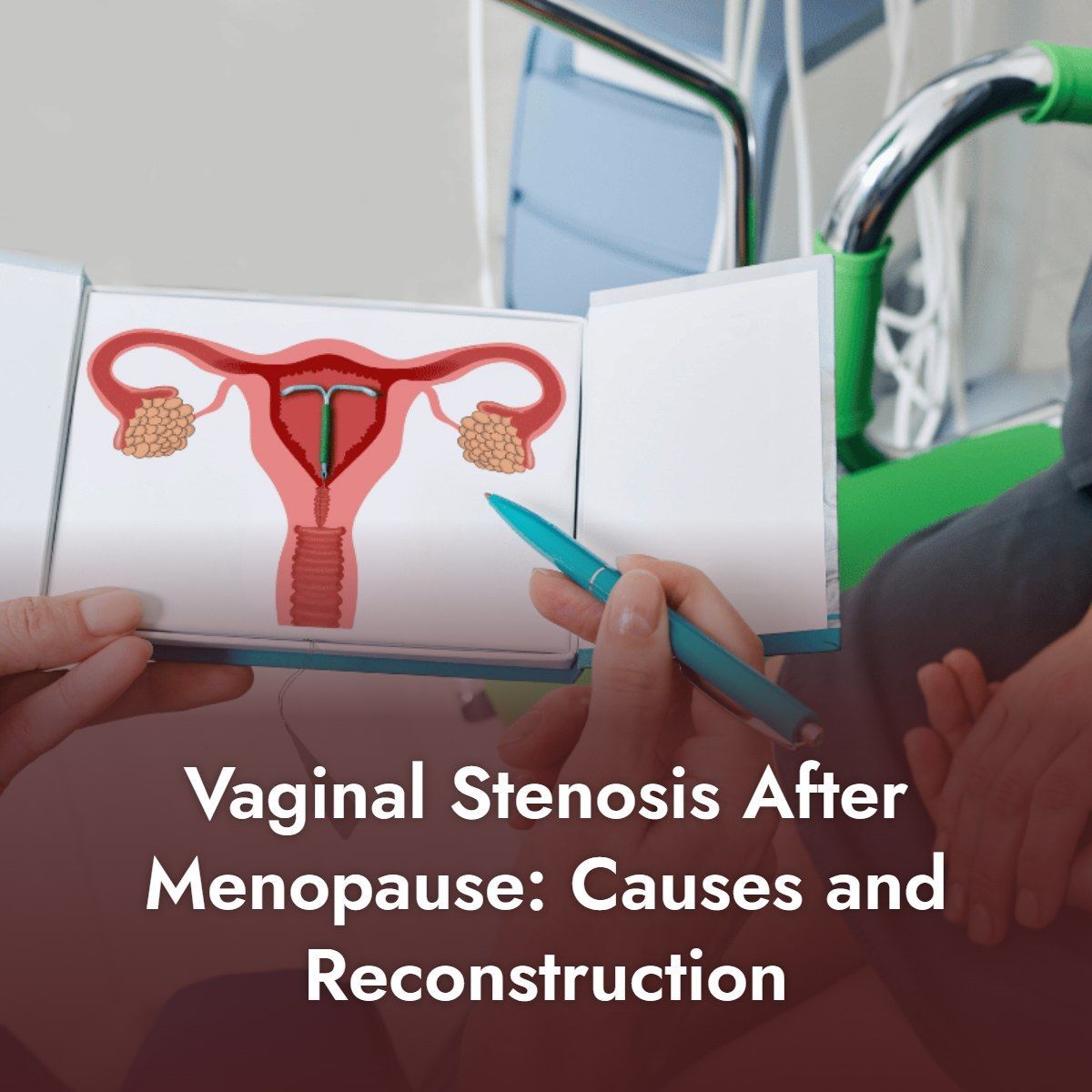
A POP-Q exam, short for Pelvic Organ Prolapse Quantification, is a standardized pelvic examination that measures exactly how far each part of the vagina descends when you strain. Doctors record nine measurements in centimeters relative to the hymen and use them to assign a stage from 0 to IV, which guides treatment and tracks change over time.
Why do doctors use the POP-Q system?
Before the POP-Q system was introduced, prolapse was described with loose terms such as "mild," "moderate" or "severe," and different grading schemes made it hard to compare findings between doctors or research studies. In 1996, the International Continence Society, together with American urogynecology and gynecologic surgery societies, published a standardized method based on precise measurements. It has since become the most widely used system in research and specialist practice.
The main advantages are that it is objective, reproducible between examiners and specific to each compartment of the vagina. It describes where the prolapse is, not just how big it is, which matters when planning surgery.
What is the reference point in a POP-Q exam?
All measurements are taken relative to the hymen, the ring of tissue at the vaginal opening, which serves as a fixed landmark. Points that stay above, or inside, the hymen are recorded as negative numbers, and points that come down past the hymen are recorded as positive numbers. A point exactly at the hymen is zero.
For example, a measurement of -3 means a point is 3 cm inside the vagina, while +2 means it protrudes 2 cm beyond the opening during straining.
What are the nine POP-Q measurements?
The examiner records six points on the vaginal walls and three lengths.
- Aa: a point on the front vaginal wall 3 cm inside the hymen, roughly under the bladder neck.
- Ba: the lowest part of the remaining front wall, reflecting bladder descent.
- C: the cervix, or the vaginal cuff if the uterus has been removed.
- D: the posterior fornix behind the cervix; it is left out after hysterectomy.
- Ap: a point on the back vaginal wall 3 cm inside the hymen.
- Bp: the lowest part of the remaining back wall, reflecting rectal or small bowel descent.
- gh (genital hiatus): the size of the vaginal opening, from the urethral opening to the back edge of the hymen.
- pb (perineal body): the distance from the back of the vaginal opening to the middle of the anus.
- tvl (total vaginal length): the depth of the vagina when the top is returned to its normal position.
These values are traditionally written in a three-by-three grid in the medical record, which allows another specialist to picture the shape of the prolapse at a glance.
How is a POP-Q exam performed?
The exam is usually done in an outpatient clinic and takes only a few minutes longer than a routine pelvic examination.
- You lie on your back on an examination couch, sometimes with the head raised; occasionally standing is used to confirm findings.
- The doctor inspects the vulva and vaginal opening at rest.
- You are asked to bear down firmly or cough, as if straining, to show the prolapse at its largest.
- A split speculum or one blade of a speculum holds back one vaginal wall while the opposite wall is assessed.
- A ruler, marked instrument or measuring device records the position of each point relative to the hymen.
- The genital hiatus, perineal body and total vaginal length are measured.
- The doctor confirms with you that what was seen matches the maximum bulge you notice in daily life.
The exam can feel awkward but should not be painful. Telling the examiner if you feel the bulge is larger at the end of the day can help, because prolapse is often more pronounced after standing for long periods.
What do POP-Q stages 0 to IV mean?
After measuring, the doctor assigns an overall stage based on the lowest point of the prolapse.
- Stage 0: no prolapse; all points are in their normal positions.
- Stage I: the lowest point stays more than 1 cm above the hymen.
- Stage II: the lowest point is within 1 cm above or below the hymen.
- Stage III: the lowest point is more than 1 cm beyond the hymen but the vagina is not fully everted.
- Stage IV: complete or near-complete eversion of the vagina.
Stage I and early stage II changes are common in women who have had children and frequently cause no symptoms at all. Symptoms usually become more likely when the prolapse reaches or passes the hymen.
Does a higher POP-Q stage always need surgery?
No. Treatment decisions are based mainly on symptoms and how much they bother you, not on the number alone. A woman with stage II prolapse and no symptoms may need no treatment, while someone with a similar stage and troublesome bulge symptoms may choose a pessary, pelvic floor muscle training or surgery.
POP-Q findings are most useful for planning. They show which compartment is involved, whether apical support is lost and whether the vaginal opening is widened, all of which influence the type of repair or pessary that may be suitable.
How is POP-Q used to follow up after treatment?
Repeating the POP-Q exam after surgery or during pessary use allows doctors to compare measurements objectively over time. Researchers also use it to report surgical outcomes. Because small anatomic changes can occur without symptoms, specialists increasingly combine POP-Q results with questionnaires about bulge symptoms, bladder, bowel and sexual function to judge success.
What are the limitations of the POP-Q exam?
POP-Q is detailed but not perfect. Measurements can vary depending on how hard the patient strains, her position, bladder fullness and the time of day. It does not directly show which organ is behind a bulge, and in some cases additional tests such as ultrasound, defecography or urodynamic studies are needed. Some general clinics use simplified versions, which are still useful but less precise.
Frequently asked questions
Does a POP-Q exam hurt?
It is usually no more uncomfortable than a standard speculum examination. Let the examiner know if you feel pain, as positions and instruments can be adjusted.
Should I have a full bladder for the exam?
Practices differ, but many examiners prefer an empty or comfortably emptied bladder because a full bladder can limit descent. Follow the instructions given for your visit.
Can my POP-Q results change from day to day?
Yes. Prolapse often looks larger later in the day or after prolonged standing or lifting. Mention when symptoms are worst so the findings can be interpreted correctly.
Is POP-Q needed if I only have mild symptoms?
A basic examination is always required, but a full POP-Q is most valuable when treatment such as surgery or a pessary is being considered, or when tracking changes over time.
What does a negative number mean on my report?
A negative number means that point stays inside the vagina above the hymen. The larger the negative number, the higher and better supported that point is.
References
- Bump RC, et al. The standardization of terminology of female pelvic organ prolapse and pelvic floor dysfunction. American Journal of Obstetrics and Gynecology. 1996.
- Haylen BT, et al. An International Urogynecological Association (IUGA)/International Continence Society (ICS) joint report on the terminology for female pelvic organ prolapse. International Urogynecology Journal. 2016.
- American College of Obstetricians and Gynecologists and American Urogynecologic Society. Practice Bulletin No. 214: Pelvic Organ Prolapse. 2019.
- National Institute for Health and Care Excellence. Urinary incontinence and pelvic organ prolapse in women: management (NG123). 2019.
This article is for general education and does not replace an examination by a qualified gynecologist. Individual results vary, and every procedure carries risks.