Vaginal laxity is usually a problem of deep support, not of the vaginal opening. The feeling of looseness most often starts higher in the vagina, where the uterus, cervix and back wall lose the ligament and muscle support that held them in place. Treatments that only narrow the entrance can leave that deeper problem untouched, which is why some women still feel loose after a procedure.
How the vagina is normally supported
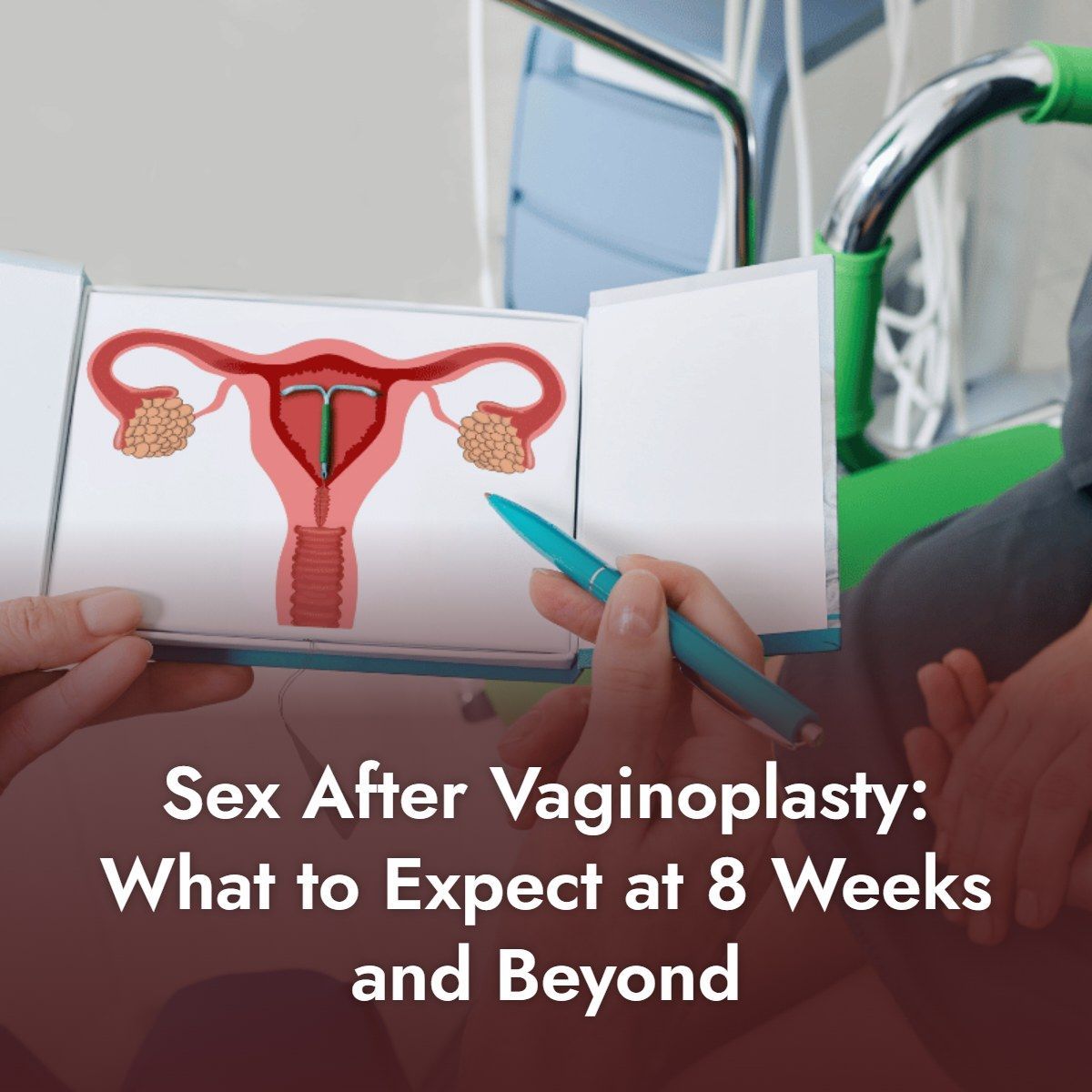
Gynecologists describe vaginal support in three levels. Level I is the top of the vagina, held up by the uterosacral and cardinal ligaments that attach to the cervix. Level II is the middle third, attached sideways to the pelvic walls by fascia. Level III is the lower third and the entrance, supported by the perineal body and the muscles of the pelvic floor.
When all three levels work together, the vaginal canal is angled backward, its walls rest against each other and the pelvic floor muscles close around it. That arrangement creates the sense of tone and grip that many women notice has changed after childbirth or with age.
Where laxity actually begins
Vaginal delivery stretches every level, but the deep supports are often the first to give. When the uterosacral ligaments weaken, the cervix sits lower and the top of the vagina widens. The back wall thins and the pouch behind the cervix (the cul-de-sac) deepens. The canal becomes more vertical and more open, so the walls no longer meet.
Because these changes happen inside, a woman may see a normal-looking opening yet still feel looseness, reduced friction or air entering during intercourse. A survey of urogynecologists published in the International Urogynecology Journal in 2012 found that most considered vaginal laxity a real quality-of-life problem that is under-reported by patients and under-assessed by doctors.
Signs the problem is deeper than the entrance
- Looseness that persists even when the pelvic floor is squeezed
- Air entering the vagina with position changes or exercise
- A heavy or dragging feeling by the end of the day
- The cervix feeling closer to the opening, or touched more easily during intercourse
- Pressing on the back wall to empty the bowel
- No improvement, or a tight but painful entrance, after an earlier tightening procedure
Why opening-only treatments often disappoint
Narrowing the entrance alone, whether with surgery, filler or thread, changes Level III but not Levels I and II. The result can be a tight ring at the opening with a wide canal behind it. Scar at the entrance can also make intercourse painful, especially after menopause when tissue thins.
Energy-based devices (laser and radiofrequency) heat the vaginal lining and may improve surface tissue quality for some women, but they do not re-attach ligaments or rebuild separated muscle. In 2018 the U.S. FDA warned that the safety and effectiveness of these devices for "vaginal rejuvenation" had not been established.
How deep support is assessed
- Pelvic examination at rest and while straining to see which wall moves and how far.
- POP-Q measurement, a standardized system that records the position of the cervix and both vaginal walls in centimeters.
- Measurement of vaginal length, width and wall thickness, which helps separate laxity from prolapse.
- Pelvic floor muscle assessment, since a strong muscle may respond to training while a thin, separated one usually will not.
Treatment that matches the level of the problem
Mild laxity with good muscle function often improves with supervised pelvic floor muscle training. When the deep supports have failed, surgical repair aims to restore all three levels: re-supporting the cervix or vaginal apex, closing an enlarged cul-de-sac, rebuilding the back wall and pelvic floor muscle along the full length of the canal, and then reconstructing the perineum. Native-tissue repair uses the woman's own tissue and avoids permanent mesh.
Who is most at risk of deep vaginal laxity?
Any woman can develop loss of deep support, but some factors make it more likely. Most of them either stretch the supports once, as in childbirth, or load them repeatedly over many years.
- Two or more vaginal births, or a single long or difficult delivery
- A large baby, or a delivery assisted with forceps or vacuum
- Menopause, when lower estrogen makes connective tissue thinner and less elastic
- Chronic constipation and straining at the toilet
- A long-standing cough from smoking, asthma or lung disease
- Regular heavy lifting at work or in training
- Excess body weight, which raises pressure inside the abdomen
- A family history of prolapse or naturally flexible connective tissue
Having one or more of these factors does not make laxity inevitable, but it is a good reason to mention symptoms early rather than waiting until they become severe.
Questions to ask before choosing a treatment
Because the same symptom can come from different levels of support, a short list of questions can help you judge whether a proposed treatment matches your actual problem:
- Which level of support, I, II or III, is causing my symptoms, and how was that measured?
- Is there any descent of the cervix, vaginal apex or back wall, and what stage is it?
- Will the proposed treatment reach the upper vagina, or only the entrance?
- How much tissue, if any, will be removed, and how will over-narrowing be avoided?
- What result can I realistically expect, and how long is it likely to last?
- What is the plan if symptoms return or intercourse becomes painful?
Clear, specific answers are a good sign. Promises of tightening without any measurement of where the laxity begins are not.
What recovery looks like after a full-length repair
When surgery restores support from the top of the vagina to the entrance, recovery is similar to that of other native-tissue vaginal repairs:
- First few days: soreness, swelling and light spotting, managed with oral pain relief; gentle walking is encouraged
- First week: many women return to desk work and light activity, using stool softeners to avoid straining
- Weeks 2 to 4: swelling settles and walking distance can increase
- Week 6: heavy lifting, running and swimming usually resume after a check-up
- Weeks 6 to 8: intercourse usually resumes once healing is confirmed
Continuing pelvic floor exercises after healing helps the muscle support the repaired tissue over the long term.
Frequently asked questions
Is vaginal laxity the same as prolapse?
They overlap. Laxity describes a widened, less supported canal. Prolapse means an organ has descended into the vagina. Many women with laxity have early prolapse, which is why measurement matters.
Can Kegel exercises fix deep laxity?
Pelvic floor training strengthens Level III muscle and can help mild cases. It cannot shorten stretched ligaments at the top of the vagina.
Does laxity get worse over time?
It can, especially after further births, with chronic straining, heavy lifting or after menopause. Early assessment gives more options.
Can a normal-looking opening hide deep laxity?
Yes. The entrance may look normal while the upper canal is wide and the cervix sits lower than before. That is why an internal examination, rather than appearance alone, is needed to find the cause.
Does a hysterectomy affect deep support?
Removing the uterus also removes the cervix that the deep ligaments attach to. Surgeons usually re-support the top of the vagina at the time of hysterectomy, but the vaginal vault can still descend later, so new symptoms deserve assessment.
References
- DeLancey JO. Anatomic aspects of vaginal eversion after hysterectomy. American Journal of Obstetrics and Gynecology (1992).
- Pauls RN, Fellner AN, Davila GW. Vaginal laxity: a poorly understood quality of life problem. International Urogynecology Journal (2012).
- U.S. Food and Drug Administration. Statement on efforts to safeguard women's health from deceptive health claims and significant risks related to devices marketed for use in medical procedures for "vaginal rejuvenation" (July 2018).
This article is for general education and does not replace an examination by a qualified gynecologist. Individual results vary, and every procedure carries risks.