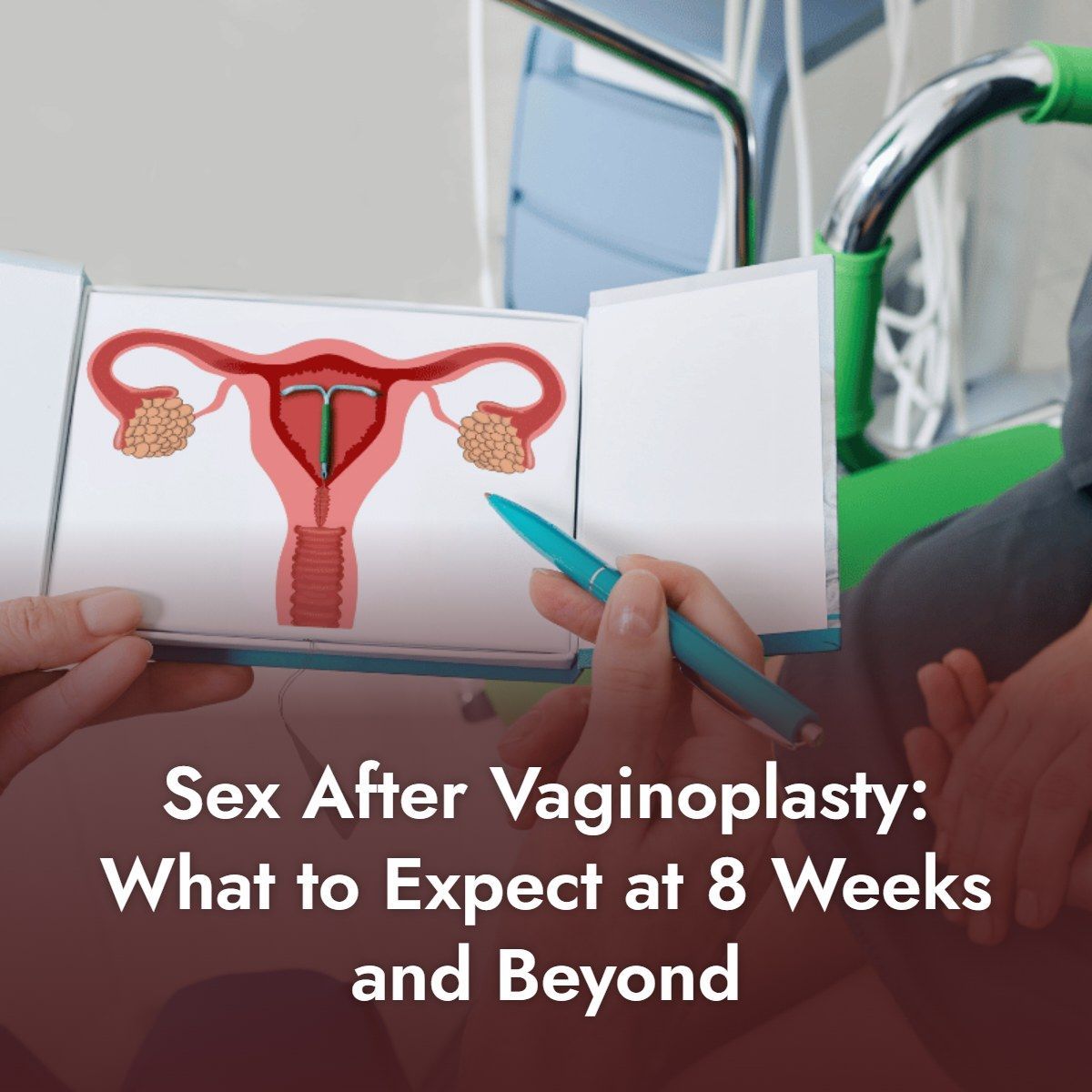
Most women can resume penetrative sex about six to eight weeks after vaginoplasty, once the surgeon confirms the wounds have healed. The first attempts often feel different: tighter, sometimes tender at the scar, and occasionally dry. Sensation and comfort usually keep improving over several months, so early discomfort is common, but persistent or worsening pain deserves a review.
Why surgeons usually wait six to eight weeks
Vaginoplasty for laxity repairs muscle and connective tissue in the lower vagina and perineum, then closes the skin and lining with dissolving stitches. The surface may look healed after two or three weeks, but deeper layers are still gaining strength. Collagen remodeling continues for months, and the repair is at its weakest in the early weeks.
Penetration too soon can stretch or reopen the incision, cause bleeding, introduce infection or leave a thickened, painful scar. For this reason most surgeons advise avoiding intercourse, tampons and inserted devices until a check-up, commonly at around six weeks. Some prefer eight weeks, especially after extensive perineal repair, previous scarring, or slow healing. The decision should be based on an examination rather than the calendar alone.
The check-up before you resume sex
At the follow-up visit, the surgeon will usually look and gently feel for:
- Complete closure of the incision line, without raw areas or granulation tissue
- Any remaining stitches or small tender spots along the scar
- The width and stretch of the vaginal opening
- Signs of infection, hematoma or abnormal discharge
- Pelvic floor muscle tone and whether the muscles can relax as well as contract
This is a good moment to ask direct questions. If the opening already feels narrow on examination, the surgeon may recommend starting with gentle dilator or finger stretching before intercourse.
What sex may feel like the first few times
Every woman's experience differs, but certain sensations are commonly reported in the first weeks after clearance:
- A feeling of tightness or pressure at the entrance, which often eases with gradual use
- Tenderness or a pulling sensation along the scar, usually at the back of the opening
- Dryness, especially while breastfeeding, after menopause, or on some hormonal contraceptives
- Changed sensation, either more or less intense, as small nerve endings recover
- Light spotting after the first attempts, which should settle quickly
Many women also notice an emotional element. Anxiety about pain or about damaging the repair can make the pelvic floor muscles tense involuntarily, which itself makes penetration uncomfortable. Recognizing this cycle helps break it.
A gradual plan for returning to intercourse
Taking things step by step reduces discomfort and builds confidence:
- Start with non-penetrative intimacy, so arousal and relaxation come first.
- Use generous amounts of a water-based or silicone-based lubricant, applied to both partners.
- Try gentle penetration with a finger first, then a small dilator if your surgeon recommended one.
- Choose positions that let you control depth and pace, such as being on top or lying side by side.
- Go slowly, stop if there is sharp pain, and avoid pushing through discomfort.
- Pass urine afterwards and note any bleeding or pain that lasts into the next day.
Most couples find sex becomes progressively easier over the following weeks. Scar tissue softens over three to six months, and the final sensation and comfort are best judged after that time.
Will sex feel better after vaginoplasty?
Women choose this surgery mainly to address a sensation of looseness, reduced friction or a wide opening after childbirth. Some studies report improved sexual satisfaction and body image after surgery, but the evidence base is limited: much of it comes from small, uncontrolled studies with short follow-up. Professional bodies such as ACOG have noted that the long-term effects of elective genital procedures on sexual function are not well established.
It also helps to remember that orgasm and arousal depend on many factors, including the clitoris, blood flow, hormones, relationship and mood. Narrowing the vagina may improve the sense of fullness for both partners, but it cannot fix problems that arise elsewhere. Setting realistic expectations before surgery tends to lead to higher satisfaction afterwards.
When pain or tightness is a problem
Mild tenderness early on is expected. Contact your surgeon if any of these occur:
- Pain that is getting worse rather than better after the first few attempts
- A band or ridge that tears or bleeds each time
- Inability to achieve penetration at all after several weeks of gentle trying
- Fever, foul-smelling discharge or increasing redness
- A firm, painful lump along the incision
Common causes and how they are treated
Persistent pain after vaginoplasty may come from over-tightening of the opening, a tight band of scar at the back of the entrance, a sensitive nerve ending trapped in scar, vaginal dryness, or pelvic floor muscle overactivity. Treatment depends on the cause and may include vaginal estrogen, graduated dilators, pelvic floor physiotherapy focused on relaxation, scar massage, or local treatment of granulation tissue. A small minority need a revision procedure to release a scar band or widen the opening, usually after the tissues have fully matured.
Partner communication and longer-term care
Explaining to a partner that the first times should be slow and gentle removes pressure on both people. Agree in advance that either of you can pause at any time. Over the longer term, maintaining pelvic floor strength with exercises, treating vaginal dryness promptly and attending routine gynecologic checks all help preserve comfort. If a future vaginal birth is planned, discuss it with your obstetrician, since childbirth can stretch the repaired tissues again.
Frequently asked questions
Can I have oral sex or orgasm before the eight-week mark?
Orgasm itself does not usually harm the repair, and gentle non-penetrative intimacy is often allowed earlier than intercourse. Avoid anything that presses on or stretches the incision. Ask your surgeon for specific advice, since practices differ.
What if sex feels too tight at eight weeks?
Some tightness is normal at first and often improves with lubricant, relaxation and gradual dilator use over the following weeks. If penetration remains impossible or very painful after a sustained effort, arrange an examination. Early assessment helps identify whether scar tissue or muscle tension is the main cause.
Is bleeding after sex normal after vaginoplasty?
A small amount of spotting after the first few attempts can happen as the scar adapts. Repeated bleeding, heavy bleeding or bleeding with pain suggests granulation tissue or a split in the scar and should be checked. These problems are usually simple to treat.
Will my partner notice a difference?
Many partners do report a greater sense of tightness, but experiences vary widely. The outcome depends on the type of repair, the starting anatomy and pelvic floor muscle tone. Open communication matters more than technique for overall satisfaction.
Does vaginoplasty affect future childbirth?
A previous repair does not automatically rule out vaginal birth, but delivery can stretch or tear the repaired tissue. Some women and obstetricians prefer to discuss a planned cesarean. This is an individual decision best made with your obstetrician.
References
- American College of Obstetricians and Gynecologists. Committee Opinion No. 795: Elective Female Genital Cosmetic Surgery. Obstet Gynecol. 2020.
- Rogers RG, Pauls RN, Thakar R, et al. An International Urogynecological Association (IUGA)/International Continence Society (ICS) joint report on the terminology for the assessment of sexual health of women with pelvic floor dysfunction. Int Urogynecol J. 2018.
- The North American Menopause Society. The 2020 genitourinary syndrome of menopause position statement. Menopause. 2020.
- U.S. Food and Drug Administration. Statement on risks related to devices marketed for "vaginal rejuvenation". 2018.
This article is for general education and does not replace an examination by a qualified gynecologist. Individual results vary, and every procedure carries risks.