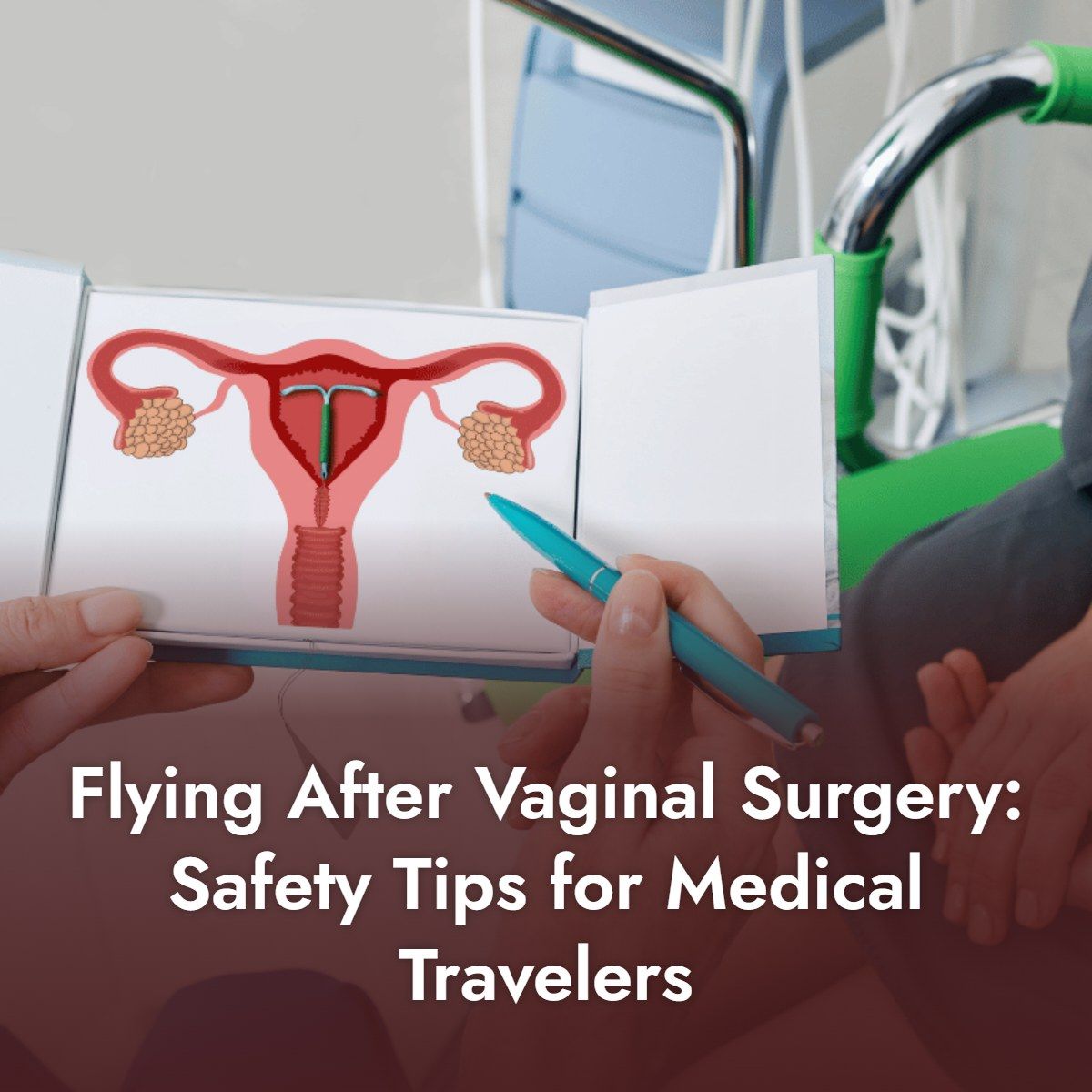
Most women can fly home after vaginal surgery once their surgeon has checked the wound and confirmed recovery is on track, often after several days to two weeks. The main concerns are blood clots, bleeding, infection and lifting luggage. Timing depends on the procedure, your health and flight length, so the final decision should always be made with your surgeon.
Is it safe to fly after vaginal surgery?
Air travel itself does not usually harm a vaginal repair. Cabin pressure changes affect gas in body cavities, which matters more after abdominal or laparoscopic surgery, where some gas can remain in the abdomen. After purely vaginal surgery, the more relevant risks are sitting still for many hours, being far from your surgical team if a complication appears and physically handling bags at airports.
Long flights raise the risk of venous thromboembolism, meaning a clot in a leg vein (deep vein thrombosis) that can travel to the lungs (pulmonary embolism). Recent surgery is itself a risk factor, so the two effects add together. This is the main reason surgeons ask medical travelers to stay nearby for a period before flying home.
How long to wait before flying
There is no single rule that fits every patient. Surgeons consider:
- The type and extent of surgery, for example a minor labial procedure versus a combined prolapse repair
- Whether general or regional anesthesia was used
- Your personal clot risk, including age, weight, smoking, hormone use and any previous clots
- How you are healing at the follow-up examination
- The length of the flight and whether there are connections
- Your access to medical care at your destination
For short procedures with fast recovery, a stay of several days may be enough. For more extensive pelvic floor surgery, many surgeons prefer around one to two weeks before a long-haul flight. Your surgeon may also ask you to wait until a stitch check or catheter removal has been completed.
Reducing the risk of blood clots in the air
Clot prevention is the most important part of flight planning after surgery. Practical steps include:
- Ask your surgeon whether you need compression stockings and get them fitted before the flight.
- Ask whether you need anticoagulant injections or tablets for the journey, based on your risk.
- Book an aisle seat so you can stand and walk easily.
- Walk the aisle every hour or two when the seatbelt sign is off.
- Do seated calf exercises: flex and point your feet and roll your ankles every half hour.
- Drink water regularly and limit alcohol and sedating sleep aids.
- Avoid tight clothing around the waist and legs.
A Cochrane review found that properly fitted compression stockings reduce symptomless clots in airline passengers, although they are not a substitute for walking and medical advice. Medications are prescribed only when the benefit outweighs the bleeding risk, so do not take aspirin or other blood thinners on your own initiative.
Comfort in the seat and during the journey
Sitting for many hours on a healing perineum can be uncomfortable. A soft cushion or a folded jacket may help; some women prefer to shift their weight from side to side regularly. Doughnut-shaped rings are not always more comfortable, so try one before the flight if you plan to use it.
Pack your carry-on with recovery in mind:
- Prescribed pain relief, stool softeners and any antibiotics in their original packaging
- Several sanitary pads and spare underwear
- A peri-bottle or small water bottle for rinsing
- A copy of your operation note and discharge instructions in English
- Healthy snacks with fiber and an empty water bottle to refill after security
Wear loose, breathable clothing and comfortable shoes. Plan toilet visits before boarding and during the flight, and do not hold urine for long periods, as a full bladder can add pelvic pressure.
Luggage, lifting and airport logistics
Lifting is often a bigger risk than flying. Surgeons commonly advise avoiding heavy lifting for around six weeks after pelvic floor surgery, although exact limits vary. Hoisting a suitcase into an overhead bin or onto a belt raises abdominal pressure and strains the repair.
Plan ahead by checking in bags rather than carrying them, using a trolley, requesting airport assistance if needed and asking a companion or crew member to lift your bag. Allow extra time at the airport so you are not rushing. Travel insurance that covers complications arising from planned treatment abroad is worth checking before departure, because many standard policies exclude it.
Constipation, bladder and bleeding on the plane
Dehydration from dry cabin air, irregular meals and pain medicines all make constipation more likely, and straining is unhelpful for a fresh repair. Continue your stool softener as directed, drink steadily and choose fiber-containing foods. Light spotting or brownish discharge is common for some weeks after vaginal surgery, but soaking a pad in an hour or passing large clots is not normal.
If you had a bladder procedure, empty your bladder regularly and avoid long gaps. Burning or difficulty passing urine after you land should be checked, as urinary tract infections are a common postoperative problem.
Warning signs during or after the flight
Seek urgent medical help if you notice:
- Pain, swelling, warmth or redness in one calf or thigh
- Sudden shortness of breath, chest pain or coughing blood
- Heavy vaginal bleeding or large clots
- Fever, chills or foul-smelling discharge
- Inability to pass urine
These symptoms can appear in the days after travel, not only on the plane. If they occur on board, tell the cabin crew immediately; at your destination, attend an emergency department and show your operation note.
Arranging follow-up after you return home
Before flying, confirm how you will contact your surgeon, whether a remote follow-up is offered and what records you will receive. Book an appointment with a local gynecologist or primary care doctor for a check a few weeks after arrival. Bringing a clear summary of the operation, the materials used and the medicines prescribed helps local clinicians help you.
Frequently asked questions
Can cabin pressure damage my stitches?
Cabin pressure changes are not known to damage vaginal stitches. The greater concerns after vaginal surgery are clot risk, prolonged sitting and lifting luggage. If you also had abdominal or laparoscopic surgery, ask your surgeon about any additional precautions.
Do I need a doctor's letter to fly?
Airlines do not usually require one for routine recovery, but some ask for medical clearance after recent surgery. A brief letter or discharge summary in English is useful for airport security if you carry medicines, and for any doctor who sees you after you land.
Should I take aspirin before flying?
Not unless your surgeon prescribes it. Aspirin and other blood thinners can increase bleeding after surgery, and the right clot prevention depends on your individual risk.
Is a shorter flight safer than a long-haul one?
Shorter flights generally carry less clot risk, but connections, waiting and luggage handling add strain. A direct flight with an aisle seat is often the most comfortable option.
Can I travel alone after surgery?
Many women do, but having a companion helps with bags, transfers and emergencies. If you travel alone, arrange airport assistance and keep your medical documents easily accessible.
References
- Centers for Disease Control and Prevention. CDC Yellow Book: Deep Vein Thrombosis and Pulmonary Embolism in travelers.
- Clarke MJ, et al. Compression stockings for preventing deep vein thrombosis in airline passengers. Cochrane Database of Systematic Reviews. 2016.
- National Institute for Health and Care Excellence. NG89: Venous thromboembolism in over 16s: reducing the risk of hospital-acquired deep vein thrombosis or pulmonary embolism. 2018.
- Aerospace Medical Association. Medical Considerations for Airline Travel.
- American College of Obstetricians and Gynecologists and American Urogynecologic Society. Practice Bulletin No. 214: Pelvic Organ Prolapse. 2019.
This article is for general education and does not replace an examination by a qualified gynecologist. Individual results vary, and every procedure carries risks.