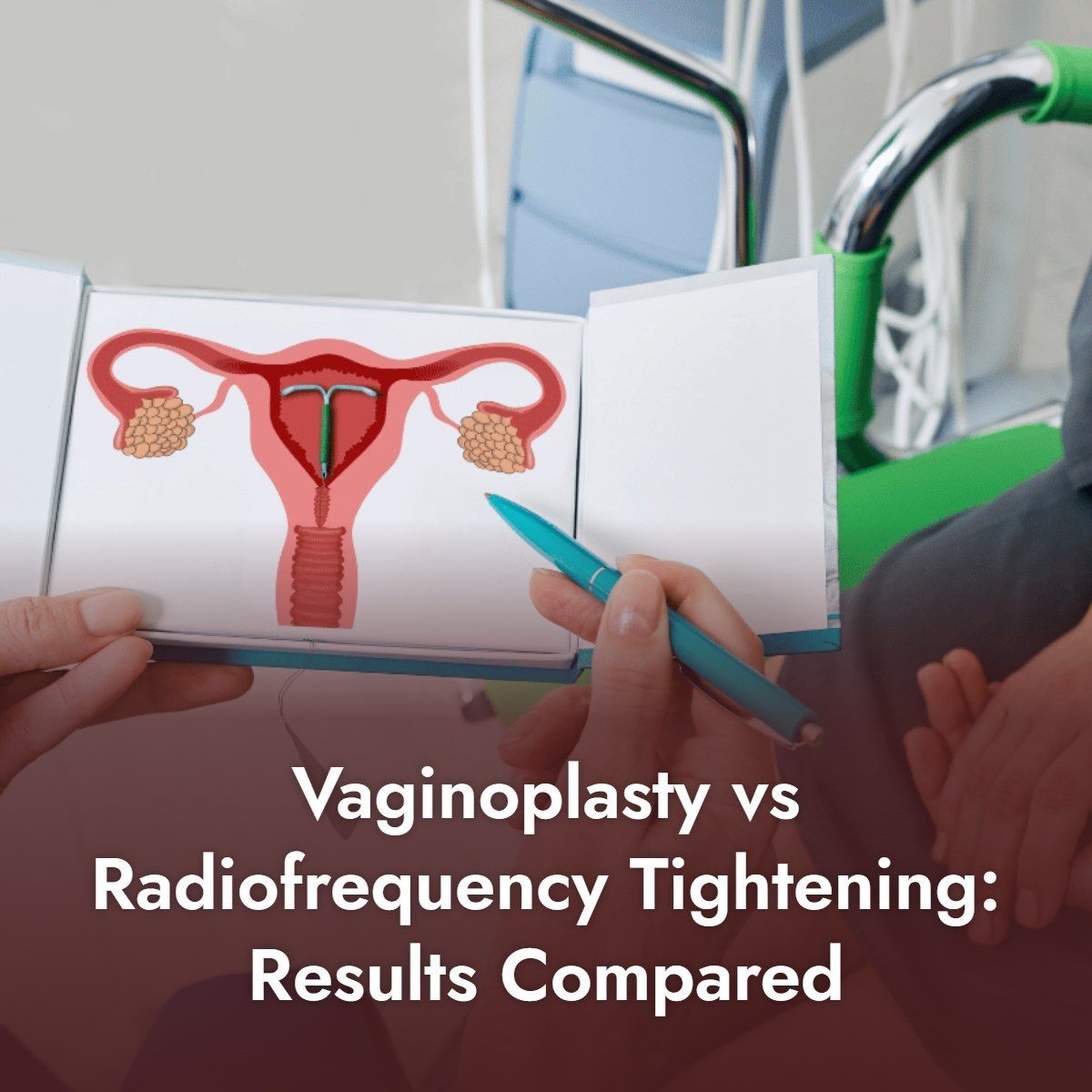
Vaginoplasty produces a larger and longer-lasting tightening effect than radiofrequency treatment, but it requires surgery and weeks of recovery. Radiofrequency devices heat the vaginal tissue to stimulate collagen without cutting, so recovery is minimal, yet the change is usually modest and fades within about a year. The right choice depends on how much structural laxity is present.
How does vaginoplasty work?
Vaginoplasty is a surgical repair of a vagina that has been widened or weakened, most often by childbirth. Through the vaginal opening, the surgeon trims excess lining, brings the stretched pelvic floor muscles and supporting tissue back together, and reconstructs the perineal body, the firm area between the vagina and anus. This narrows the canal and firms the entrance at the level of the muscles, not just the surface.
The operation is usually performed under general or spinal anesthesia, and most women go home the same day or the next. Because muscle and tissue are actually repaired, the result is visible and measurable as soon as swelling settles.
How does radiofrequency vaginal tightening work?
Radiofrequency (RF) treatment uses a handheld probe that delivers electromagnetic energy to the vaginal walls and sometimes the vulva. The energy heats the deeper layers of tissue while the surface is kept relatively cool. Heat causes existing collagen fibers to contract and triggers a healing response that lays down new collagen over the following weeks.
- Session length: usually 20 to 45 minutes, without anesthesia.
- Course: commonly three sessions spaced about a month apart.
- Maintenance: many providers suggest a top-up session every 12 months or so.
- Sensation: most women describe warmth rather than pain.
RF does not join separated muscles or remove excess tissue. Its aim is to improve tissue firmness and, for some women, lubrication and sensation.
Vaginoplasty vs radiofrequency: side-by-side comparison
Vaginoplasty
- How it works: surgical tightening of the muscles and supporting tissue, removal of excess mucosa and rebuilding of the entrance.
- Results: a clear, structural reduction in canal width and a firmer perineum.
- Durability: typically many years; ageing and a further vaginal birth can reduce the effect.
- Recovery: about one to two weeks off work and roughly six to eight weeks before intercourse and strenuous exercise.
- Risks: bleeding, infection, wound breakdown, scarring, pain with intercourse from over-narrowing and, rarely, rectal injury.
- Who it suits: women with moderate to severe laxity or a widened opening who have completed childbearing.
Radiofrequency tightening
- How it works: controlled heating of deeper vaginal tissue to contract collagen and stimulate new collagen.
- Results: a subtle improvement in firmness reported by some women; little measurable change in canal size.
- Durability: usually months to about a year, with maintenance sessions recommended.
- Recovery: no downtime; normal activity the same day and often intercourse within a day or two.
- Risks: temporary redness, warmth, discharge or mild discomfort; burns are uncommon but possible with improper use.
- Who it suits: women with mild laxity or mild dryness who want to avoid surgery and accept a modest, temporary effect.
How do the results really compare?
The difference in results reflects the difference in mechanism. Vaginoplasty changes anatomy, so the narrowing is predictable and can be planned during surgery. Women with a wide, gaping entrance or a thin perineum typically notice the most change.
Radiofrequency changes tissue quality. Some women describe feeling slightly tighter or more sensitive, and some report better lubrication, but the effect is variable and often hard to distinguish from the placebo effect. Sham-controlled trials of RF devices have produced mixed results, and most other studies are small, short and lack a comparison group. In 2018 the US FDA warned that energy-based devices are not cleared or approved for vaginal rejuvenation or tightening, and ACOG recommends caution with cosmetic vaginal procedures because of limited evidence.
Expectations also matter. A woman with mild looseness who mainly wants to feel more confident may be satisfied with a small improvement from RF. A woman who notices a wide opening, air or water entering the vagina, or a clear loss of friction during intercourse is far more likely to need structural repair, and RF is unlikely to meet her expectations however many sessions she has.
Recovery and downtime compared
Recovery is the main advantage of RF. There is no wound, no anesthesia and usually no time off work. After vaginoplasty, women should expect swelling, soreness and some discharge for one to two weeks, and must avoid intercourse, tampons, swimming and heavy lifting until healing is confirmed, usually around six to eight weeks.
That difference matters, but it should be balanced against durability. Several RF courses plus yearly maintenance add up, and they may still not deliver the degree of change that one well-planned operation can.
Steps to choose the right option
- Book a gynecologic examination to assess the entrance, muscle strength and any prolapse.
- Describe your main symptom in your own words: looseness during intercourse, air or water entering the vagina, appearance, or dryness.
- Ask the doctor to rate your laxity as mild, moderate or marked and explain the cause.
- Complete a trial of pelvic floor muscle training if you have not already done one.
- Discuss future pregnancy, as a later vaginal birth can stretch a surgical repair.
- Compare the realistic result, recovery time and need for maintenance of each option in writing.
Which should you choose?
Choose vaginoplasty if you have clear structural laxity, want a meaningful and lasting change, and can take time to recover. Radiofrequency may be reasonable if your symptoms are mild, you want no downtime, or you are not ready for surgery, provided you understand that results are modest, variable and temporary. If dryness or pain is your main problem, a medical assessment for menopause-related changes may point to a different treatment entirely.
Frequently asked questions
Is radiofrequency the same as laser?
No. Both are energy-based treatments, but laser mainly affects the surface lining, while radiofrequency heats deeper tissue without breaking the surface. Neither repairs muscles, and both have limited long-term evidence for tightening.
Does radiofrequency hurt?
Most women feel warmth and mild pressure rather than pain, and no anesthesia is needed. Discomfort or a burning sensation should be reported straight away so the settings can be adjusted. Persistent pain after treatment needs a medical review.
Can radiofrequency help after childbirth?
It may modestly improve tissue firmness, but it cannot correct muscle separation or a torn perineum. Waiting at least six to twelve months after birth and completing pelvic floor training usually gives a clearer picture of what treatment, if any, is needed.
How long does vaginoplasty last?
Results are usually long lasting, often many years. The tissue continues to age, and menopause or another vaginal birth can reduce the effect. Maintaining pelvic floor strength helps protect the repair.
Can I have radiofrequency after vaginoplasty?
Some doctors offer energy-based treatments after full healing to address tissue quality, especially around menopause. The added benefit is uncertain, so ask about the evidence and wait until the surgeon confirms healing is complete.
References
- American College of Obstetricians and Gynecologists. Committee Opinion No. 795: Elective Female Genital Cosmetic Surgery. 2020.
- US Food and Drug Administration. Warning on energy-based devices marketed for vaginal rejuvenation or cosmetic vaginal procedures. July 2018.
- Royal College of Obstetricians and Gynaecologists. Ethical Opinion Paper: Ethical considerations in relation to female genital cosmetic surgery. 2013.
- DeLancey JO. Anatomic aspects of vaginal eversion after hysterectomy. American Journal of Obstetrics and Gynecology. 1992.
This article is for general education and does not replace an examination by a qualified gynecologist. Individual results vary, and every procedure carries risks.